Commenting on the Weather or Environment
আবহাওয়া বা চারপাশের পরিবেশ নিয়ে কথা বলা
People strike up a conversation by remarking on the current weather conditions (too hot, too cold) or the immediate surroundings.
বর্তমান আবহাওয়া (খুব গরম বা খুব ঠান্ডা) কিংবা আশপাশের পরিবেশ নিয়ে মন্তব্য করে মানুষ কথাবার্তা শুরু করে।
সংলাপ8
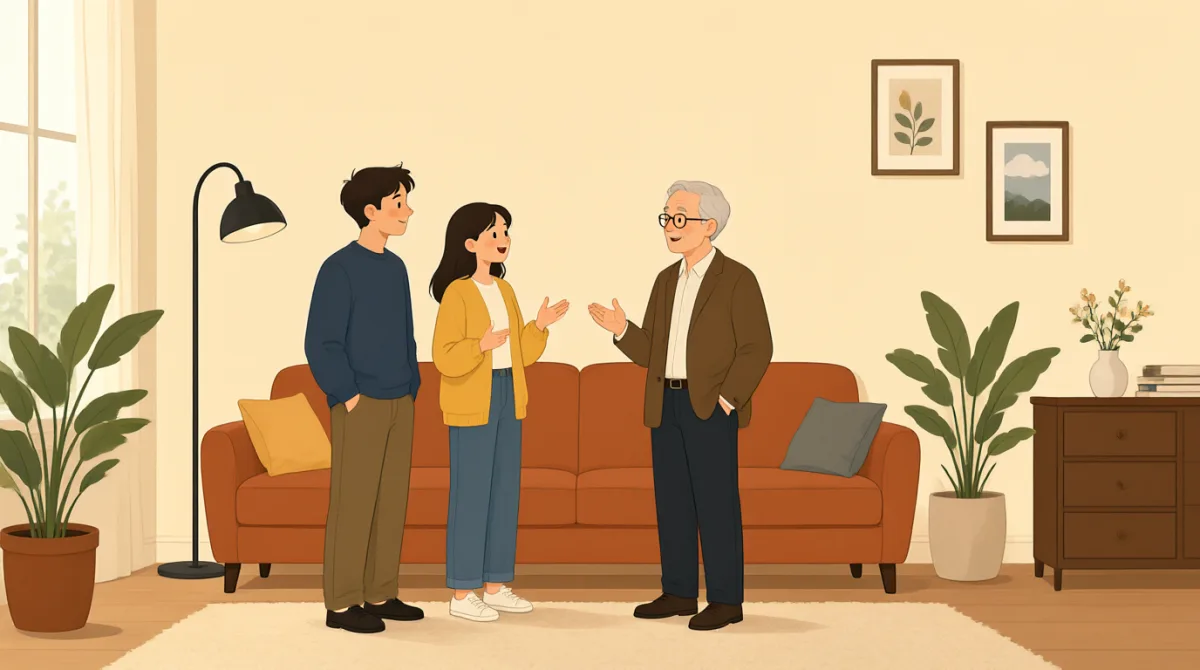

Wow, it's really warm in here, isn't it?
বাহ, এখানে বেশ গরম, তাই না?

Yeah, it is. I think the heating might be a bit too high.
হ্যাঁ, তা-ই। আমার মনে হয় হিটিংটা একটু বেশিই চলছে।
Definitely. I'm already starting to feel a bit stuffy.
একদম। আমার তো ইতিমধ্যেই একটু দমবন্ধ লাগছে।
Me too. And with this many people, it's only going to get warmer.
আমারও। আর এত লোকের মধ্যে আরও গরমই লাগবে।
True. At least we're not waiting outside today. It's freezing out there.
সত্যি। অন্তত আজ বাইরে দাঁড়িয়ে অপেক্ষা করতে হচ্ছে না। বাইরে তো হাড়কাঁপানো ঠান্ডা।
Oh, absolutely. I heard it might even snow later.
ওহ, একদম। শুনেছি পরে নাকি তুষারপাতও হতে পারে।
Really? Well, I guess a little warmth is better than shivering.
সত্যি? আচ্ছা, কাঁপতে থাকার চেয়ে একটু উষ্ণতা বোধহয় ভালো।
You've got a point there.
আপনার কথায় যুক্তি আছে।
শব্দভান্ডার6
- warmউষ্ণ
Warm means having a comfortably high temperature, not too hot. It's often used to describe indoor spaces or mild weather. For example, in small talk, you can say 'It's warm today' to start a conversation about the environment.
"warm" মানে আরামদায়কভাবে উষ্ণ, তবে খুব গরম নয়। ঘরের ভেতরের পরিবেশ বা মৃদু আবহাওয়া বোঝাতে শব্দটি প্রায়ই ব্যবহৃত হয়। যেমন, পরিবেশ নিয়ে আলাপ শুরু করতে বলতে পারেন, 'It's warm today' (আজ বেশ উষ্ণ)।
- heatingগরম করার ব্যবস্থা
Heating refers to the system that makes a room warmer, like radiators or air conditioners set to warm air. In conversations, people complain about it if it's too strong, such as 'The heating is on too high.'
"heating" বলতে ঘর গরম রাখার ব্যবস্থাকে বোঝায়, যেমন রেডিয়েটর বা গরম বাতাস ছাড়ে এমন এয়ার কন্ডিশনার। ঘর অতিরিক্ত গরম হলে কথাবার্তায় এ নিয়ে অভিযোগ করা যায়, যেমন 'The heating is on too high.' (হিটিংটা খুব বেশি জোরে চলছে)।
- stuffyদমবন্ধ, বদ্ধ
Stuffy describes air that feels hot, humid, and uncomfortable, making it hard to breathe easily. It's common in crowded or poorly ventilated places, like saying 'It feels stuffy in here' during small talk.
"stuffy" দিয়ে এমন বাতাস বোঝায় যা গরম, আর্দ্র ও অস্বস্তিকর লাগে এবং সহজে শ্বাস নিতে অসুবিধা হয়। ভিড় বা বাতাস চলাচল কম এমন জায়গায় এ শব্দটি প্রচলিত। ছোটখাটো আলাপে বলতে পারেন, 'It feels stuffy in here' (এখানে দমবন্ধ লাগছে)।
- freezingহাড়কাঁপানো ঠান্ডা
Freezing means extremely cold, often so cold that it feels painful. It's informal and used for outdoor weather, for example, 'It's freezing outside!' to express discomfort.
"freezing" মানে ভীষণ ঠান্ডা—এতটাই যে ঠান্ডাটা ব্যথার মতো লাগতে পারে। বাইরে আবহাওয়ার কথা বলতে কথ্য ভাষায় এটি ব্যবহার করা হয়। যেমন, অস্বস্তি বোঝাতে বলা যায়, 'It's freezing outside!' (বাইরে হাড়কাঁপানো ঠান্ডা!)
- shiveringকাঁপা
Shivering means shaking slightly because you are very cold. It's a physical reaction, and in talk, you might say 'I'm shivering' to describe feeling cold compared to being warm.
"shivering" মানে খুব ঠান্ডা লাগায় শরীরের হালকা কাঁপুনি। এটি শরীরের একটি প্রতিক্রিয়া। উষ্ণ লাগার বিপরীতে ঠান্ডা লাগার কথা বলতে পারেন, 'I'm shivering' (আমার কাঁপুনি হচ্ছে)।
- absolutelyএকদম, সম্পূর্ণভাবে
Absolutely means completely or totally, used to show strong agreement. In casual chats, it emphasizes yes, like 'Absolutely, I agree!' to keep the conversation positive.
"absolutely" মানে সম্পূর্ণভাবে বা একদম; কারও কথায় জোরালো সম্মতি জানাতে এটি বলা হয়। অনানুষ্ঠানিক আলাপে সম্মতি জোর দিয়ে বোঝাতে বলতে পারেন, 'Absolutely, I agree!' (একদম, আমি একমত!)—এতে কথাবার্তাও ইতিবাচক থাকে।
গুরুত্বপূর্ণ বাক্য8
- 1
Wow, it's really warm in here, isn't it?
বাহ, এখানে বেশ গরম, তাই না?
This sentence starts a conversation by commenting on the temperature and uses a tag question 'isn't it?' to invite agreement. It's useful for small talk in lines or queues because it makes the other person respond easily and builds rapport.
এই বাক্যে তাপমাত্রা নিয়ে মন্তব্য করে কথাবার্তা শুরু করা হয়েছে। 'isn't it?' দিয়ে শেষে এমন প্রশ্ন জুড়ে দেওয়া হয়েছে, যাতে অন্যজন সম্মতি জানাতে পারেন। লাইনে অপেক্ষা করার সময় হালকা আলাপে এটি কাজে লাগে, কারণ এর উত্তর দেওয়া সহজ এবং এতে পরিচিতি বাড়ে।
- 2
Yeah, it is. I think the heating might be a bit too high.
হ্যাঁ, তা-ই। আমার মনে হয় হিটিংটা একটু বেশিই চলছে।
This shows agreement with 'Yeah, it is' and gives an opinion using 'I think' and 'might' for possibility. It's practical for everyday chats as it continues the topic politely without being too direct.
'Yeah, it is' দিয়ে সম্মতি জানানো হয়েছে এবং 'I think' ও 'might' ব্যবহার করে একটি সম্ভাব্য মতামত জানানো হয়েছে। দৈনন্দিন কথাবার্তায় বিষয়টি খুব সরাসরি না বলে ভদ্রভাবে এগিয়ে নিতে এই বাক্যটি কাজে লাগে।
- 3
Definitely. I'm already starting to feel a bit stuffy.
একদম। আমার তো ইতিমধ্যেই একটু দমবন্ধ লাগছে।
'Definitely' strongly agrees, and the sentence describes a personal feeling with 'starting to feel' in present continuous tense. Use this to express discomfort in shared spaces, helping learners practice adverb placement and sensory verbs.
'Definitely' দিয়ে জোরালো সম্মতি জানানো হয়। বাক্যটিতে 'starting to feel' ব্যবহার করে এই মুহূর্তে কোনো অনুভূতি শুরু হওয়ার কথা বলা হয়েছে। সবার সঙ্গে ভাগ করে নেওয়া কোনো জায়গায় অস্বস্তির কথা জানাতে এটি ব্যবহার করুন; এতে ক্রিয়াবিশেষণের অবস্থান ও অনুভূতি-সংক্রান্ত ক্রিয়া চর্চা হয়।
- 4
Me too. And with this many people, it's only going to get warmer.
আমারও। আর এত লোকের মধ্যে আরও গরমই লাগবে।
'Me too' agrees quickly, and the second part predicts the future with 'it's only going to get' in future tense. This pattern is common in small talk to add reasons and keep the dialogue flowing naturally.
'Me too' দিয়ে সংক্ষেপে সম্মতি জানানো হয়। পরের অংশে 'it's only going to get' দিয়ে ভবিষ্যতে কী হতে পারে তা বলা হয়েছে। কারণ যোগ করে ছোটখাটো আলাপ স্বাভাবিকভাবে চালিয়ে যেতে এই গঠনটি খুব পরিচিত।
- 5
True. At least we're not waiting outside today. It's freezing out there.
সত্যি। অন্তত আজ বাইরে দাঁড়িয়ে অপেক্ষা করতে হচ্ছে না। বাইরে তো হাড়কাঁপানো ঠান্ডা।
'True' agrees simply, and 'At least' introduces a positive aspect with a comparison. The contraction 'It's freezing out there' is idiomatic for extreme cold. It's useful for balancing complaints with positives in casual conversations.
'True' দিয়ে সহজভাবে একমত হওয়া হয়, আর 'At least' তুলনা করে একটি ইতিবাচক দিক তুলে ধরে। 'It's freezing out there' বাইরে প্রচণ্ড ঠান্ডা বোঝানোর একটি স্বাভাবিক কথ্য অভিব্যক্তি। অনানুষ্ঠানিক কথায় কোনো অসুবিধার পাশাপাশি ভালো দিকটিও বলতে এটি কাজে লাগে।
- 6
Oh, absolutely. I heard it might even snow later.
ওহ, একদম। শুনেছি পরে নাকি তুষারপাতও হতে পারে।
'Oh, absolutely' shows surprise and strong agreement, followed by sharing information with 'I heard' and 'might' for uncertainty. This sentence teaches how to introduce new info in weather talks, making it engaging for listeners.
'Oh, absolutely' দিয়ে বিস্ময় ও জোরালো সম্মতি প্রকাশ করা হয়েছে। এরপর 'I heard' দিয়ে শোনা তথ্য জানানো হয়েছে, আর 'might' দিয়ে অনিশ্চয়তা বোঝানো হয়েছে। আবহাওয়া নিয়ে আলাপে নতুন তথ্য তুলে ধরে কথাকে আকর্ষণীয় করতে এই বাক্যটি শেখা কাজে দেবে।
- 7
Really? Well, I guess a little warmth is better than shivering.
সত্যি? আচ্ছা, কাঁপতে থাকার চেয়ে একটু উষ্ণতা বোধহয় ভালো।
'Really?' expresses surprise, and 'I guess' softens an opinion, using a comparative 'better than' to contrast options. It's great for intermediate learners to practice expressing preferences and comparisons in response to news.
'Really?' দিয়ে বিস্ময় প্রকাশ করা হয়, আর 'I guess' ব্যবহার করে মতামতটি কিছুটা নরমভাবে বলা হয়। 'better than' তুলনা করে দুটি অবস্থার মধ্যে কোনটি ভালো তা বোঝায়। কোনো খবরের প্রতিক্রিয়ায় পছন্দ ও তুলনা প্রকাশের চর্চায় এটি কাজে লাগে।
- 8
You've got a point there.
আপনার কথায় যুক্তি আছে।
This idiom means 'You are right' or 'That's a good idea,' used to agree with someone's opinion politely. It's a common phrase in English small talk to end or acknowledge a point without saying much more.
এই বাগ্ধারাটির অর্থ 'আপনি ঠিক বলেছেন' বা 'ওটা ভালো পরামর্শ'। কারও মতের সঙ্গে ভদ্রভাবে একমত হতে এটি ব্যবহার করা হয়। ইংরেজিতে হালকা আলাপে কথাটি বেশ প্রচলিত; বেশি কিছু না বলেও কারও বক্তব্য স্বীকার করে নিতে বা কথার ইতি টানতে পারেন।