Responding to a Request - Agreeing
回應請求 - 同意
Someone hears a request to open a window and agrees, perhaps offering to help or explaining why it's a good idea.
有人聽到開窗的請求並表示同意,可能會主動幫忙或解釋這樣做的原因。
對話6
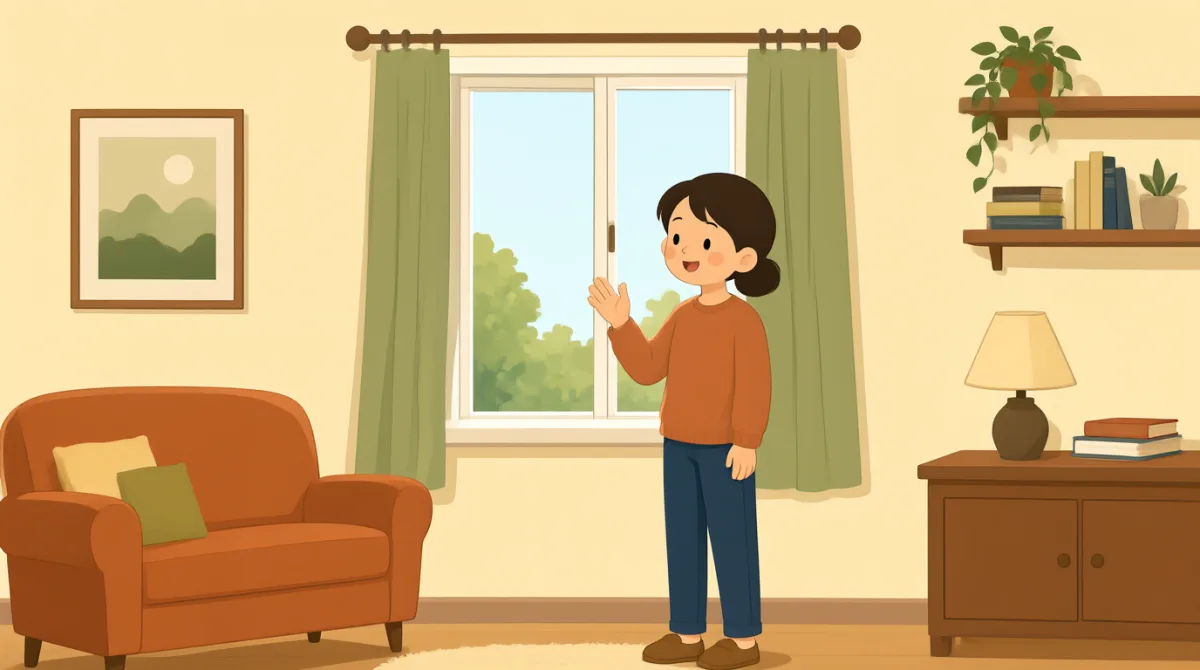

Excuse me, would you mind if I opened a window? It's getting a bit stuffy in here.
打擾一下,你介意我開個窗嗎?這裡面有點悶了。

Not at all, Emma. Go right ahead! I was actually just thinking the same thing.
完全不介意,艾瑪。請便!我剛才也正這麼想呢。
Great! Just wanted to check first. Thanks.
太好了!我只是想先問一下。謝謝。
No problem. A little fresh air will do us good. It's been pretty warm today.
沒問題。一點新鮮空氣對我們有好處。今天挺暖和的。
Exactly. I'll just open it a crack, not too wide.
沒錯。我就開個小縫,不會開太寬的。
Sounds perfect.
聽起來完美。
詞彙5
- stuffy悶的
Stuffy means a room feels hot, closed, and uncomfortable because there is not enough fresh air. Use it when describing indoor air quality.
“Stuffy”形容房間裡空氣不流通,感覺又熱又悶,讓人不舒服。描述室內空氣狀況時可以用這個詞。
- go right ahead請便
This phrase means 'please do it' or 'feel free to proceed.' It's a polite way to give permission in casual situations.
這個短語表示“請做吧”或“儘管做”。在日常場合中,它是一種禮貌地表示允許的說法。
- fresh air新鮮空氣
Fresh air refers to clean, outdoor air that feels refreshing. People often say this when they want to open windows for better ventilation.
“Fresh air”指清新的室外空氣,讓人感覺神清氣爽。人們常在想開窗通風時這樣說。
- do us good對我們有好處
This idiom means something will be beneficial for us. Use it to explain why an action like opening a window is helpful.
這個習語表示某件事會對我們有益。解釋開窗之類的舉動為什麼有幫助時可以用它。
- a crack一條小縫
A crack here means a small opening or gap. It's used when you want to open something just a little, like a window, to let in some air without too much.
這裡的“a crack”指一個小開口或縫隙。想把某樣東西稍微開啟一點時可以用這個說法,比如把窗戶開一條小縫,讓空氣進來,但不必開太大。
關鍵句5
- 1
Excuse me, would you mind if I opened a window?
打擾一下,你介意我開個窗嗎?
This is a polite way to ask for permission. 'Would you mind if...' is a common structure for requests. Use it in shared spaces to be courteous and avoid offending others.
這是禮貌地徵求許可的說法。“Would you mind if...”是常見的請求句式。在共用空間裡這樣說,能顯得客氣,也不容易冒犯別人。
- 2
Not at all, Emma. Go right ahead!
完全不介意,艾瑪。請便!
This agrees to a request politely. 'Not at all' means 'no problem at all,' and 'go right ahead' gives permission. It's useful for positive responses in everyday conversations.
這句話禮貌地答應了對方的請求。“Not at all”表示“完全沒問題”,“go right ahead”則表示允許對方去做。在日常對話中,想積極回應時很實用。
- 3
No problem. A little fresh air will do us good.
沒問題。一點新鮮空氣對我們有好處。
This shows agreement and explains the benefit. 'Will do us good' is future tense indicating positive effect. Use this to respond helpfully and build rapport.
這句話既表示贊同,也說明了這樣做的好處。“Will do us good”用將來時表示會帶來積極影響。用這種說法回應,既顯得熱心,也能拉近彼此的距離。
- 4
Exactly. I'll just open it a crack, not too wide.
沒錯。我就開個小縫,不會開太寬的。
'Exactly' means 'I agree completely.' This sentence reassures by describing a small action. It's practical for compromising in group settings to keep everyone comfortable.
“Exactly”表示“我完全同意”。這句話透過說明只會稍微開啟窗戶來讓對方放心。在多人一起活動時,這種說法很實用,能照顧到大家的舒適感。
- 5
Sounds perfect.
聽起來很不錯。
This is a casual way to show approval. Use it to end a conversation positively when someone suggests something reasonable. It's simple and versatile for agreements.
這是表示贊同的一種隨意說法。有人提出合理的建議時,可以用它來積極地結束對話。簡單又好用,適合表達同意。