Pressing the Stop Button
Dur Düğmesine Basmak
Your stop is the next one, and you locate and press the 'stop' or 'bell' button to signal the driver.
Durağınız bir sonraki durak. Şoföre haber vermek için “stop” ya da “bell” düğmesini bulup basıyorsunuz.
Diyalog7
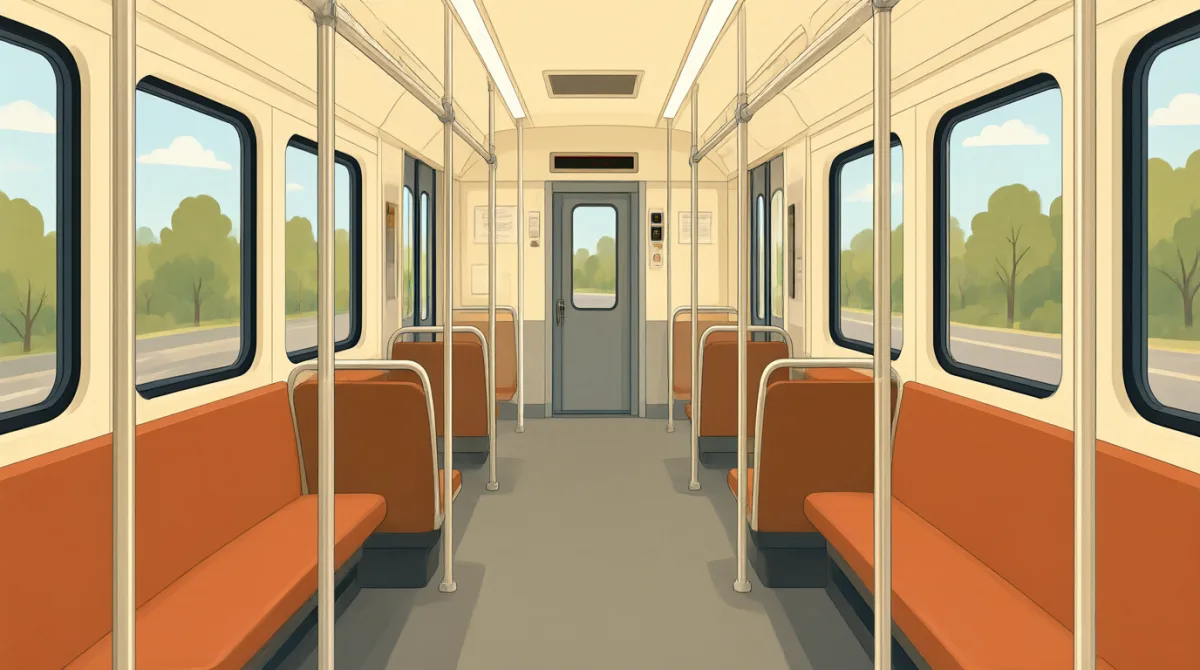

Okay, almost there! My stop is the next one.
Tamam, az kaldı! Benim durağım bir sonraki durak.

Are you sure? It looks like we're still a bit away.
Emin misin? Daha biraz var gibi görünüyor.
Yep, totally sure. I can see the landmark from here. Just need to hit the button.
Evet, kesinlikle eminim. Buradan o işareti görebiliyorum. Düğmeye basmam yeterli.
Right. Don't forget to push the stop button, or the driver might just pass it.
Aynen. Dur düğmesine basmayı unutma, yoksa şoför durağı geçip gidebilir.
Got it. Looking for it now... Ah, there it is! *presses button*
Tamamdır. Şimdi düğmeyi arıyorum... Ah, işte orada! *düğmeye basar*
Good. You hear that ding? That means it registered.
Güzel. Şu dıng sesini duydun mu? Bu, sinyalin alındığı anlamına geliyor.
Yes, perfect! Now just wait for the bus to pull over.
Evet, harika! Şimdi otobüsün kenara çekmesini bekleyelim.
Kelime Bilgisi6
- stopdurak
In this context, 'stop' refers to a bus stop, a place where the bus pauses to let passengers get on or off. It's essential for public transport conversations.
Bu bağlamda “stop”, otobüsün yolcu alıp indirmek için durduğu yeri, yani otobüs durağını ifade eder. Toplu taşımayla ilgili konuşmalarda sıkça kullanılır.
- buttondüğme
A 'button' is a small switch you press to activate something, like the stop button on a bus to signal the driver. Commonly used in vehicles and machines.
“Button”, bir şeyi çalıştırmak için basılan küçük bir düğmedir. Otobüsteki dur düğmesi, şoföre durmasını bildirmek için kullanılır.
- landmarktanınmış yapı veya yer işareti
A 'landmark' is a famous or easily recognizable building or feature that helps you identify your location. Useful for describing where you are or need to go.
“Landmark”, bulunduğunuz yeri belirlemenize yardımcı olan ünlü ya da kolayca tanınabilen bir yapı veya özelliktir. Nerede olduğunuzu ya da nereye gitmeniz gerektiğini anlatırken işe yarar.
- pushbasmak
To 'push' means to press or apply force on something, like pushing a button. In buses, you push the stop button to request a stop.
“Push”, bir şeye kuvvet uygulamak ya da bastırmak demektir; örneğin bir düğmeye basmak. Otobüste dur düğmesine basarak durma isteğinde bulunursunuz.
- dingdıng sesi
A 'ding' is a short, ringing sound, often from a bell or button, signaling that your request is noted. On buses, it confirms the stop signal is sent.
“Ding”, genellikle bir zil ya da düğmeden gelen kısa, çınlayan sestir. Otobüste bu ses, durma sinyalinin gönderildiğini bildirir.
- pull overkenara çekmek
To 'pull over' means for a vehicle to move to the side of the road and stop. Drivers do this when signaled to let passengers off.
“Pull over”, bir aracın yolun kenarına yanaşıp durması demektir. Şoförler, yolcuların inmesi için sinyal verildiğinde bunu yapar.
Önemli Cümleler5
- 1
My stop is the next one.
Benim durağım bir sonraki durak.
This sentence tells others that your destination is the upcoming bus stop. It's useful for informing friends or confirming with the driver. Simple present tense for facts; practice saying it clearly when traveling.
Bu cümle, ineceğiniz durağın sıradaki durak olduğunu söyler. Arkadaşlarınıza haber verirken ya da şoförle teyitleşirken kullanabilirsiniz. Bir gerçeği anlatan bu basit cümleyi yolculuk sırasında net bir şekilde söylemeye çalışın.
- 2
Just need to hit the button.
Düğmeye basmam yeterli.
Here, 'hit the button' is an informal way to say 'press the button.' It's casual and practical for quick actions on public transport. Use it when describing what you're about to do; 'just need to' expresses a simple necessity.
Burada “hit the button”, “press the button” (düğmeye basmak) demenin samimi ve gündelik bir yoludur. Toplu taşımada hızlıca yapacağınız bir şeyden söz ederken kullanabilirsiniz. “Just need to” (tek yapmam gereken) basit bir gerekliliği ifade eder.
- 3
Don't forget to push the stop button, or the driver might just pass it.
Dur düğmesine basmayı unutma, yoksa şoför durağı geçip gidebilir.
This warns someone to remember an action to avoid a problem. Useful for giving advice in transport situations. Conditional 'might just pass' shows possibility; the comma connects the reminder and consequence.
Bu cümle, bir sorunu önlemek için birine yapması gereken bir şeyi hatırlatır. Ulaşım sırasında tavsiye verirken işe yarar. “Might just pass” olasılık belirtir; virgül, hatırlatmayı olası sonucuna bağlar.
- 4
You hear that ding? That means it registered.
Şu dıng sesini duydun mu? Bu, sinyalin alındığı anlamına geliyor.
This asks if someone noticed a sound and explains its meaning. Great for confirming signals in noisy places like buses. Question form for engagement; 'that means' introduces explanation.
Bu cümle, birinin sesi fark edip etmediğini sorar ve sesin ne anlama geldiğini açıklar. Otobüs gibi gürültülü yerlerde bir sinyali teyit etmek için kullanışlıdır. Soru, karşıdakinin dikkatini çeker; “that means” açıklama sunar.
- 5
Now just wait for the bus to pull over.
Şimdi otobüsün kenara çekmesini bekle.
This instructs to wait patiently for the bus to stop at the side. Helpful after signaling; use in sequences of actions. Infinitive 'to pull over' after 'wait for'; 'just' softens the command.
Bu cümle, otobüsün kenara çekip durmasını sabırla beklemenizi söyler. Sinyal verdikten sonra kullanışlıdır ve eylemleri sırayla anlatır. “Wait for” ifadesinden sonra “to pull over” gelir; “just” ise talimatı yumuşatır.