Pressing the Stop Button
Naciśnięcie przycisku stopu
Your stop is the next one, and you locate and press the 'stop' or 'bell' button to signal the driver.
Twój przystanek jest następny. Znajdujesz i naciskasz przycisk „stop” lub „dzwonek”, żeby dać kierowcy znać.
Dialog7
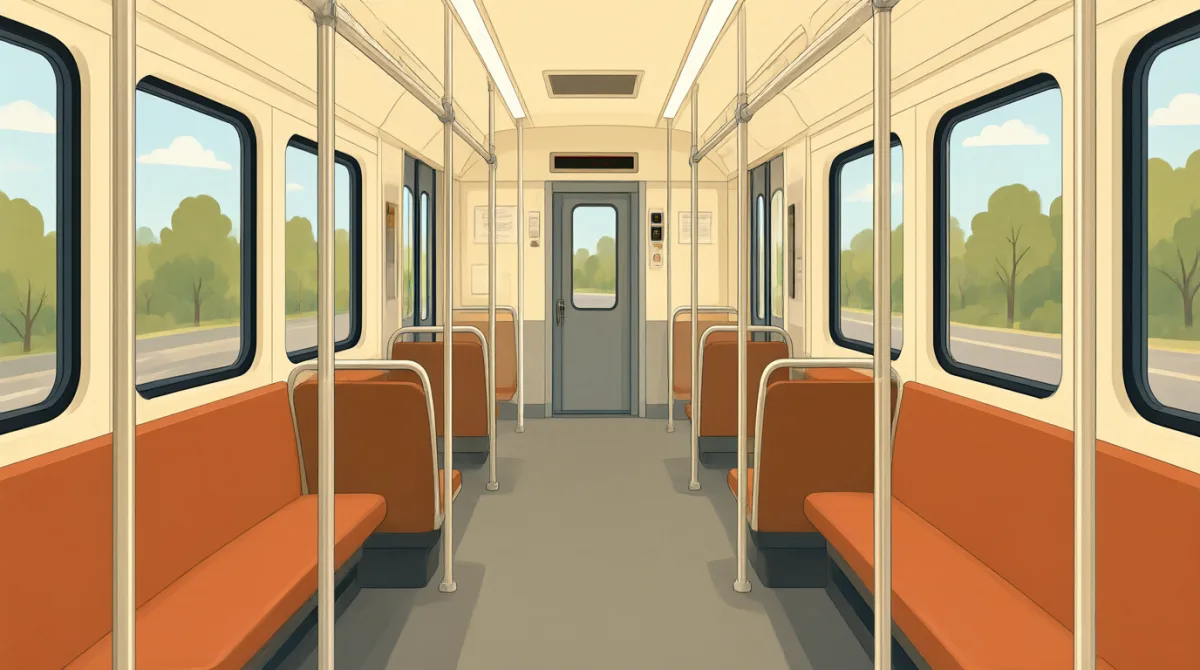

Okay, almost there! My stop is the next one.
Okej, już prawie! Mój przystanek jest następny.

Are you sure? It looks like we're still a bit away.
Na pewno? Wygląda, jakbyśmy byli jeszcze kawałek drogi stąd.
Yep, totally sure. I can see the landmark from here. Just need to hit the button.
Tak, na sto procent. Stąd widzę ten charakterystyczny punkt. Muszę tylko nacisnąć przycisk.
Right. Don't forget to push the stop button, or the driver might just pass it.
No właśnie. Nie zapomnij nacisnąć przycisku stopu, bo kierowca może po prostu minąć przystanek.
Got it. Looking for it now... Ah, there it is! *presses button*
Jasne. Już go szukam... O, jest! *naciska przycisk*
Good. You hear that ding? That means it registered.
Dobrze. Słyszysz to ding? To znaczy, że sygnał został odebrany.
Yes, perfect! Now just wait for the bus to pull over.
Tak, super! Teraz wystarczy poczekać, aż autobus zjedzie na bok i się zatrzyma.
Słownictwo6
- stopprzystanek
In this context, 'stop' refers to a bus stop, a place where the bus pauses to let passengers get on or off. It's essential for public transport conversations.
W tym kontekście 'stop' oznacza przystanek autobusowy, czyli miejsce, w którym autobus zatrzymuje się, żeby pasażerowie mogli wsiąść lub wysiąść. To ważne słowo w rozmowach o komunikacji publicznej.
- buttonprzycisk
A 'button' is a small switch you press to activate something, like the stop button on a bus to signal the driver. Commonly used in vehicles and machines.
'Button' to mały przełącznik, który naciskasz, żeby coś uruchomić, na przykład przycisk stopu w autobusie, którym dajesz znać kierowcy. Tego słowa używa się też w kontekście pojazdów i urządzeń.
- landmarkcharakterystyczny punkt
A 'landmark' is a famous or easily recognizable building or feature that helps you identify your location. Useful for describing where you are or need to go.
'Landmark' to znany lub łatwy do rozpoznania budynek albo element krajobrazu, który pomaga ustalić, gdzie jesteś. Przydaje się, gdy opisujesz swoje położenie lub drogę.
- pushnacisnąć
To 'push' means to press or apply force on something, like pushing a button. In buses, you push the stop button to request a stop.
'Push' oznacza nacisnąć coś lub użyć siły, na przykład nacisnąć przycisk. W autobusie naciskasz przycisk stopu, żeby poprosić o zatrzymanie.
- dingdźwięk dzwonka
A 'ding' is a short, ringing sound, often from a bell or button, signaling that your request is noted. On buses, it confirms the stop signal is sent.
'Ding' to krótki, dźwięczny sygnał, często wydawany przez dzwonek lub przycisk. Informuje, że zgłoszenie zostało przyjęte. W autobusie potwierdza wysłanie sygnału o potrzebie zatrzymania.
- pull overzjechać na bok i się zatrzymać
To 'pull over' means for a vehicle to move to the side of the road and stop. Drivers do this when signaled to let passengers off.
'Pull over' oznacza zjechać pojazdem na bok drogi i się zatrzymać. Kierowcy robią tak, gdy dostaną sygnał, żeby pasażerowie mogli wysiąść.
Kluczowe zdania5
- 1
My stop is the next one.
Mój przystanek jest następny.
This sentence tells others that your destination is the upcoming bus stop. It's useful for informing friends or confirming with the driver. Simple present tense for facts; practice saying it clearly when traveling.
Tym zdaniem informujesz innych, że wysiadasz na następnym przystanku. Możesz go użyć, gdy rozmawiasz ze znajomymi albo potwierdzasz trasę z kierowcą. Czas teraźniejszy prosty opisuje tu fakt. W podróży wypowiedz to wyraźnie.
- 2
Just need to hit the button.
Muszę tylko nacisnąć przycisk.
Here, 'hit the button' is an informal way to say 'press the button.' It's casual and practical for quick actions on public transport. Use it when describing what you're about to do; 'just need to' expresses a simple necessity.
Tutaj 'hit the button' to potoczne określenie, które znaczy 'nacisnąć przycisk'. To swobodny i praktyczny zwrot, gdy trzeba szybko coś zrobić w komunikacji miejskiej. Użyj go, by powiedzieć, co zaraz zrobisz; 'just need to' wyraża prostą konieczność.
- 3
Don't forget to push the stop button, or the driver might just pass it.
Nie zapomnij nacisnąć przycisku stopu, bo kierowca może po prostu minąć przystanek.
This warns someone to remember an action to avoid a problem. Useful for giving advice in transport situations. Conditional 'might just pass' shows possibility; the comma connects the reminder and consequence.
To przypomnienie, żeby ktoś nie zapomniał o czymś, co pozwoli uniknąć problemu. Przydaje się, gdy dajesz komuś radę w podróży. 'Might just pass' wskazuje, że kierowca może po prostu minąć przystanek, a przecinek łączy przypomnienie z jego możliwym skutkiem.
- 4
You hear that ding? That means it registered.
Słyszysz to ding? To znaczy, że sygnał został odebrany.
This asks if someone noticed a sound and explains its meaning. Great for confirming signals in noisy places like buses. Question form for engagement; 'that means' introduces explanation.
Pytasz, czy ktoś zauważył dźwięk, a następnie wyjaśniasz, co on oznacza. To przydatne przy potwierdzaniu sygnałów w hałaśliwych miejscach, takich jak autobus. Pytanie angażuje rozmówcę, a 'that means' wprowadza wyjaśnienie.
- 5
Now just wait for the bus to pull over.
Teraz wystarczy poczekać, aż autobus zjedzie na bok i się zatrzyma.
This instructs to wait patiently for the bus to stop at the side. Helpful after signaling; use in sequences of actions. Infinitive 'to pull over' after 'wait for'; 'just' softens the command.
To polecenie, by spokojnie poczekać, aż autobus zatrzyma się z boku drogi. Przydaje się po wysłaniu sygnału o potrzebie zatrzymania i podczas opisywania kolejnych czynności. Po 'wait for' używamy bezokolicznika z 'to', jak w 'to pull over'; 'just' łagodzi polecenie.