Cooking Over a Fire
불 피워 요리하기
Emma and Jack cook dinner over the campsite fire. They prepare a simple meal and talk about what they want to do the next day.
에마와 잭은 캠프파이어에 저녁을 준비해. 간단한 음식을 만들며 다음 날 무엇을 하고 싶은지 이야기해.
대화8
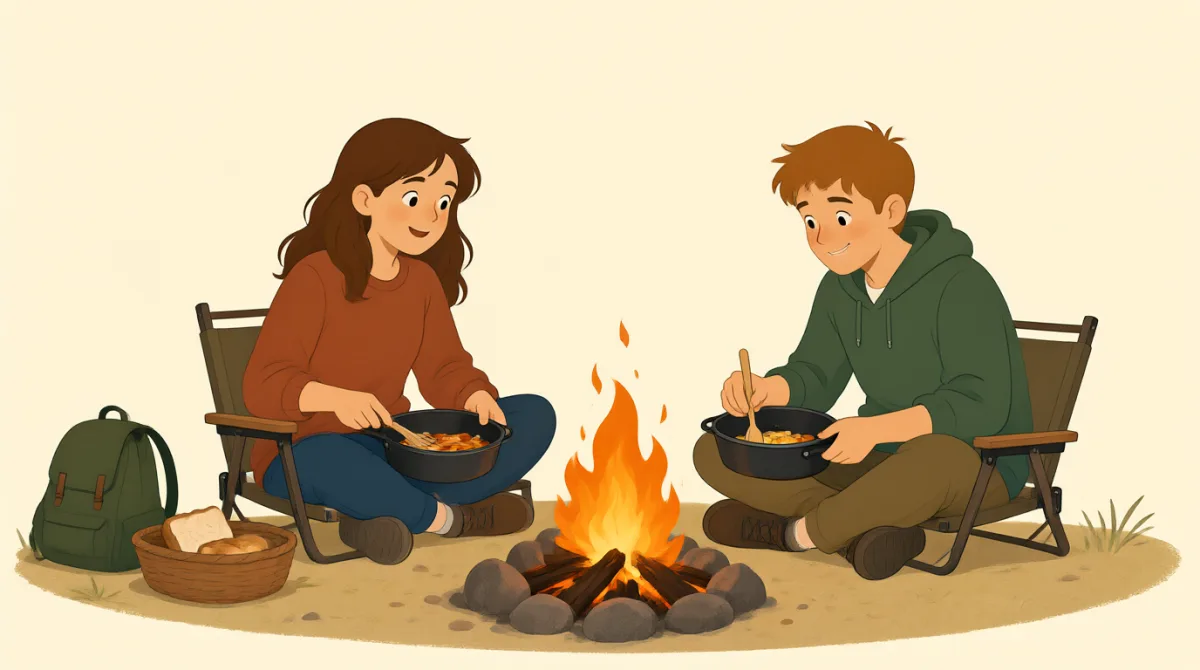

The fire is ready. What should we cook for dinner?
불이 준비됐어. 저녁으로 뭐 해 먹을까?

Let’s cook sausages and potatoes. I brought some bread, too.
소시지랑 감자 구워 먹자. 빵도 좀 가져왔어.
Great! Can you put the potatoes in the pan?
좋아! 감자를 팬에 넣어 줄래?
Sure. We should cook them slowly so they don’t burn.
그래. 타지 않게 천천히 익혀야 해.
I’ll turn the sausages. They smell really good.
내가 소시지 뒤집을게. 냄새가 정말 좋다.
Dinner will be ready soon. What do you want to do tomorrow?
곧 저녁 먹을 수 있겠다. 내일은 뭐 하고 싶어?
I’d like to hike by the lake and take some pictures.
호숫가에서 하이킹하고 사진도 좀 찍고 싶어.
Sounds good. Let’s eat, then plan our morning.
좋네. 밥 먹고 아침 일정을 계획하자.
어휘8
- cook for dinner저녁을 준비하다
This means to prepare food for the evening meal. You can ask, “What should we cook for dinner?”
저녁 식사를 준비한다는 뜻이에요. “What should we cook for dinner?”라고 물어볼 수 있어요.
- brought가져왔다
“Brought” is the past form of “bring.” Use it to say you carried something with you, such as food on a camping trip.
“Brought”는 “bring”의 과거형이에요. 캠핑 갈 때 음식처럼 무언가를 가지고 왔다고 말할 때 써요.
- put the potatoes in the pan감자를 팬에 넣다
This means to place the potatoes inside the pan. You can use “put [something] in [a container]” when giving a simple instruction.
감자를 팬 안에 넣는다는 뜻이에요. 간단한 지시를 할 때 “put [something] in [a container]”라는 표현을 쓸 수 있어요.
- cook them slowly천천히 익히다
This means to heat the food gently over time. You can use this phrase when food needs to cook without burning.
음식을 시간을 들여 약한 불로 익힌다는 뜻이에요. 음식이 타지 않도록 조리해야 할 때 쓸 수 있는 표현이에요.
- turn the sausages소시지를 뒤집다
This means to move or flip the sausages so they cook on the other side. It is useful when cooking food in a pan or over a fire.
소시지가 반대쪽도 익도록 뒤집거나 움직인다는 뜻이에요. 팬이나 불 위에서 음식을 조리할 때 유용한 표현이에요.
- burn타다
Food burns when it gets too hot or cooks for too long. You can say, “Watch the food so it doesn’t burn.”
음식이 너무 뜨겁거나 너무 오래 익으면 타요. “Watch the food so it doesn’t burn.”이라고 말할 수 있어요.
- by the lake호숫가에
This means near or beside the lake. Use “by” to describe a place next to something.
호수 가까이나 호수 옆이라는 뜻이에요. “by”는 무언가 바로 옆에 있는 장소를 나타낼 때 써요.
- take some pictures사진을 좀 찍다
This means to use a camera or phone to make photographs. You can say, “I’d like to take some pictures” when talking about plans.
카메라나 휴대전화로 사진을 찍는다는 뜻이에요. 계획을 이야기할 때 “I’d like to take some pictures”라고 말할 수 있어요.
핵심 문장8
- 1
What should we cook for dinner?
저녁으로 뭐 해 먹을까?
Use this question to ask for ideas about what to prepare for an evening meal. You can replace “dinner” with another meal or occasion.
저녁 식사로 뭘 준비할지 아이디어를 물어볼 때 쓰는 질문이에요. “dinner”를 다른 식사나 행사로 바꿔 쓸 수도 있어요.
- 2
I brought some bread, too.
빵도 좀 가져왔어.
This sentence tells someone that you brought an additional item. Use “I brought [something], too” to mention something you have with you.
무언가를 추가로 가져왔다고 상대에게 말하는 문장이에요. 가지고 온 것을 덧붙여 말할 때 “I brought [something], too”라고 해요.
- 3
Can you put the potatoes in the pan?
감자를 팬에 넣어 줄래?
This is a polite way to ask someone to do a task. Replace “the potatoes” and “the pan” with other things and places.
상대에게 어떤 일을 해 달라고 정중하게 부탁하는 표현이에요. “the potatoes”와 “the pan”을 다른 물건이나 장소로 바꿔 쓸 수 있어요.
- 4
We should cook them slowly so they don’t burn.
타지 않게 천천히 익혀야 해.
Use “We should” to make a suggestion, and “so” to explain the reason. You can use this pattern to give practical advice.
“We should”는 제안할 때 쓰고, “so”는 이유를 설명할 때 써요. 이 패턴으로 실용적인 조언을 할 수 있어요.
- 5
I’ll turn the sausages.
내가 소시지 뒤집을게.
Use “I’ll” to offer to do something now or soon. Replace “turn the sausages” with another helpful task.
지금이나 곧 어떤 일을 하겠다고 나설 때 “I’ll”을 써요. “turn the sausages”를 다른 도움 되는 일로 바꿔 보세요.
- 6
What do you want to do tomorrow?
내일은 뭐 하고 싶어?
Use this question to ask someone about their plans for the next day. You can replace “tomorrow” with another time.
상대방의 다음 날 계획을 물어볼 때 쓰는 질문이에요. “tomorrow”를 다른 시간 표현으로 바꿔 쓸 수 있어요.
- 7
I’d like to hike by the lake and take some pictures.
호숫가에서 하이킹하고 사진도 좀 찍고 싶어.
Use “I’d like to” to talk about something you want to do. Add two activities with “and” to describe your plans.
하고 싶은 일을 말할 때 “I’d like to”를 써요. 계획을 설명할 때는 “and”로 두 가지 활동을 연결해 보세요.
- 8
Let’s eat, then plan our morning.
밥 먹고 아침 일정을 계획하자.
Use “Let’s” to suggest doing something together. “Then” shows the order of the activities: eat first and plan afterward.
함께 무언가 하자고 제안할 때 “Let’s”를 써요. “Then”은 활동의 순서를 나타내요. 먼저 먹고, 그다음에 계획을 세우는 거예요.