Buying a Ticket/Pass
ซื้อตั๋วหรือบัตรโดยสาร
A passenger at a ticket counter or vending machine needs to purchase a single ticket or a daily/weekly pass for public transport.
ผู้โดยสารที่เคาน์เตอร์จำหน่ายตั๋วหรือตู้ขายตั๋วต้องการซื้อตั๋วเที่ยวเดียวหรือบัตรโดยสารรายวัน/รายสัปดาห์สำหรับการเดินทางด้วยขนส่งสาธารณะ
บทสนทนา9
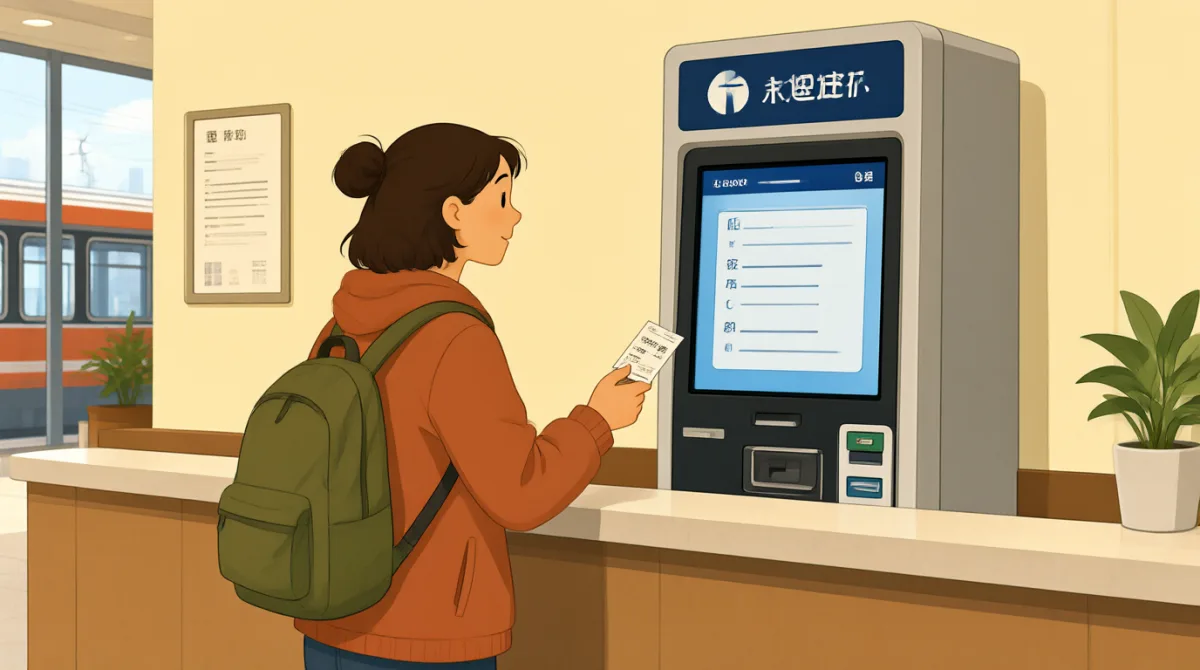

Excuse me, I'd like to buy a single ticket, please.
ขอโทษนะครับ ผมขอซื้อตั๋วเที่ยวเดียวครับ

Certainly. Where are you heading to?
ได้เลยค่ะ จะเดินทางไปที่ไหนคะ
Just to the city center. Is there a daily pass available?
ไปแค่ใจกลางเมืองครับ มีบัตรโดยสารรายวันไหมครับ
Yes, we have a day pass for 7 dollars, which offers unlimited rides for 24 hours. A single ticket to the city center is 2.50.
มีค่ะ เรามีบัตรรายวันราคา 7 ดอลลาร์ ใช้เดินทางได้ไม่จำกัดเที่ยวเป็นเวลา 24 ชั่วโมงค่ะ ตั๋วเที่ยวเดียวไปใจกลางเมืองราคา 2.50 ดอลลาร์ค่ะ
Hmm, I'll probably be making a few trips today. I'll take the day pass then.
อืม วันนี้ผมน่าจะเดินทางหลายเที่ยว งั้นเอาบัตรรายวันครับ
Alright, that'll be 7 dollars, please. Cash or card?
ได้ค่ะ ทั้งหมด 7 ดอลลาร์นะคะ รับเงินสดหรือบัตรคะ
Card, please. Here you go.
บัตรครับ นี่ครับ
Thank you. And here’s your pass and receipt. Have a good day!
ขอบคุณค่ะ นี่บัตรโดยสารกับใบเสร็จค่ะ ขอให้วันนี้เป็นวันที่ดีนะคะ
You too, thanks!
เช่นกันครับ ขอบคุณครับ
คำศัพท์7
- Excuse meขอโทษครับ/ค่ะ
A polite phrase used to get someone's attention or interrupt politely, common when starting a conversation at a ticket counter.
วลีสุภาพที่ใช้เรียกความสนใจหรือขัดจังหวะอย่างนุ่มนวล มักใช้เมื่อต้องการเริ่มพูดคุยที่เคาน์เตอร์จำหน่ายตั๋ว
- single ticketตั๋วเที่ยวเดียว
A ticket for one trip only, also called a one-way ticket, useful for short journeys on public transport.
ตั๋วสำหรับเดินทางเพียงเที่ยวเดียว หรือเรียกว่าตั๋วเที่ยวเดียว เหมาะสำหรับการเดินทางระยะสั้นด้วยขนส่งสาธารณะ
- daily passบัตรโดยสารรายวัน
A type of ticket that allows unlimited travel for one day, often cheaper for multiple trips, also known as a day pass.
ตั๋วประเภทหนึ่งที่ใช้เดินทางได้ไม่จำกัดเที่ยวภายในหนึ่งวัน มักคุ้มค่ากว่าหากเดินทางหลายเที่ยว และเรียกอีกอย่างว่าบัตรรายวัน
- heading toกำลังจะไปที่
Means 'going to' or 'traveling to' a place, a casual way to ask about someone's destination.
“heading to” หมายถึง “กำลังไปที่” หรือ “เดินทางไปยัง” ใช้ถามปลายทางของใครสักคนแบบเป็นกันเอง
- unlimited ridesเดินทางได้ไม่จำกัดเที่ยว
Means you can take as many trips as you want without extra cost, ideal for busy travel days.
หมายถึงสามารถเดินทางได้กี่เที่ยวก็ได้โดยไม่ต้องจ่ายเพิ่ม เหมาะกับวันที่ต้องเดินทางหลายครั้ง
- cash or cardเงินสดหรือบัตร
A common question for payment options, where 'cash' is money and 'card' is using a credit/debit card.
คำถามที่ใช้ถามวิธีชำระเงิน โดย “cash” คือเงินสด ส่วน “card” หมายถึงการใช้บัตรเครดิตหรือบัตรเดบิต
- receiptใบเสร็จ
A printed record of your purchase, important for proof if there's an issue with your ticket.
เอกสารที่พิมพ์ไว้เป็นหลักฐานการซื้อ ควรเก็บไว้เพื่อใช้ยืนยันหากมีปัญหาเกี่ยวกับตั๋ว
ประโยคสำคัญ7
- 1
Excuse me, I'd like to buy a single ticket, please.
ขอโทษนะครับ ผมขอซื้อตั๋วเที่ยวเดียวครับ
This is a polite way to start a request at a ticket counter. 'I'd like to' is a formal way to say 'I want to,' and 'please' makes it courteous. Use it when buying transport tickets.
ประโยคนี้เป็นวิธีสุภาพในการเริ่มต้นขอซื้อตั๋วที่เคาน์เตอร์ “I'd like to” เป็นวิธีพูดที่สุภาพกว่า “I want to” และ “please” ช่วยให้ฟังสุภาพยิ่งขึ้น ใช้ประโยคนี้เมื่อซื้อตั๋วโดยสารได้เลย
- 2
Where are you heading to?
จะเดินทางไปที่ไหนคะ
A natural question to ask a passenger's destination. 'Heading to' is informal for 'going to.' Useful for service workers to clarify travel needs.
เป็นคำถามที่ฟังเป็นธรรมชาติเมื่อต้องการถามปลายทางของผู้โดยสาร “heading to” เป็นรูปแบบไม่เป็นทางการของ “going to” พนักงานใช้ถามเพื่อให้ทราบความต้องการในการเดินทางได้
- 3
Is there a daily pass available?
มีบัตรโดยสารรายวันไหมครับ
This asks if a specific ticket option exists. 'Available' means ready for purchase. Good for inquiring about options before deciding.
ใช้ถามว่ามีตั๋วประเภทที่ต้องการหรือไม่ “available” หมายถึงมีพร้อมจำหน่าย ใช้สอบถามตัวเลือกต่าง ๆ ก่อนตัดสินใจได้
- 4
Yes, we have a day pass for 7 dollars, which offers unlimited rides for 24 hours.
มีค่ะ เรามีบัตรรายวันราคา 7 ดอลลาร์ ใช้เดินทางได้ไม่จำกัดเที่ยวเป็นเวลา 24 ชั่วโมงค่ะ
This explains a ticket's benefits. 'Which offers' is a relative clause adding details. Use it to describe products or services clearly.
ประโยคนี้อธิบายข้อดีของตั๋ว “which offers” ใช้เชื่อมประโยคเพื่อเพิ่มรายละเอียด นำไปใช้บรรยายสินค้าและบริการให้เข้าใจชัดเจนได้
- 5
I'll probably be making a few trips today. I'll take the day pass then.
วันนี้ผมน่าจะเดินทางหลายเที่ยว งั้นเอาบัตรรายวันครับ
Shows decision-making based on plans. 'Probably' expresses uncertainty, and 'then' connects the reason to the choice. Practical for explaining why you choose something.
ประโยคนี้แสดงการตัดสินใจโดยอิงจากแผนที่วางไว้ “Probably” ใช้บอกความไม่แน่ใจ ส่วน “then” เชื่อมเหตุผลเข้ากับสิ่งที่เลือก ใช้อธิบายได้ว่าทำไมถึงเลือกบางอย่าง
- 6
Alright, that'll be 7 dollars, please. Cash or card?
ได้ค่ะ ทั้งหมด 7 ดอลลาร์นะคะ รับเงินสดหรือบัตรคะ
'That'll be' is a contraction for 'that will be,' used for stating the total cost. This is a standard way to ask for payment in shops or counters.
“That'll be” ย่อมาจาก “that will be” ใช้แจ้งยอดรวมที่ต้องชำระ เป็นวิธีถามรับชำระเงินตามปกติในร้านค้าหรือที่เคาน์เตอร์
- 7
Thank you. And here’s your pass and receipt. Have a good day!
ขอบคุณค่ะ นี่บัตรโดยสารกับใบเสร็จค่ะ ขอให้วันนี้เป็นวันที่ดีนะคะ
A polite closing with thanks and well-wishes. 'Here’s' is short for 'here is.' Use this to end transactions positively and build good interactions.
เป็นการปิดบทสนทนาอย่างสุภาพด้วยคำขอบคุณและคำอวยพร “Here’s” เป็นรูปย่อของ “here is” ใช้ปิดท้ายการซื้อขายให้เป็นไปอย่างราบรื่นและสร้างความประทับใจที่ดีได้