Asking for Specific Department Hours
विशेष विभाग के खुलने के समय के बारे में पूछना
Inside a larger store or mall, a customer asks an employee about the opening hours of a specific department or concession within the premises.
एक बड़े स्टोर या मॉल में ग्राहक किसी कर्मचारी से परिसर के किसी खास विभाग या काउंटर के खुलने के समय के बारे में पूछता है।
संवाद8
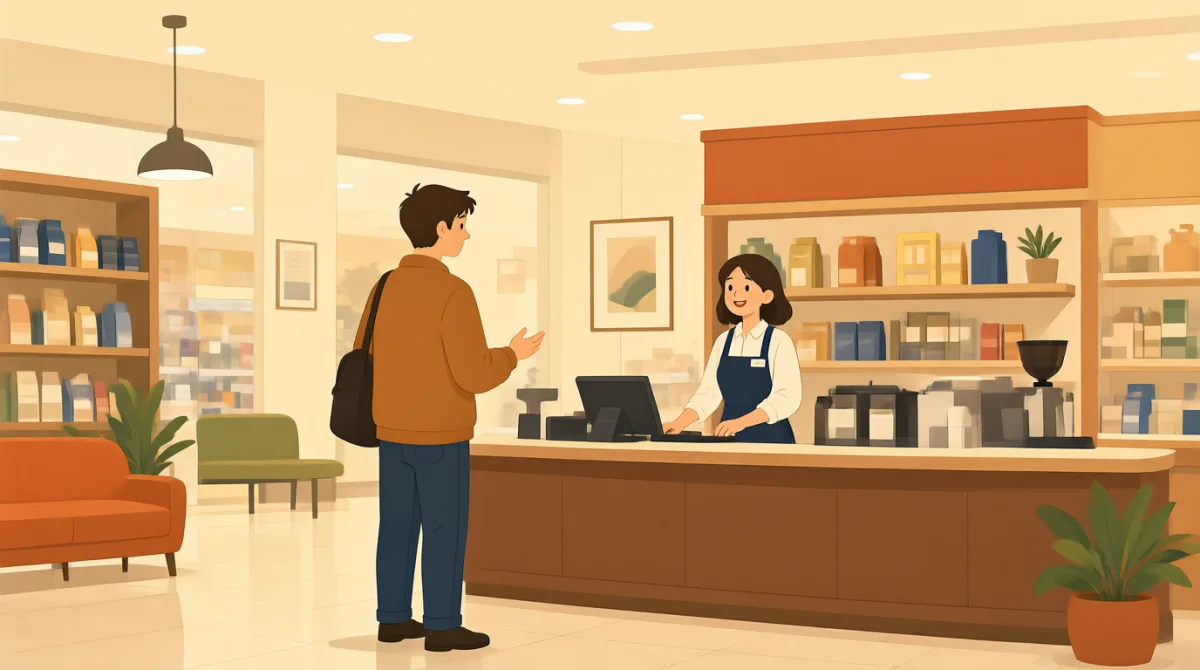

Excuse me, I'm looking for the electronics department. Do you know what time it opens today?
माफ़ कीजिए, मुझे इलेक्ट्रॉनिक्स विभाग ढूँढ़ना है। क्या आपको पता है कि यह आज कितने बजे खुलता है?

Hello! The electronics department usually opens at 10 AM, just like the rest of the store.
नमस्ते! इलेक्ट्रॉनिक्स विभाग आमतौर पर सुबह 10 बजे खुलता है, बाकी स्टोर की तरह।
Ah, okay. So, it's not open yet?
अच्छा, ठीक है। तो यह अभी खुला नहीं है?
That's right. It's 9:30 AM now, so you'll have to wait about half an hour.
जी हाँ। अभी सुबह के 9:30 बजे हैं, इसलिए आपको करीब आधा घंटा इंतज़ार करना होगा।
Got it. And do they have different closing hours from the main store?
समझ गया। और क्या यह मुख्य स्टोर से अलग समय पर बंद होता है?
No, all departments, including electronics, close at 9 PM on weekdays and 7 PM on Sundays.
नहीं, इलेक्ट्रॉनिक्स समेत सभी विभाग सप्ताह के दिनों में रात 9 बजे और रविवार को शाम 7 बजे बंद होते हैं।
Perfect, thanks for the information!
बहुत बढ़िया, जानकारी के लिए धन्यवाद!
You're welcome! Is there anything else I can help you with?
कोई बात नहीं! क्या मैं आपकी किसी और चीज़ में मदद कर सकती हूँ?
शब्दावली6
- departmentविभाग
A section of a store that sells specific items, like electronics or clothing. Use it when asking about a particular area in a big shop.
स्टोर का वह हिस्सा जहाँ खास तरह की चीज़ें बिकती हैं, जैसे इलेक्ट्रॉनिक्स या कपड़े। बड़े स्टोर में किसी खास हिस्से के बारे में पूछते समय इस शब्द का इस्तेमाल करें।
- opensखुलता है
The verb meaning when a place starts business for the day. It's the third person form of 'open' used with times, like 'The store opens at 9 AM.'
यह क्रिया बताती है कि कोई जगह दिन का कारोबार किस समय शुरू करती है। समय बताने के लिए 'open' का तीसरे पुरुष वाला रूप 'opens' इस्तेमाल होता है, जैसे 'The store opens at 9 AM.' (स्टोर सुबह 9 बजे खुलता है।)
- usuallyआमतौर पर
An adverb meaning most of the time or normally. It helps describe regular schedules, like 'The shop usually opens at 10 AM.'
यह क्रिया-विशेषण बताता है कि कोई काम ज़्यादातर समय या सामान्य तौर पर होता है। नियमित समय-सारणी बताने में इसका इस्तेमाल होता है, जैसे 'The shop usually opens at 10 AM.' (दुकान आमतौर पर सुबह 10 बजे खुलती है।)
- closing hoursबंद होने का समय
The time when a store stops business for the day. Ask about it to know when something ends, like 'What are the closing hours?'
वह समय जब स्टोर दिन का कारोबार बंद करता है। किसी जगह के बंद होने का समय जानने के लिए पूछें, जैसे 'What are the closing hours?' (बंद होने का समय क्या है?)
- weekdaysसप्ताह के दिन
The days from Monday to Friday, not including weekends. It's useful for talking about work or store schedules.
सोमवार से शुक्रवार तक के दिन, सप्ताहांत को छोड़कर। काम या स्टोर की समय-सारणी के बारे में बात करते समय यह शब्द काम आता है।
- includingशामिल
A preposition meaning to include something in a group. Use it to specify parts, like 'All departments, including electronics.'
यह पूर्वसर्ग किसी चीज़ को किसी समूह में शामिल करने का अर्थ देता है। किसी समूह के हिस्सों को बताने के लिए इसका इस्तेमाल करें, जैसे 'All departments, including electronics.' (इलेक्ट्रॉनिक्स समेत सभी विभाग।)
मुख्य वाक्य7
- 1
Excuse me, I'm looking for the electronics department. Do you know what time it opens today?
माफ़ कीजिए, मुझे इलेक्ट्रॉनिक्स विभाग ढूँढ़ना है। क्या आपको पता है कि यह आज कितने बजे खुलता है?
This polite question combines asking for directions and hours. Use 'Excuse me' to get attention, and 'what time it opens' to inquire about opening time. Great for starting conversations in stores.
इस विनम्र सवाल में रास्ता पूछना और खुलने का समय जानना, दोनों शामिल हैं। किसी का ध्यान खींचने के लिए 'Excuse me' (माफ़ कीजिए) कहें और खुलने का समय पूछने के लिए 'what time it opens' (यह कितने बजे खुलता है) का इस्तेमाल करें। दुकानों में बातचीत शुरू करने के लिए यह बहुत उपयोगी है।
- 2
The electronics department usually opens at 10 AM, just like the rest of the store.
इलेक्ट्रॉनिक्स विभाग आमतौर पर सुबह 10 बजे खुलता है, बाकी स्टोर की तरह।
This explains a typical schedule using 'usually' for habits and 'just like' for comparison. Useful for giving information about routines; note the time format '10 AM'.
यह वाक्य 'usually' (आमतौर पर) से नियमित समय-सारणी और 'just like' (की तरह) से तुलना बताता है। रोज़मर्रा के नियमों की जानकारी देते समय यह काम आता है। समय लिखने के तरीके '10 AM' पर ध्यान दें।
- 3
Ah, okay. So, it's not open yet?
अच्छा, ठीक है। तो यह अभी खुला नहीं है?
A confirmation question using 'So' to connect ideas and 'yet' for something expected but not happened. It's a natural way to check understanding in casual talk.
यहाँ 'So' (तो) से विचारों को जोड़कर पुष्टि के लिए सवाल पूछा गया है और 'yet' (अभी तक) ऐसी बात के लिए है जिसकी उम्मीद है, लेकिन जो अभी हुई नहीं। अनौपचारिक बातचीत में अपनी समझ की पुष्टि करने का यह स्वाभाविक तरीका है।
- 4
It's 9:30 AM now, so you'll have to wait about half an hour.
अभी सुबह के 9:30 बजे हैं, इसलिए आपको करीब आधा घंटा इंतज़ार करना होगा।
This states current time and estimates wait using 'so' for result and 'about' for approximation. Practice telling time and suggesting waits in service situations.
इस वाक्य में मौजूदा समय बताकर इंतज़ार का अनुमान दिया गया है। 'so' (इसलिए) नतीजा बताता है और 'about' (करीब) अनुमान। सेवा से जुड़ी परिस्थितियों में समय बताने और इंतज़ार की जानकारी देने का अभ्यास करें।
- 5
No, all departments, including electronics, close at 9 PM on weekdays and 7 PM on Sundays.
नहीं, इलेक्ट्रॉनिक्स समेत सभी विभाग सप्ताह के दिनों में रात 9 बजे और रविवार को शाम 7 बजे बंद होते हैं।
This denies a difference and lists times with 'including' and 'and' for connections. It's useful for explaining schedules; note plural 'departments' and days like 'weekdays'.
इस वाक्य में अलग समय होने की बात को नकारकर 'including' (समेत) और 'and' (और) से समय दिए गए हैं। समय-सारणी समझाने में यह उपयोगी है। बहुवचन 'departments' और 'weekdays' जैसे दिनों के नामों पर ध्यान दें।
- 6
Perfect, thanks for the information!
बहुत बढ़िया, जानकारी के लिए धन्यवाद!
A positive response showing satisfaction with 'Perfect' and thanks. Use it to end helpfully; 'information' is formal for details given.
यह जवाब 'Perfect' (बहुत बढ़िया) कहकर संतुष्टि दिखाता है और धन्यवाद देता है। मददगार ढंग से बातचीत खत्म करने के लिए इसका इस्तेमाल करें। 'information' (जानकारी) दी गई बातों के लिए थोड़ा औपचारिक शब्द है।
- 7
You're welcome! Is there anything else I can help you with?
कोई बात नहीं! क्या मैं आपकी किसी और चीज़ में मदद कर सकती हूँ?
Standard polite reply to thanks, followed by an offer for more help. 'You're welcome' is idiomatic; the question uses 'anything else' to check for further needs.
यह धन्यवाद का एक आम, विनम्र जवाब है, जिसके बाद और मदद की पेशकश की जाती है। 'You're welcome' (कोई बात नहीं) एक मुहावरेदार जवाब है। सवाल में 'anything else' (और कुछ) पूछकर जाना जाता है कि सामने वाले को किसी और मदद की ज़रूरत है या नहीं।