Offering a Seat to Someone in Need
สละที่นั่งให้ผู้ที่ต้องการ
An elderly person, a pregnant woman, or someone with a visible disability has just boarded the crowded bus/train. You want to offer your seat politely.
มีผู้สูงอายุ หญิงตั้งครรภ์ หรือผู้ที่มีความพิการให้เห็นได้ชัดเพิ่งขึ้นรถเมล์หรือรถไฟที่มีผู้โดยสารแน่น คุณต้องการเสนอที่นั่งให้เขาอย่างสุภาพ
บทสนทนา6
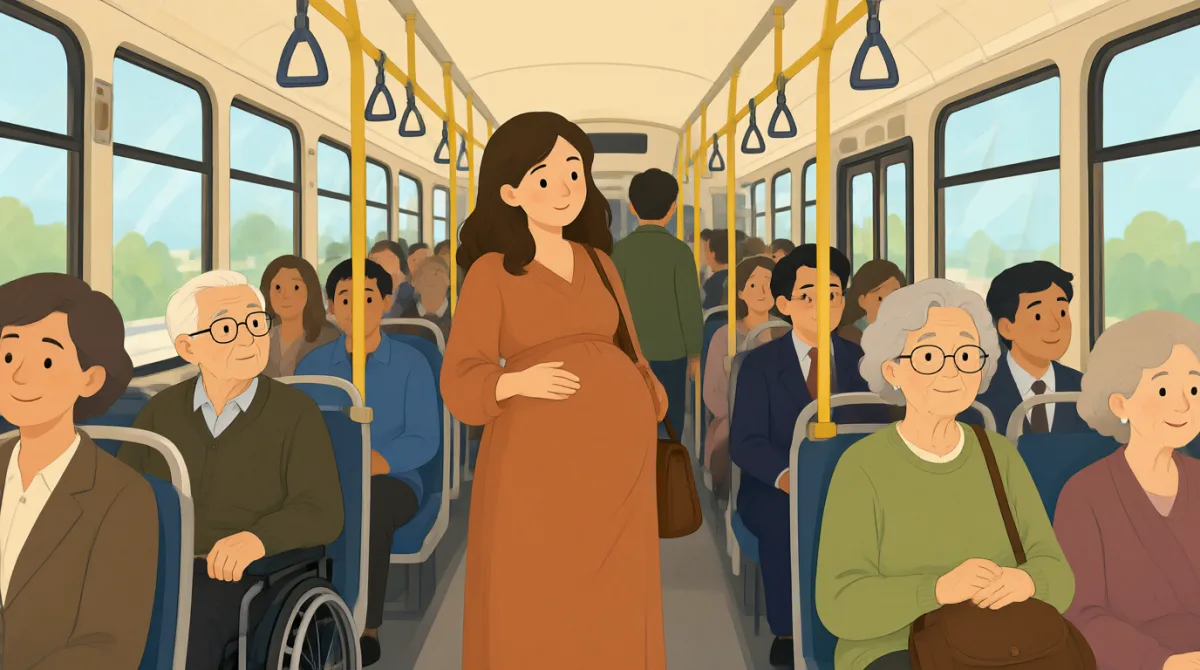

Excuse me, ma'am. Would you like to have my seat? It looks like you've been standing for a while.
ขอโทษนะคะ คุณป้าสนใจนั่งที่ของฉันไหมคะ เห็นยืนมาสักพักแล้วค่ะ

Oh, that's very kind of you, dear. Are you sure? I don't want to inconvenience you.
โอ้ ใจดีจังเลยจ้ะหนู แน่ใจนะจ๊ะ ป้าไม่อยากทำให้หนูลำบาก
Not at all! I'm getting off in a couple of stops anyway, and I prefer to stand. Please, take it.
ไม่ลำบากเลยค่ะ! อีกสองสามป้ายฉันก็ลงแล้ว แล้วฉันก็ชอบยืนมากกว่าค่ะ เชิญนั่งเลยค่ะ
Well, if you're sure. My legs aren't what they used to be, especially on a moving bus. Thank you so much!
ถ้าหนูแน่ใจนะจ๊ะ ขาป้าก็ไม่แข็งแรงเหมือนเมื่อก่อนแล้ว โดยเฉพาะตอนรถกำลังวิ่ง ขอบคุณมากนะจ๊ะ!
You're most welcome. Just be careful when you sit down, the bus might be a bit bumpy.
ยินดีมากค่ะ ตอนนั่งระวังหน่อยนะคะ รถอาจจะกระเทือนนิดหน่อยค่ะ
I will, thank you for the warning. You're a very thoughtful young lady.
จ้ะ ขอบใจที่เตือนนะ หนูเป็นสาวน้อยที่มีน้ำใจมากเลย
คำศัพท์9
- ma'amคุณป้า
A polite way to address an older woman or a female stranger, similar to 'madam' in formal situations.
คำสุภาพที่ใช้เรียกผู้หญิงสูงวัยหรือผู้หญิงที่ไม่รู้จัก คล้ายกับการเรียกผู้หญิงว่า 'คุณผู้หญิง' ในสถานการณ์ที่เป็นทางการ
- seatที่นั่ง
A place to sit, like on a bus or train; offering your seat shows politeness to those in need.
ที่สำหรับนั่ง เช่น บนรถเมล์หรือรถไฟ การสละที่นั่งให้คนที่ต้องการความช่วยเหลือถือเป็นการแสดงความสุภาพ
- kindใจดี
Nice and helpful; used to thank someone for a thoughtful action, as in 'that's very kind of you.'
มีน้ำใจและชอบช่วยเหลือ ใช้ขอบคุณใครสักคนที่ทำสิ่งที่น่าประทับใจ เช่นในประโยค 'that's very kind of you.'
- inconvenienceทำให้ลำบาก
To cause trouble or bother someone; often used when politely declining help to avoid seeming rude.
ทำให้ใครสักคนเดือดร้อนหรือไม่สะดวก มักใช้ตอนปฏิเสธความช่วยเหลืออย่างสุภาพเพื่อไม่ให้ดูเสียมารยาท
- getting offลงจากรถ
Leaving a bus, train, or similar transport; useful for explaining why you can offer your seat.
ออกจากรถเมล์ รถไฟ หรือยานพาหนะลักษณะเดียวกัน ใช้อธิบายเหตุผลที่เราสามารถสละที่นั่งให้คนอื่นได้
- stopsป้ายจอด
Places where a bus or train pauses to let people on or off; 'a couple of stops' means two or a few.
จุดที่รถเมล์หรือรถไฟจอดให้ผู้โดยสารขึ้นหรือลง 'a couple of stops' หมายถึงสองสามป้าย
- preferชอบมากกว่า
To like one thing better than another; used to reassure someone by saying you don't mind standing.
ชอบสิ่งหนึ่งมากกว่าอีกสิ่งหนึ่ง ใช้ทำให้อีกฝ่ายสบายใจ เช่น บอกว่าเราไม่ลำบากที่จะยืน
- bumpyกระเทือน
Rough and jolting, like a road with holes; describes a bus ride to warn about unsteady movement.
ขรุขระและสะเทือนโคลงเคลงเหมือนถนนที่เป็นหลุม ใช้บรรยายการเดินทางบนรถเมล์เพื่อเตือนว่ารถอาจเคลื่อนไหวไม่เรียบ
- thoughtfulมีน้ำใจ
Considerate and caring about others' feelings; a compliment for someone who offers help politely.
ใส่ใจและคำนึงถึงความรู้สึกของผู้อื่น เป็นคำชมคนที่เสนอความช่วยเหลืออย่างสุภาพ
ประโยคสำคัญ7
- 1
Excuse me, ma'am. Would you like to have my seat?
ขอโทษนะคะ คุณป้าสนใจนั่งที่ของฉันไหมคะ
A polite way to offer your seat; 'Excuse me' gets attention, and the question shows respect without assuming. Use this to start offering help on public transport.
เป็นวิธีเสนอที่นั่งอย่างสุภาพ 'Excuse me' ใช้เรียกความสนใจ ส่วนคำถามแสดงความเคารพโดยไม่คิดแทนอีกฝ่าย ใช้เริ่มเสนอความช่วยเหลือบนรถสาธารณะได้
- 2
Oh, that's very kind of you, dear.
โอ้ ใจดีจังเลยจ้ะหนู
Expresses thanks for kindness; 'dear' is a friendly term like 'sweetie' for elders. Useful for responding positively to offers of help.
ใช้กล่าวขอบคุณในความมีน้ำใจ 'dear' เป็นคำเรียกอย่างเป็นกันเอง คล้ายกับคำว่า 'คนดี' ที่ผู้สูงอายุใช้เรียกคนอายุน้อยกว่า เหมาะสำหรับตอบรับข้อเสนอความช่วยเหลืออย่างอบอุ่น
- 3
Not at all! I'm getting off in a couple of stops anyway.
ไม่ลำบากเลยค่ะ! อีกสองสามป้ายฉันก็ลงแล้ว
Reassures that it's no trouble; 'Not at all' means 'no problem at all.' The clause explains the reason, making the offer sincere. Use when insisting someone takes your seat.
ใช้ยืนยันว่าไม่ได้ลำบากอะไร 'Not at all' หมายถึง 'ไม่เป็นปัญหาเลย' ส่วนข้อความถัดมาบอกเหตุผล ทำให้ข้อเสนอฟังดูจริงใจ ใช้ตอนยืนยันให้อีกฝ่ายรับที่นั่งของเราได้
- 4
Please, take it.
เชิญนั่งเลยค่ะ
A direct but polite encouragement to accept; 'Please' adds courtesy. Simple and useful in situations where you want someone to sit without hesitation.
เป็นการเชื้อเชิญให้อีกฝ่ายรับข้อเสนออย่างตรงไปตรงมาแต่สุภาพ คำว่า 'Please' ช่วยเพิ่มความสุภาพ เป็นประโยคสั้น ๆ ที่ใช้ได้เมื่อต้องการให้อีกฝ่ายนั่งโดยไม่ต้องลังเล
- 5
My legs aren't what they used to be.
ขาป้าก็ไม่แข็งแรงเหมือนเมื่อก่อนแล้ว
Explains a physical difficulty politely; this idiom means 'not as strong as before.' Good for sharing why you need a seat without complaining.
ใช้อธิบายข้อจำกัดทางร่างกายอย่างสุภาพ สำนวนนี้หมายถึง 'ไม่แข็งแรงเหมือนเมื่อก่อน' เหมาะสำหรับบอกเหตุผลที่ต้องการที่นั่งโดยไม่ฟังเหมือนกำลังบ่น
- 6
You're most welcome.
ยินดีมากค่ะ
A formal way to say 'you're welcome'; emphasizes politeness. Use after someone thanks you to show it's no bother at all.
เป็นวิธีพูดว่า 'ไม่เป็นไร' ที่สุภาพและเป็นทางการ เน้นความสุภาพ ใช้ตอบหลังจากมีคนขอบคุณ เพื่อแสดงว่าเราไม่ได้ลำบากอะไรเลย
- 7
Just be careful when you sit down, the bus might be a bit bumpy.
ตอนนั่งระวังหน่อยนะคะ รถอาจจะกระเทือนนิดหน่อยค่ะ
Gives friendly advice; 'might be' shows possibility, and 'a bit' softens the warning. Useful for showing care in everyday conversations on transport.
เป็นการให้คำแนะนำด้วยความหวังดี 'might be' แสดงความเป็นไปได้ ส่วน 'a bit' ช่วยให้คำเตือนฟังดูนุ่มนวล ใช้แสดงความใส่ใจในการสนทนาทั่วไปบนรถสาธารณะได้