Offering a Seat to Someone in Need
給有需要的人讓座
An elderly person, a pregnant woman, or someone with a visible disability has just boarded the crowded bus/train. You want to offer your seat politely.
一位老人、孕婦或有明顯殘疾的人剛上擁擠的公交/地鐵。你想禮貌地讓出你的座位。
對話6
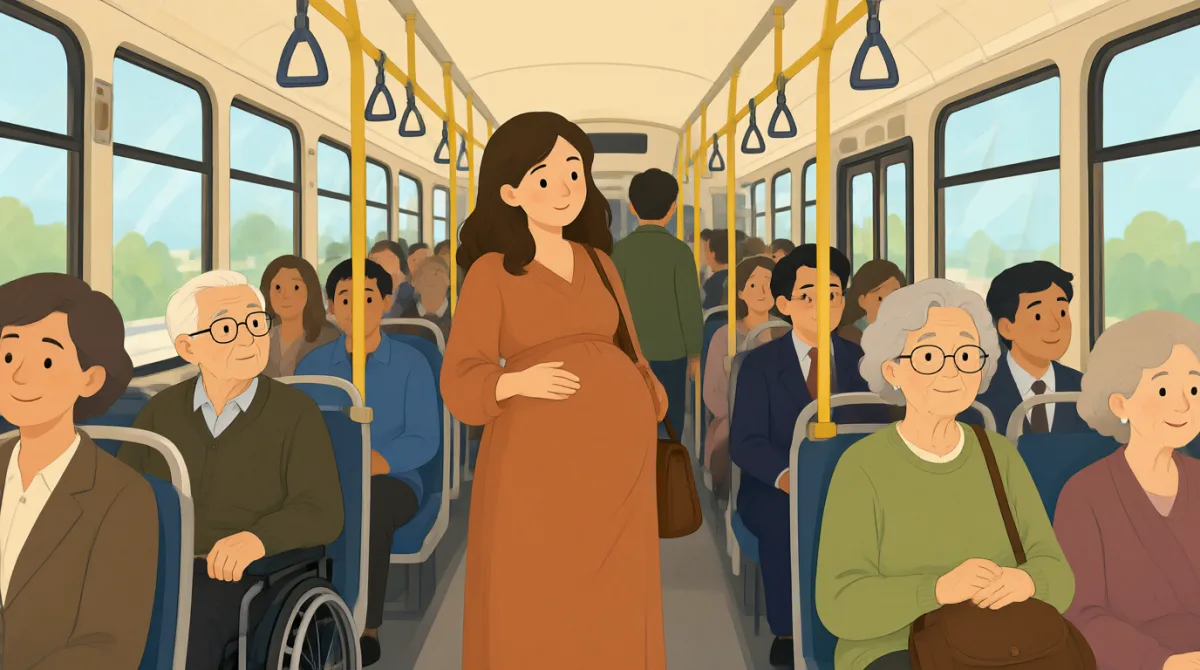

Excuse me, ma'am. Would you like to have my seat? It looks like you've been standing for a while.
打擾一下,女士。您想坐我的座位嗎?您好像站了有一會兒了。

Oh, that's very kind of you, dear. Are you sure? I don't want to inconvenience you.
哦,你真是太好了,孩子。你確定嗎?我不想麻煩你。
Not at all! I'm getting off in a couple of stops anyway, and I prefer to stand. Please, take it.
一點也不!反正我再過幾站就下車了,而且我更喜歡站著。請,坐吧。
Well, if you're sure. My legs aren't what they used to be, especially on a moving bus. Thank you so much!
嗯,如果你確定的話。我的腿不如以前了,尤其是在移動的公交車上。太謝謝你了!
You're most welcome. Just be careful when you sit down, the bus might be a bit bumpy.
不客氣。您坐下時請小心,公交車可能會有點顛簸。
I will, thank you for the warning. You're a very thoughtful young lady.
我會的,謝謝你的提醒。你真是個很體貼的年輕女士。
詞彙9
- ma'am女士
A polite way to address an older woman or a female stranger, similar to 'madam' in formal situations.
禮貌地稱呼年長女性或陌生女性的方式,類似於正式場合使用的“夫人”。
- seat座位
A place to sit, like on a bus or train; offering your seat shows politeness to those in need.
可以坐的地方,比如公交車或火車上的座位;把座位讓給有需要的人是一種禮貌的表現。
- kind體貼的;友善的
Nice and helpful; used to thank someone for a thoughtful action, as in 'that's very kind of you.'
形容人友善又樂於助人。別人做了貼心的事時,可以用這個詞表達感謝,比如“that's very kind of you.”
- inconvenience麻煩;打擾
To cause trouble or bother someone; often used when politely declining help to avoid seeming rude.
給別人添麻煩或造成困擾;禮貌地婉拒幫助時常用這個詞,以免顯得失禮。
- getting off下車
Leaving a bus, train, or similar transport; useful for explaining why you can offer your seat.
離開公交車、火車或類似的交通工具;可以用來說明為什麼你願意讓出座位。
- stops站;停靠站
Places where a bus or train pauses to let people on or off; 'a couple of stops' means two or a few.
公交車或火車停下來讓乘客上下車的地方;“a couple of stops”指兩三站左右。
- prefer更喜歡
To like one thing better than another; used to reassure someone by saying you don't mind standing.
表示更喜歡某件事物而不是另一件事。你可以用它告訴對方自己不介意站著,讓對方安心接受座位。
- bumpy顛簸的
Rough and jolting, like a road with holes; describes a bus ride to warn about unsteady movement.
形容路面不平、車子晃動得厲害;可以用來提醒別人公交車行駛時可能不太平穩。
- thoughtful體貼的;周到的
Considerate and caring about others' feelings; a compliment for someone who offers help politely.
形容一個人關心他人的感受、為他人著想;可以用來稱讚禮貌地提供幫助的人。
關鍵句7
- 1
Excuse me, ma'am. Would you like to have my seat?
打擾一下,女士。您想坐我的座位嗎?
A polite way to offer your seat; 'Excuse me' gets attention, and the question shows respect without assuming. Use this to start offering help on public transport.
這是禮貌地提出讓座的說法;“Excuse me”用來引起對方注意,而問句既表達尊重,也不會擅自替對方做決定。可以用它在公共交通上主動提供幫助。
- 2
Oh, that's very kind of you, dear.
哦,你真是太好了,親愛的。
Expresses thanks for kindness; 'dear' is a friendly term like 'sweetie' for elders. Useful for responding positively to offers of help.
這句話用來感謝對方的好意;“dear”是對長者親切友好的稱呼,類似“親愛的”。有人主動幫忙時,可以這樣回應。
- 3
Not at all! I'm getting off in a couple of stops anyway.
一點也不麻煩!反正我再過幾站就下車了。
Reassures that it's no trouble; 'Not at all' means 'no problem at all.' The clause explains the reason, making the offer sincere. Use when insisting someone takes your seat.
這句話是在告訴對方完全不用擔心給你添麻煩;“Not at all”表示“完全沒關係”。後半句說明原因,讓你的好意顯得真誠。堅持讓對方坐下時可以這樣說。
- 4
Please, take it.
請坐吧。
A direct but polite encouragement to accept; 'Please' adds courtesy. Simple and useful in situations where you want someone to sit without hesitation.
這是一種直接但禮貌地鼓勵對方接受的說法;“Please”讓語氣更客氣。想讓對方放心坐下、不必猶豫時,這句話簡單又實用。
- 5
My legs aren't what they used to be.
我的腿不如以前了。
Explains a physical difficulty politely; this idiom means 'not as strong as before.' Good for sharing why you need a seat without complaining.
這句話禮貌地說明身體上的不便;這個習慣表達的意思是“沒有以前那麼有力了”。需要解釋自己為什麼想坐下時,可以用它,而不必聽起來像是在抱怨。
- 6
You're most welcome.
別客氣。
A formal way to say 'you're welcome'; emphasizes politeness. Use after someone thanks you to show it's no bother at all.
這是比較正式、禮貌的“別客氣”的說法,能表達對方完全沒有給你添麻煩。別人向你道謝後,可以這樣回應。
- 7
Just be careful when you sit down, the bus might be a bit bumpy.
您坐下時小心一點,公交車可能會有點顛簸。
Gives friendly advice; 'might be' shows possibility, and 'a bit' softens the warning. Useful for showing care in everyday conversations on transport.
這句話是在友好地提醒對方;“might be”表示一種可能性,“a bit”則讓提醒聽起來更委婉。日常乘車聊天時,可以用它表達關心。