Welcome and Initial Greetings
ต้อนรับและทักทายกันเบื้องต้น
Friends arrive one by one at the gathering location, exchanging greetings, hugs, and initial pleasantries as they settle in.
เพื่อน ๆ ทยอยมาถึงสถานที่นัดพบ ทักทาย กอดกัน และพูดคุยทักทายกันเล็กน้อยระหว่างเข้าที่เข้าทาง
บทสนทนา10
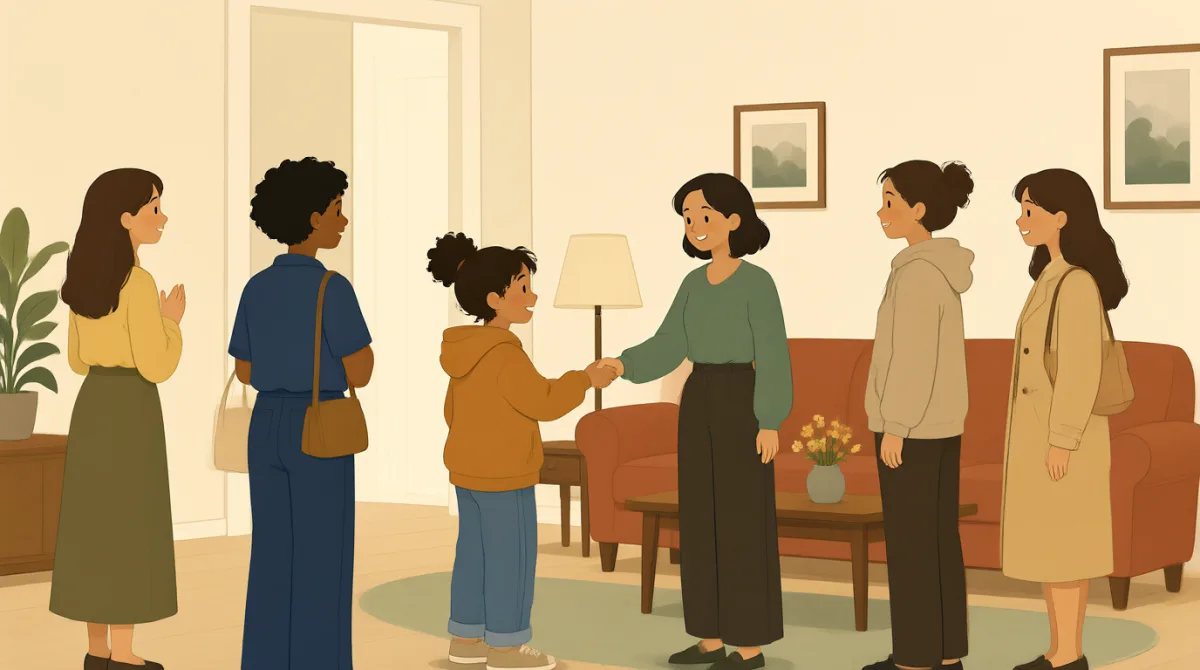

Emma! You made it! Come on in, it's great to see you!
เอ็มมา! มาได้แล้ว! เข้ามาเลย ดีใจจังที่ได้เจอเธอ!

Hey Grace! Thanks for having me. Wow, your place looks amazing!
ไง เกรซ! ขอบใจที่ชวนนะ ว้าว บ้านเธอสวยมากเลย!
Thanks! Just trying to make it cozy. Let me take your coat. Drinks are in the kitchen, help yourself.
ขอบใจนะ! แค่พยายามจัดบ้านให้น่าอยู่ เข้ามาสิ เดี๋ยวฉันช่วยถือเสื้อโค้ตให้ เครื่องดื่มอยู่ในครัว หยิบได้ตามสบายเลย
Perfect, thanks! Is Liam here yet? I told him I'd meet him here.
ดีเลย ขอบใจนะ! เลียมมาถึงหรือยัง? ฉันบอกเขาว่าจะมาเจอที่นี่น่ะ
Not yet, but he should be just around the corner. He texted a few minutes ago. Oh, here's David!
ยังเลย แต่คงอยู่แถว ๆ นี้แหละ เขาส่งข้อความมาเมื่อไม่กี่นาทีก่อน อ้อ เดวิดมาแล้ว!

Hey everyone! Sorry I'm a bit late, traffic was a nightmare.
ไงทุกคน! โทษทีที่มาสายนิดหน่อย รถติดสุด ๆ เลย
No worries at all, David, glad you made it! Come on in. You know Emma, right?
ไม่เป็นไรเลย เดวิด ดีใจที่มาได้นะ! เข้ามาสิ เธอรู้จักเอ็มมาแล้วใช่ไหม?
Of course! Hey Emma, it's been a while! How have you been?
แน่นอน! ไง เอ็มมา ไม่เจอกันตั้งนาน! เป็นไงบ้าง?
David! Great to see you! I'm good, just getting settled in. You?
เดวิด! ดีใจจังที่ได้เจอ! ฉันสบายดี กำลังตั้งหลักอยู่ เธอล่ะ?
Can't complain! Just got here myself. Grace, where do you want me to put this bottle of wine?
ก็ดี ไม่มีอะไรให้บ่น! ฉันก็เพิ่งมาถึงเหมือนกัน เกรซ อยากให้ฉันวางไวน์ขวดนี้ไว้ตรงไหน?
คำศัพท์8
- made itมาถึงจนได้
This means you successfully arrived at a place or event, often used when someone shows up after some effort. It's casual and friendly for greetings.
คำนี้หมายถึงมาถึงสถานที่หรือกิจกรรมได้สำเร็จ มักใช้เมื่อใครสักคนมาถึงหลังจากต้องพยายามหรือเดินทางมา เป็นคำพูดสบาย ๆ และเป็นกันเองที่ใช้ทักทายกันได้
- cozyอบอุ่น น่าอยู่
Describes a place that is comfortable and warm, like a welcoming home. Use it to compliment someone's home or space during social visits.
ใช้บรรยายสถานที่ที่สบายและให้ความรู้สึกอบอุ่นเหมือนบ้านที่ชวนให้รู้สึกยินดีต้อนรับ ใช้ชมบ้านหรือสถานที่ของใครสักคนเวลาไปเยี่ยมได้
- help yourselfหยิบได้ตามสบาย
An invitation to take something without asking, like food or drinks. It's polite and common at parties to make guests feel at ease.
เป็นคำเชิญให้หยิบของกินหรือเครื่องดื่มได้โดยไม่ต้องขออนุญาตก่อน เป็นคำพูดสุภาพที่ใช้กันบ่อยในงานเลี้ยง เพื่อให้แขกรู้สึกสบายใจ
- just around the cornerอยู่ใกล้ ๆ นี้เอง
Means something is very close and will happen soon, like someone arriving shortly. It's idiomatic for expressing nearness in time or place.
หมายถึงบางสิ่งอยู่ใกล้มากหรือกำลังจะเกิดขึ้นในไม่ช้า เช่น มีคนกำลังจะมาถึง เป็นสำนวนที่ใช้พูดถึงความใกล้ทั้งในแง่สถานที่และเวลา
- nightmareแย่มาก
Here, it means a very bad or frustrating experience, like heavy traffic. Use it informally to complain lightly about difficulties.
ในที่นี้หมายถึงประสบการณ์ที่แย่หรือน่าหงุดหงิดมาก เช่น รถติด ใช้พูดบ่นถึงปัญหาแบบไม่เป็นทางการและไม่จริงจังเกินไป
- no worriesไม่เป็นไร
A casual way to say 'don't worry' or 'it's okay,' often in response to an apology. It's reassuring and common in friendly conversations.
เป็นคำพูดสบาย ๆ ที่หมายถึง “ไม่ต้องกังวล” หรือ “ไม่เป็นไร” มักใช้ตอบรับคำขอโทษ เป็นคำพูดปลอบใจที่พบได้บ่อยในการสนทนาระหว่างเพื่อน
- gladดีใจ
Means happy or pleased about something. Use it to express positive feelings, like being happy to see someone at a gathering.
หมายถึงรู้สึกมีความสุขหรือพอใจกับบางสิ่ง ใช้บอกความรู้สึกดี ๆ เช่น ดีใจที่ได้เจอใครสักคนในงานเลี้ยง
- it's been a whileไม่ได้เจอกันตั้งนาน
Means a long time has passed since last seeing someone. It's a friendly way to acknowledge time apart when reuniting.
หมายถึงเวลาผ่านไปนานแล้วตั้งแต่ครั้งสุดท้ายที่ได้เจอกัน เป็นคำพูดทักทายอย่างเป็นกันเองเมื่อกลับมาเจอกันอีกครั้ง
ประโยคสำคัญ8
- 1
You made it! Come on in, it's great to see you!
มาได้แล้ว! เข้ามาเลย ดีใจจังที่ได้เจอเธอ!
This is a warm welcome for someone arriving. 'Made it' shows relief they arrived, 'come on in' invites them inside casually, and 'it's great to see you' expresses happiness. Use at parties to greet friends enthusiastically.
ประโยคนี้ใช้ต้อนรับคนที่เพิ่งมาถึงอย่างอบอุ่น 'Made it' แสดงความโล่งใจที่อีกฝ่ายมาถึงแล้ว ส่วน 'come on in' เป็นการชวนให้เข้ามาข้างในอย่างเป็นกันเอง และ 'it's great to see you' แสดงความดีใจที่ได้เจอกัน ใช้ทักทายเพื่อนอย่างกระตือรือร้นในงานเลี้ยงได้
- 2
Thanks for having me.
ขอบใจที่ชวนนะ
A polite thank you to the host for inviting you. It's a common expression of gratitude when arriving at someone's home. Use it right after entering to show appreciation.
เป็นคำขอบคุณเจ้าบ้านอย่างสุภาพที่ชวนเราไปงานหรือที่บ้านของเขา เป็นสำนวนที่ใช้กันทั่วไปเมื่อไปถึงบ้านใครสักคน พูดหลังจากเข้ามาแล้วเพื่อแสดงความขอบคุณได้เลย
- 3
Let me take your coat. Drinks are in the kitchen, help yourself.
เดี๋ยวฉันช่วยถือเสื้อโค้ตให้ เครื่องดื่มอยู่ในครัว หยิบได้ตามสบายเลย
This offers help and directions politely. 'Let me take' is an offer of assistance, and 'help yourself' encourages self-service. Useful for hosts to make guests comfortable; note the imperative form for suggestions.
ประโยคนี้เป็นการเสนอตัวช่วยและบอกทางอย่างสุภาพ 'Let me take' ใช้เสนอตัวช่วย ส่วน 'help yourself' เป็นการชวนให้บริการตัวเอง เหมาะสำหรับเจ้าบ้านที่อยากให้แขกรู้สึกสบายใจ สังเกตว่าคำสั่งรูป imperative ใช้เป็นคำแนะนำหรือคำเชิญได้
- 4
Not yet, but he should be just around the corner.
ยังเลย แต่เขาคงอยู่ใกล้ ๆ นี้เอง
Responds to a question about someone's arrival, meaning soon. 'Just around the corner' is an idiom for imminent. Use in conversations to update on expected arrivals without exact times.
ใช้ตอบคำถามว่ามีใครมาถึงหรือยัง โดยสื่อว่าอีกฝ่ายน่าจะมาในไม่ช้า 'Just around the corner' เป็นสำนวนที่หมายถึงกำลังจะเกิดขึ้นในเร็ว ๆ นี้ ใช้บอกความคืบหน้าเรื่องคนที่กำลังจะมาถึงได้โดยไม่ต้องระบุเวลาแน่นอน
- 5
Sorry I'm a bit late, traffic was a nightmare.
โทษทีที่มาสายนิดหน่อย รถติดแย่มากเลย
An apology for being late with a reason. 'A bit late' softens the lateness, 'nightmare' exaggerates the problem lightly. Common in social settings; use to explain delays casually.
เป็นการขอโทษที่มาสายพร้อมบอกเหตุผล 'A bit late' ช่วยทำให้ฟังดูเหมือนมาสายไม่มาก ส่วน 'nightmare' ใช้พูดเกินจริงเล็กน้อยเพื่อเน้นว่าปัญหาหนักหนา เป็นสำนวนที่ใช้กันทั่วไปในสถานการณ์สบาย ๆ เพื่ออธิบายว่าทำไมถึงล่าช้า
- 6
No worries at all, glad you made it!
ไม่เป็นไรเลย ดีใจที่เธอมาได้นะ!
Dismisses an apology reassuringly. 'No worries at all' means it's completely fine, 'glad you made it' shows pleasure. Use to respond to lateness or issues in friendly chats; simple present tense for general feelings.
ใช้ตอบคำขอโทษเพื่อให้อีกฝ่ายสบายใจ 'No worries at all' หมายถึงไม่เป็นไรเลย ส่วน 'glad you made it' แสดงความดีใจที่อีกฝ่ายมาถึง ใช้ตอบเมื่อเพื่อนมาสายหรือเจอปัญหาได้ และใช้ present simple พูดถึงความรู้สึกในตอนนี้
- 7
Hey Emma, it's been a while! How have you been?
ไง เอ็มมา ไม่เจอกันตั้งนาน! เป็นไงบ้าง?
A reunion greeting. 'It's been a while' notes time passed, followed by a question about well-being. Use when seeing someone after a long time; present perfect for past to now connection.
เป็นคำทักทายเมื่อกลับมาเจอกันอีกครั้ง 'It's been a while' กล่าวถึงเวลาที่ผ่านไป แล้วตามด้วยคำถามไถ่สารทุกข์สุขดิบ ใช้เมื่อเจอใครหลังจากไม่ได้เจอกันนาน สังเกตการใช้ present perfect เพื่อเชื่อมช่วงเวลาตั้งแต่อดีตจนถึงปัจจุบัน
- 8
Can't complain! Just got here myself.
ก็ดี ไม่มีอะไรให้บ่น! ฉันก็เพิ่งมาถึงเหมือนกัน
A positive response to 'How have you been?' meaning things are good. 'Can't complain' is idiomatic for no problems, 'just got here myself' shares similarity. Use for light, upbeat replies in groups.
เป็นคำตอบเชิงบวกต่อคำถาม 'How have you been?' หมายถึงทุกอย่างก็ราบรื่นดี 'Can't complain' เป็นสำนวนที่หมายถึงไม่มีปัญหาอะไร ส่วน 'just got here myself' ใช้บอกว่าเราเองก็เพิ่งมาถึงเหมือนกัน ใช้ตอบแบบสบาย ๆ สดใสเมื่อคุยกับเพื่อนเป็นกลุ่มได้