Welcome and Initial Greetings
स्वागत और शुरुआती अभिवादन
Friends arrive one by one at the gathering location, exchanging greetings, hugs, and initial pleasantries as they settle in.
दोस्त एक-एक करके मिलने की जगह पर पहुँचते हैं। वहाँ वे अभिवादन करते हैं, गले मिलते हैं और सहज होते हुए शुरुआती बातचीत करते हैं।
संवाद10
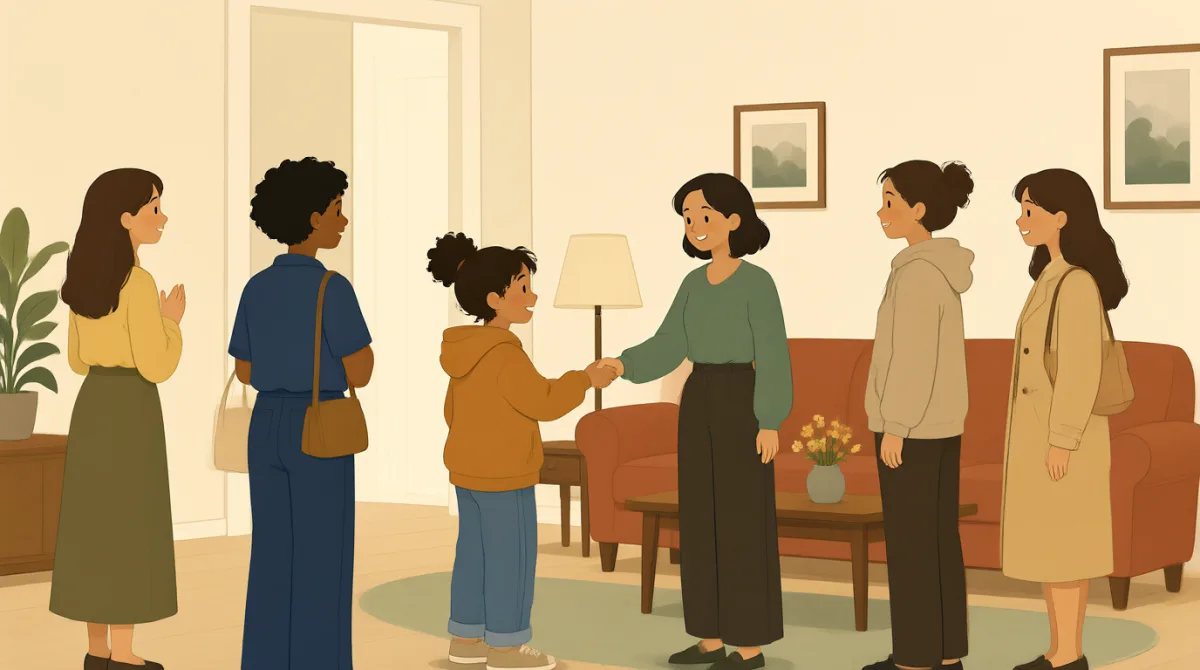

Emma! You made it! Come on in, it's great to see you!
एमा! तुम आ गई! अंदर आओ, तुम्हें देखकर बहुत अच्छा लगा!

Hey Grace! Thanks for having me. Wow, your place looks amazing!
अरे, ग्रेस! बुलाने के लिए शुक्रिया। वाह, तुम्हारा घर कितना शानदार लग रहा है!
Thanks! Just trying to make it cozy. Let me take your coat. Drinks are in the kitchen, help yourself.
शुक्रिया! बस घर को आरामदायक बनाने की कोशिश कर रही हूँ। लाओ, तुम्हारा कोट ले लूँ। ड्रिंक्स रसोई में हैं, ले लेना।
Perfect, thanks! Is Liam here yet? I told him I'd meet him here.
बढ़िया, शुक्रिया! क्या लियाम आ गया? मैंने उससे कहा था कि यहीं मिलूँगी।
Not yet, but he should be just around the corner. He texted a few minutes ago. Oh, here's David!
अभी नहीं, लेकिन वह बस पहुँचने ही वाला होगा। उसने कुछ मिनट पहले मैसेज किया था। अरे, डेविड आ गया!

Hey everyone! Sorry I'm a bit late, traffic was a nightmare.
अरे, सब लोग! माफ़ करना, मुझे थोड़ी देर हो गई। ट्रैफ़िक बहुत भयानक था।
No worries at all, David, glad you made it! Come on in. You know Emma, right?
कोई बात नहीं, डेविड, अच्छा हुआ तुम आ गए! अंदर आओ। तुम एमा को जानते हो, है न?
Of course! Hey Emma, it's been a while! How have you been?
बिल्कुल! अरे, एमा, कितने दिनों बाद मिले! कैसी हो?
David! Great to see you! I'm good, just getting settled in. You?
डेविड! तुम्हें देखकर बहुत अच्छा लगा! मैं ठीक हूँ, बस अभी-अभी आई हूँ। तुम बताओ?
Can't complain! Just got here myself. Grace, where do you want me to put this bottle of wine?
शिकायत का कोई कारण नहीं! मैं भी अभी-अभी पहुँचा हूँ। ग्रेस, यह वाइन की बोतल कहाँ रखूँ?
शब्दावली8
- made itसकुशल पहुँच जाना
This means you successfully arrived at a place or event, often used when someone shows up after some effort. It's casual and friendly for greetings.
“made it” का मतलब है किसी जगह या कार्यक्रम में सफलतापूर्वक पहुँच जाना। अक्सर इसका इस्तेमाल तब करते हैं जब कोई थोड़ी मशक्कत के बाद पहुँचता है। अभिवादन में यह दोस्ताना और अनौपचारिक लगता है।
- cozyआरामदायक और सुकूनभरा
Describes a place that is comfortable and warm, like a welcoming home. Use it to compliment someone's home or space during social visits.
“cozy” ऐसी जगह के लिए कहते हैं जो आरामदायक और गर्मजोशी भरी हो, जैसे किसी का स्वागत करने वाला घर। किसी के घर या जगह की तारीफ़ करते समय इसका इस्तेमाल कर सकते हैं।
- help yourselfखुद ले लो
An invitation to take something without asking, like food or drinks. It's polite and common at parties to make guests feel at ease.
“help yourself” किसी चीज़ को बिना पूछे लेने का न्योता है, जैसे खाने या पीने की चीज़ें। मेहमानों को सहज महसूस कराने के लिए पार्टियों में यह आम और शिष्ट तरीका है।
- just around the cornerबस पहुँचने ही वाला
Means something is very close and will happen soon, like someone arriving shortly. It's idiomatic for expressing nearness in time or place.
“just around the corner” का मतलब है कि कोई चीज़ बहुत पास है या जल्द होने वाली है, जैसे किसी का थोड़ी देर में पहुँच जाना। समय या जगह की नज़दीकी बताने का यह मुहावरेदार तरीका है।
- nightmareबहुत बुरा अनुभव
Here, it means a very bad or frustrating experience, like heavy traffic. Use it informally to complain lightly about difficulties.
यहाँ “nightmare” का मतलब है बहुत बुरा या परेशान करने वाला अनुभव, जैसे भारी ट्रैफ़िक। मुश्किलों के बारे में हल्के-फुल्के, अनौपचारिक अंदाज़ में शिकायत करने के लिए इसका इस्तेमाल होता है।
- no worriesकोई बात नहीं
A casual way to say 'don't worry' or 'it's okay,' often in response to an apology. It's reassuring and common in friendly conversations.
“no worries” कहने का अनौपचारिक तरीका है “चिंता मत करो” या “कोई बात नहीं।” माफ़ी के जवाब में अक्सर इसका इस्तेमाल होता है। यह दोस्ताना बातचीत में किसी को आश्वस्त करने का आम तरीका है।
- gladखुश
Means happy or pleased about something. Use it to express positive feelings, like being happy to see someone at a gathering.
“glad” का मतलब है किसी बात से खुश या प्रसन्न होना। किसी समारोह में किसी को देखकर खुशी जताने के लिए इसका इस्तेमाल कर सकते हैं।
- it's been a whileकाफ़ी समय हो गया
Means a long time has passed since last seeing someone. It's a friendly way to acknowledge time apart when reuniting.
“it's been a while” का मतलब है कि किसी से पिछली बार मिले हुए काफ़ी समय बीत गया है। दोबारा मिलने पर बीते समय का ज़िक्र करने का यह दोस्ताना तरीका है।
मुख्य वाक्य8
- 1
You made it! Come on in, it's great to see you!
तुम आ गई! अंदर आओ, तुम्हें देखकर बहुत अच्छा लगा!
This is a warm welcome for someone arriving. 'Made it' shows relief they arrived, 'come on in' invites them inside casually, and 'it's great to see you' expresses happiness. Use at parties to greet friends enthusiastically.
किसी के पहुँचने पर उसका गर्मजोशी से स्वागत करने के लिए यह वाक्य कहते हैं। “made it” से खुशी या राहत जतती है कि वह पहुँच गया, “come on in” उसे अनौपचारिक ढंग से अंदर बुलाता है और “it's great to see you” उसे देखकर खुशी जताता है। दोस्तों का उत्साह से स्वागत करते समय इसका इस्तेमाल करें।
- 2
Thanks for having me.
मुझे बुलाने के लिए शुक्रिया।
A polite thank you to the host for inviting you. It's a common expression of gratitude when arriving at someone's home. Use it right after entering to show appreciation.
मेज़बान को बुलाने के लिए धन्यवाद देने का यह शिष्ट तरीका है। किसी के घर पहुँचने पर आभार जताने के लिए यह आम तौर पर कहा जाता है। अंदर आने के तुरंत बाद इसका इस्तेमाल करके अपनी कृतज्ञता दिखाएँ।
- 3
Let me take your coat. Drinks are in the kitchen, help yourself.
लाओ, तुम्हारा कोट ले लूँ। ड्रिंक्स रसोई में हैं, खुद ले लेना।
This offers help and directions politely. 'Let me take' is an offer of assistance, and 'help yourself' encourages self-service. Useful for hosts to make guests comfortable; note the imperative form for suggestions.
इस वाक्य में मदद की पेशकश के साथ रास्ता भी बताया गया है। “Let me take” मदद की पेशकश है, जबकि “help yourself” खुद लेने के लिए कहता है। मेहमानों को सहज महसूस कराने के लिए मेज़बान इसका इस्तेमाल कर सकते हैं। ध्यान दें कि सुझाव देने के लिए यहाँ आज्ञार्थक रूप है।
- 4
Not yet, but he should be just around the corner.
अभी नहीं, लेकिन वह बस पहुँचने ही वाला होगा।
Responds to a question about someone's arrival, meaning soon. 'Just around the corner' is an idiom for imminent. Use in conversations to update on expected arrivals without exact times.
यह किसी के आने के बारे में पूछे गए सवाल का जवाब है और बताता है कि वह जल्द आएगा। “just around the corner” का मुहावरेदार अर्थ है कि कुछ बस होने ही वाला है। आने वाले मेहमानों के बारे में बिना पक्का समय बताए जानकारी देने के लिए इसका इस्तेमाल करें।
- 5
Sorry I'm a bit late, traffic was a nightmare.
माफ़ करना, मुझे थोड़ी देर हो गई। ट्रैफ़िक बहुत भयानक था।
An apology for being late with a reason. 'A bit late' softens the lateness, 'nightmare' exaggerates the problem lightly. Common in social settings; use to explain delays casually.
देर होने की वजह बताते हुए माफ़ी माँगने का यह तरीका है। “a bit late” देर को थोड़ा कम करके बताता है, जबकि “nightmare” परेशानी को हल्के-फुल्के अंदाज़ में बढ़ा-चढ़ाकर कहता है। दोस्तों से मिलते समय देरी की वजह बताने के लिए इसका इस्तेमाल करें।
- 6
No worries at all, glad you made it!
कोई बात नहीं, अच्छा हुआ तुम आ गए!
Dismisses an apology reassuringly. 'No worries at all' means it's completely fine, 'glad you made it' shows pleasure. Use to respond to lateness or issues in friendly chats; simple present tense for general feelings.
यह जवाब माफ़ी को प्यार से यह कहकर स्वीकार करता है कि चिंता की कोई बात नहीं। “No worries at all” का मतलब है कि सब बिल्कुल ठीक है, और “glad you made it” पहुँचने की खुशी जताता है। दोस्तों से बातचीत में किसी की देरी या परेशानी पर जवाब देने के लिए इसका इस्तेमाल करें। अपनी आम भावना बताने के लिए यहाँ वर्तमान काल का प्रयोग हुआ है।
- 7
Hey Emma, it's been a while! How have you been?
अरे एमा, कितने दिनों बाद मिले! कैसी हो?
A reunion greeting. 'It's been a while' notes time passed, followed by a question about well-being. Use when seeing someone after a long time; present perfect for past to now connection.
यह दोबारा मिलने पर किया जाने वाला अभिवादन है। “It's been a while” बीते हुए समय का ज़िक्र करता है, जिसके बाद हालचाल पूछा जाता है। लंबे समय बाद किसी से मिलने पर इसका इस्तेमाल करें। बीते समय को वर्तमान से जोड़ने के लिए यहाँ present perfect tense का प्रयोग हुआ है।
- 8
Can't complain! Just got here myself.
शिकायत का कोई कारण नहीं! मैं भी अभी-अभी पहुँचा हूँ।
A positive response to 'How have you been?' meaning things are good. 'Can't complain' is idiomatic for no problems, 'just got here myself' shares similarity. Use for light, upbeat replies in groups.
“How have you been?” के जवाब में यह कहने का सकारात्मक तरीका है कि सब ठीक है। “Can't complain” एक मुहावरा है जिसका मतलब है कि कोई खास परेशानी नहीं है। “just got here myself” कहकर सामने वाले को बताया जाता है कि आप भी अभी पहुँचे हैं। समूह में हल्के-फुल्के और खुशमिज़ाज जवाब के लिए इसका इस्तेमाल करें।