Giving Directions to a Tourist
บอกทางให้นักท่องเที่ยว
A local is approached by a tourist who asks for directions to a popular attraction or a specific type of establishment (e.g., a good restaurant, a museum).
คนท้องถิ่นคนหนึ่งถูกนักท่องเที่ยวเข้ามาถามทางไปสถานที่ท่องเที่ยวยอดนิยมหรือสถานที่ประเภทใดประเภทหนึ่ง เช่น ร้านอาหารดี ๆ หรือพิพิธภัณฑ์
บทสนทนา10
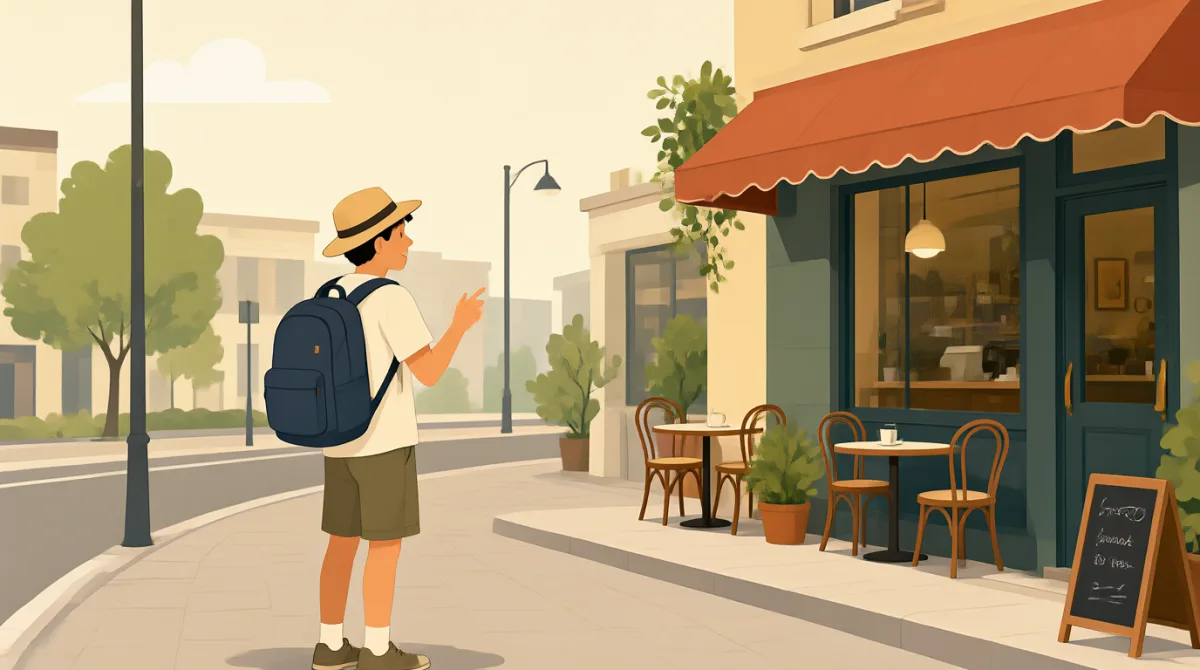

Excuse me, I'm a bit lost. Could you tell me how to get to the Art Museum from here?
ขอโทษนะคะ ฉันหลงทางนิดหน่อย ช่วยบอกได้ไหมคะว่าจากตรงนี้ไปพิพิธภัณฑ์ศิลปะยังไง

Certainly! The Art Museum is actually not too far from here. Do you prefer to walk or take public transport?
ได้เลยครับ! ที่จริงพิพิธภัณฑ์ศิลปะอยู่ไม่ไกลจากตรงนี้เท่าไร คุณอยากเดินไปหรือขึ้นรถสาธารณะครับ
I'd prefer to walk, if it's not too long. I enjoy seeing the city on foot.
ฉันอยากเดินไปค่ะ ถ้าไม่ไกลเกินไป ฉันชอบเดินชมเมืองค่ะ
Great! So, what you want to do is go straight down this street for about two blocks. You'll pass a large park on your left.
ดีเลยครับ ถ้าอย่างนั้นก็เดินตรงไปตามถนนเส้นนี้ประมาณสองช่วงตึกนะครับ คุณจะผ่านสวนสาธารณะขนาดใหญ่ทางซ้ายมือ
Okay, straight for two blocks, past a park on the left. Got it.
โอเค เดินตรงไปสองช่วงตึก ผ่านสวนทางซ้ายมือ เข้าใจแล้วค่ะ
Then, once you reach the end of the park, you'll see a big intersection with traffic lights. Turn left there onto Main Street.
จากนั้นพอเดินถึงสุดสวน คุณจะเห็นสี่แยกใหญ่ที่มีสัญญาณไฟจราจร ให้เลี้ยวซ้ายตรงนั้นเข้าถนนเมนครับ
Turn left onto Main Street at the intersection. Got it.
เลี้ยวซ้ายเข้าถนนเมนตรงสี่แยก เข้าใจแล้วค่ะ
Exactly. Walk down Main Street for about one block, and the Art Museum will be on your right side. It's a large, modern building.
ถูกต้องครับ เดินไปตามถนนเมนประมาณหนึ่งช่วงตึก แล้วพิพิธภัณฑ์ศิลปะจะอยู่ทางขวามือ เป็นอาคารสมัยใหม่ขนาดใหญ่ครับ
Perfect! That sounds clear enough. Thank you so much for your help!
เยี่ยมเลยค่ะ ฟังดูเข้าใจง่ายมาก ขอบคุณที่ช่วยนะคะ
You're very welcome! Enjoy your visit to the museum!
ยินดีมากครับ ขอให้เที่ยวชมพิพิธภัณฑ์ให้สนุกนะครับ
คำศัพท์8
- lostหลงทาง
Feeling confused about your location or direction; often used when you can't find your way in a new place.
รู้สึกสับสนว่าตัวเองอยู่ที่ไหนหรือควรไปทางไหน มักใช้เมื่อหาทางในสถานที่ใหม่ไม่เจอ
- excuse meขอโทษนะ
A polite phrase to get someone's attention before asking a question, like starting a conversation with a stranger.
วลีสุภาพที่ใช้เรียกความสนใจของใครสักคนก่อนถามคำถาม เช่น ตอนเริ่มคุยกับคนแปลกหน้า
- certainlyได้เลย
Means 'yes, of course' or 'no problem'; used to politely agree to help or answer.
หมายถึง 'ได้เลย' หรือ 'ไม่มีปัญหา' ใช้ตอบรับอย่างสุภาพเมื่อตกลงช่วยหรือตอบคำถาม
- preferชอบ...มากกว่า
To like one option more than another; helpful for expressing choices, like in travel plans.
ชอบตัวเลือกหนึ่งมากกว่าอีกตัวเลือกหนึ่ง ใช้บอกความชอบหรือทางเลือก เช่น แผนการเดินทาง
- straightตรงไป
Going directly ahead without turning; a common direction word in navigation.
มุ่งหน้าไปข้างหน้าโดยไม่เลี้ยว เป็นคำบอกทางที่ใช้กันทั่วไป
- blocksช่วงตึก
In cities, a short distance between two streets; used to measure walking routes, like 'two blocks away'.
ในเมือง หมายถึงระยะสั้น ๆ ระหว่างถนนสองสาย ใช้บอกระยะทางเดิน เช่น อยู่ห่างออกไปสองช่วงตึก
- intersectionสี่แยก
A place where two or more roads cross; important for giving directions at busy city spots.
จุดที่ถนนสองสายขึ้นไปตัดกัน เป็นจุดสำคัญที่ใช้บอกทางในย่านเมืองที่มีรถพลุกพล่าน
- turn leftเลี้ยวซ้าย
To change direction by going to the left; a basic command in giving or following directions.
เปลี่ยนทิศทางโดยไปทางซ้าย เป็นคำสั่งพื้นฐานที่ใช้บอกทางหรือทำตามคำบอกทาง
ประโยคสำคัญ8
- 1
Excuse me, I'm a bit lost. Could you tell me how to get to the Art Museum from here?
ขอโทษนะคะ ฉันหลงทางนิดหน่อย ช่วยบอกได้ไหมคะว่าจากตรงนี้ไปพิพิธภัณฑ์ศิลปะยังไง
This is a polite way to ask for directions; 'I'm a bit lost' shows you're confused, and 'how to get to' is a common phrase for routes. Use it when approaching strangers for help.
นี่เป็นวิธีสุภาพในการถามทาง วลี 'I'm a bit lost' (ฉันหลงทางนิดหน่อย) แสดงว่าคุณกำลังสับสน ส่วน 'how to get to' (ไป...ยังไง) เป็นวลีที่ใช้ถามเส้นทางบ่อย ๆ ใช้ประโยคนี้เมื่อขอความช่วยเหลือจากคนแปลกหน้า
- 2
Certainly! The Art Museum is actually not too far from here.
ได้เลยครับ! ที่จริงพิพิธภัณฑ์ศิลปะอยู่ไม่ไกลจากตรงนี้เท่าไร
A friendly response to offer help; 'certainly' means 'yes', and 'not too far' reassures the person. Useful for locals giving directions to make the other feel comfortable.
เป็นคำตอบที่เป็นมิตรเพื่อเสนอตัวช่วย 'certainly' หมายถึง 'ได้เลย' ส่วน 'not too far' (ไม่ไกลเท่าไร) ช่วยให้อีกฝ่ายสบายใจ คนท้องถิ่นใช้ตอบแบบนี้เวลาบอกทางได้
- 3
I'd prefer to walk, if it's not too long.
ฉันอยากเดินไปค่ะ ถ้าไม่ไกลเกินไป
Expresses a preference with 'I'd prefer to' (I would prefer to), and a condition with 'if'; great for discussing travel options like walking vs. transport.
ประโยคนี้บอกความชอบด้วย 'I'd prefer to' (ฉันอยาก...มากกว่า) ซึ่งย่อมาจาก I would prefer to และบอกเงื่อนไขด้วย 'if' ใช้พูดคุยเรื่องทางเลือกในการเดินทาง เช่น เดินหรือใช้รถสาธารณะ
- 4
Go straight down this street for about two blocks.
เดินตรงไปตามถนนเส้นนี้ประมาณสองช่วงตึก
A clear direction command; 'go straight' means no turns, and 'for about two blocks' gives distance. Use this pattern to describe simple paths in cities.
เป็นคำบอกทางที่ชัดเจน 'go straight' หมายถึงเดินตรงไปโดยไม่เลี้ยว ส่วน 'for about two blocks' บอกระยะทาง ใช้รูปแบบนี้อธิบายเส้นทางง่าย ๆ ในเมืองได้
- 5
You'll pass a large park on your left.
คุณจะผ่านสวนสาธารณะขนาดใหญ่ทางซ้ายมือ
Uses future 'you'll pass' to describe what happens next; 'on your left' specifies side. Helpful for landmarks to help someone recognize the route.
ใช้ 'you'll pass' ในรูปอนาคตเพื่อบอกว่าจะเจออะไรต่อไป ส่วน 'on your left' ระบุด้านที่อยู่ของสถานที่ การบอกจุดสังเกตแบบนี้ช่วยให้อีกฝ่ายรู้ว่ามาถูกทาง
- 6
Turn left there onto Main Street.
เลี้ยวซ้ายตรงนั้นเข้าถนนเมน
Direct instruction with 'turn left' and 'onto' for entering a street; 'there' points to the spot. Essential for step-by-step directions at turns.
เป็นคำสั่งตรง ๆ โดยใช้ 'turn left' (เลี้ยวซ้าย) และ 'onto' เมื่อต้องการบอกให้เข้าสู่ถนน ส่วน 'there' (ตรงนั้น) ชี้ตำแหน่งที่ให้เลี้ยว วลีเหล่านี้จำเป็นต่อการบอกทางทีละขั้น
- 7
The Art Museum will be on your right side.
พิพิธภัณฑ์ศิลปะจะอยู่ทางขวามือของคุณ
Describes the destination location with 'will be' for future arrival; 'on your right side' clarifies position. Use to end directions by identifying the place.
ใช้ 'will be' เพื่อบอกตำแหน่งที่จะพบเมื่อไปถึง และ 'on your right side' (ทางขวามือของคุณ) เพื่อระบุตำแหน่ง ใช้ปิดท้ายคำบอกทางด้วยการบอกว่าสถานที่นั้นอยู่ตรงไหนได้
- 8
Thank you so much for your help!
ขอบคุณมากที่ช่วยนะคะ!
A polite way to show gratitude; 'so much' emphasizes thanks. Always use after receiving help to be courteous in English conversations.
เป็นวิธีสุภาพในการแสดงความขอบคุณ 'so much' ช่วยเน้นย้ำความขอบคุณ อย่าลืมใช้หลังจากได้รับความช่วยเหลือ เพื่อแสดงมารยาทที่ดีในการสนทนาภาษาอังกฤษ