Giving Directions to a Tourist
為遊客指路
A local is approached by a tourist who asks for directions to a popular attraction or a specific type of establishment (e.g., a good restaurant, a museum).
一位當地人被一位遊客搭訕,遊客詢問前往熱門景點或特定型別場所(例如,一家好餐廳,一個博物館)的路線。
對話10
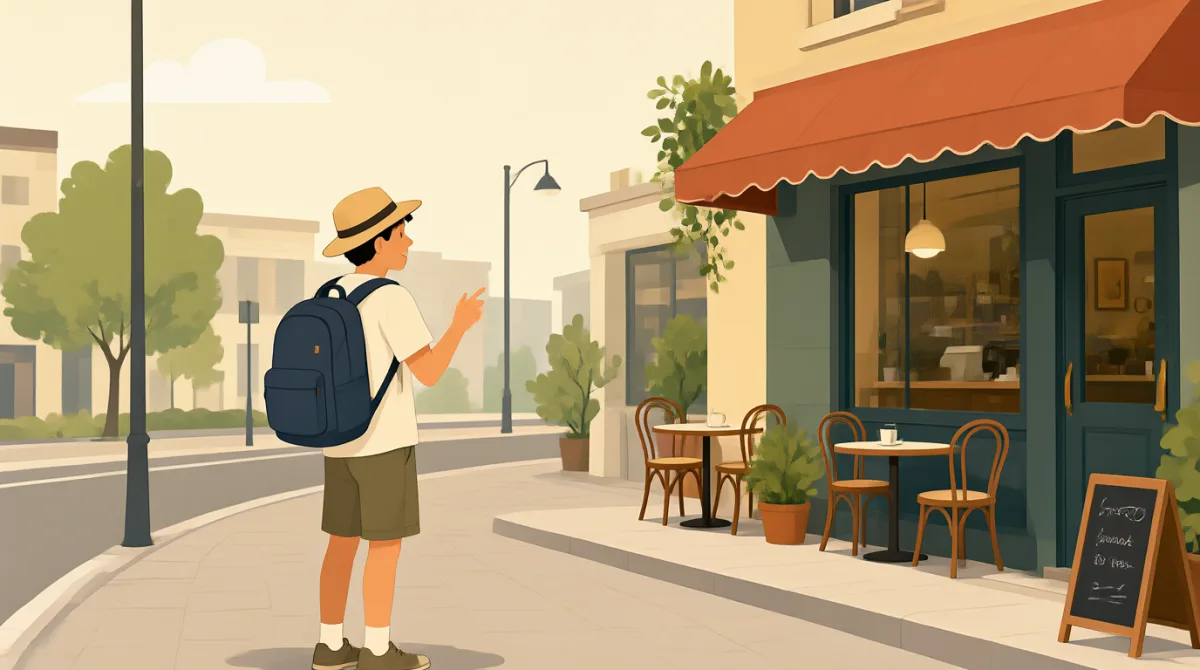

Excuse me, I'm a bit lost. Could you tell me how to get to the Art Museum from here?
打擾一下,我有點迷路了。您能告訴我從這裡怎麼去藝術博物館嗎?

Certainly! The Art Museum is actually not too far from here. Do you prefer to walk or take public transport?
當然可以!藝術博物館離這兒其實不遠。您是想步行還是坐公共交通工具?
I'd prefer to walk, if it's not too long. I enjoy seeing the city on foot.
如果不是很遠的話,我更喜歡步行。我喜歡步行看這座城市。
Great! So, what you want to do is go straight down this street for about two blocks. You'll pass a large park on your left.
好的!您需要沿著這條街直走大約兩個街區。您的左手邊會經過一個大公園。
Okay, straight for two blocks, past a park on the left. Got it.
好的,直走兩個街區,經過左邊的公園。明白了。
Then, once you reach the end of the park, you'll see a big intersection with traffic lights. Turn left there onto Main Street.
然後,當您走到公園盡頭時,會看到一個帶紅綠燈的大十字路口。在那裡左轉,進入主街。
Turn left onto Main Street at the intersection. Got it.
在十字路口左轉到主街。明白了。
Exactly. Walk down Main Street for about one block, and the Art Museum will be on your right side. It's a large, modern building.
沒錯。沿著主街走大約一個街區,藝術博物館就會在您的右側。那是一座大型的現代建築。
Perfect! That sounds clear enough. Thank you so much for your help!
太好了!聽起來很清楚。非常感謝您的幫助!
You're very welcome! Enjoy your visit to the museum!
不客氣!祝您博物館之行愉快!
詞彙8
- lost迷路的
Feeling confused about your location or direction; often used when you can't find your way in a new place.
表示對自己所在的位置或方向感到困惑;當你在陌生的地方找不到路時經常使用。
- excuse me打擾一下
A polite phrase to get someone's attention before asking a question, like starting a conversation with a stranger.
在提出問題前用來禮貌地引起別人注意的短語,比如和陌生人開始交談時使用。
- certainly當然可以
Means 'yes, of course' or 'no problem'; used to politely agree to help or answer.
表示“是的,當然”或“沒問題”;用於禮貌地同意提供幫助或回答問題。
- prefer更喜歡
To like one option more than another; helpful for expressing choices, like in travel plans.
表示比起另一個選項更喜歡某個選項;在討論旅行計劃等選擇時很有用。
- straight直走
Going directly ahead without turning; a common direction word in navigation.
表示不轉彎,直接向前走;這是描述路線時常用的方向詞。
- blocks街區
In cities, a short distance between two streets; used to measure walking routes, like 'two blocks away'.
在城市裡,指兩條街之間的一小段距離;可以用來表示步行路線的距離,例如“two blocks away”。
- intersection十字路口
A place where two or more roads cross; important for giving directions at busy city spots.
指兩條或多條道路交叉的地方;在城市繁忙地段指路時很重要。
- turn left左轉
To change direction by going to the left; a basic command in giving or following directions.
表示改變方向,向左走;這是指路或跟隨路線時的基本指令。
關鍵句8
- 1
Excuse me, I'm a bit lost. Could you tell me how to get to the Art Museum from here?
打擾一下,我有點迷路了。您能告訴我從這裡怎麼去藝術博物館嗎?
This is a polite way to ask for directions; 'I'm a bit lost' shows you're confused, and 'how to get to' is a common phrase for routes. Use it when approaching strangers for help.
這是禮貌地詢問路線的說法;“I'm a bit lost”表示你有些困惑,而“how to get to”是描述路線的常用短語。向陌生人求助時可以使用這句話。
- 2
Certainly! The Art Museum is actually not too far from here.
當然可以!藝術博物館離這兒其實不遠。
A friendly response to offer help; 'certainly' means 'yes', and 'not too far' reassures the person. Useful for locals giving directions to make the other feel comfortable.
這是主動表示願意幫忙的友好回應;“certainly”表示“是的”,而“not too far”可以讓對方放心。當地人為別人指路時可以用這句話,讓對方感到更安心。
- 3
I'd prefer to walk, if it's not too long.
如果不是很遠的話,我更喜歡步行。
Expresses a preference with 'I'd prefer to' (I would prefer to), and a condition with 'if'; great for discussing travel options like walking vs. transport.
這句話用“I'd prefer to”表達偏好(I would prefer to),並用“if”表達條件;在討論步行還是乘坐交通工具等旅行選擇時非常實用。
- 4
Go straight down this street for about two blocks.
沿著這條街直走大約兩個街區。
A clear direction command; 'go straight' means no turns, and 'for about two blocks' gives distance. Use this pattern to describe simple paths in cities.
這是清楚的指路指令;“go straight”表示不轉彎,而“for about two blocks”說明距離。描述城市中的簡單路線時可以使用這個句型。
- 5
You'll pass a large park on your left.
您會經過左邊的一個大公園。
Uses future 'you'll pass' to describe what happens next; 'on your left' specifies side. Helpful for landmarks to help someone recognize the route.
這裡用將來時“you'll pass”描述接下來會發生的事;“on your left”說明物體位於哪一側。指路時可以用地標幫助對方確認路線。
- 6
Turn left there onto Main Street.
在那裡左轉,進入主街。
Direct instruction with 'turn left' and 'onto' for entering a street; 'there' points to the spot. Essential for step-by-step directions at turns.
這是一個直接的指路指令,使用“turn left”表示左轉,用“onto”表示進入某條街道;“there”指向轉彎的位置。在分步驟指路時,這個句型非常重要。
- 7
The Art Museum will be on your right side.
藝術博物館會在您的右手邊。
Describes the destination location with 'will be' for future arrival; 'on your right side' clarifies position. Use to end directions by identifying the place.
這裡用“will be”描述到達時目的地的位置;“on your right side”明確說明它在右側。指路結束時,可以用這句話指出目的地的位置。
- 8
Thank you so much for your help!
非常感謝您的幫助!
A polite way to show gratitude; 'so much' emphasizes thanks. Always use after receiving help to be courteous in English conversations.
這是禮貌地表達感謝的說法;“so much”用來加強感謝的語氣。在英語對話中得到幫助後,使用這句話會顯得很有禮貌。