Giving Directions to a Tourist
एक पर्यटक को रास्ता बताना
A local is approached by a tourist who asks for directions to a popular attraction or a specific type of establishment (e.g., a good restaurant, a museum).
एक पर्यटक किसी स्थानीय व्यक्ति से लोकप्रिय आकर्षण या किसी खास तरह की जगह (जैसे अच्छा रेस्टोरेंट या संग्रहालय) का रास्ता पूछता है।
संवाद10
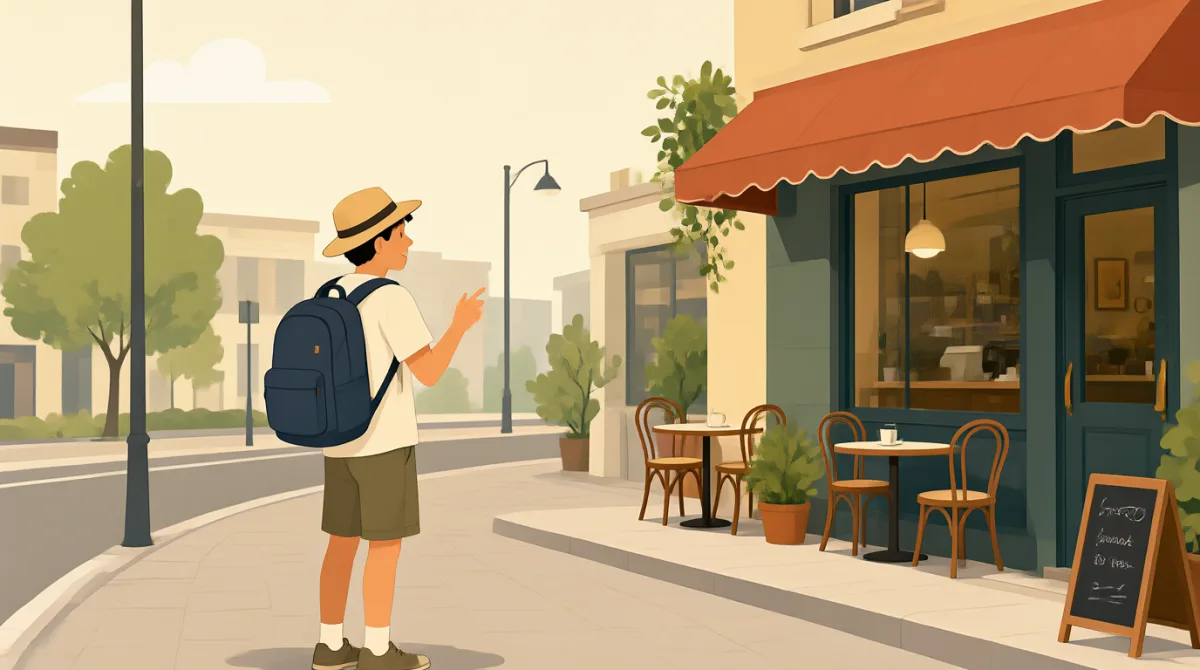

Excuse me, I'm a bit lost. Could you tell me how to get to the Art Museum from here?
माफ़ कीजिए, मैं थोड़ा रास्ता भटक गई हूँ। क्या आप मुझे बता सकते हैं कि यहाँ से कला संग्रहालय कैसे पहुँचूँ?

Certainly! The Art Museum is actually not too far from here. Do you prefer to walk or take public transport?
ज़रूर! कला संग्रहालय यहाँ से ज़्यादा दूर नहीं है। आप पैदल जाना पसंद करेंगी या सार्वजनिक परिवहन से?
I'd prefer to walk, if it's not too long. I enjoy seeing the city on foot.
अगर रास्ता बहुत लंबा न हो, तो मैं पैदल जाना पसंद करूँगी। मुझे पैदल शहर देखना अच्छा लगता है।
Great! So, what you want to do is go straight down this street for about two blocks. You'll pass a large park on your left.
बहुत बढ़िया! आपको इस सड़क पर सीधे लगभग दो ब्लॉक तक जाना है। आपके बाईं ओर एक बड़ा पार्क आएगा।
Okay, straight for two blocks, past a park on the left. Got it.
ठीक है, पार्क के पास से होते हुए बाईं ओर दो ब्लॉक तक सीधे जाना है। समझ गई।
Then, once you reach the end of the park, you'll see a big intersection with traffic lights. Turn left there onto Main Street.
फिर, पार्क के आख़िर तक पहुँचने पर आपको ट्रैफ़िक लाइट वाला एक बड़ा चौराहा दिखेगा। वहाँ बाएँ मुड़कर मेन स्ट्रीट पर जाइए।
Turn left onto Main Street at the intersection. Got it.
चौराहे पर बाएँ मुड़कर मेन स्ट्रीट पर जाना है। समझ गई।
Exactly. Walk down Main Street for about one block, and the Art Museum will be on your right side. It's a large, modern building.
बिल्कुल। मेन स्ट्रीट पर लगभग एक ब्लॉक तक चलिए। कला संग्रहालय आपके दाईं ओर होगा। वह एक बड़ी, आधुनिक इमारत है।
Perfect! That sounds clear enough. Thank you so much for your help!
बहुत बढ़िया! रास्ता काफ़ी साफ़ समझ में आ गया। आपकी मदद के लिए बहुत-बहुत धन्यवाद!
You're very welcome! Enjoy your visit to the museum!
आपका स्वागत है! संग्रहालय की सैर का आनंद लीजिए!
शब्दावली8
- lostरास्ता भटका हुआ
Feeling confused about your location or direction; often used when you can't find your way in a new place.
जब आपको अपनी जगह या दिशा को लेकर उलझन हो, तो आप रास्ता भटके हुए होते हैं। किसी नई जगह पर रास्ता न मिलने पर यह शब्द अक्सर इस्तेमाल होता है।
- excuse meमाफ़ कीजिए
A polite phrase to get someone's attention before asking a question, like starting a conversation with a stranger.
किसी से सवाल पूछने से पहले उसका ध्यान खींचने के लिए यह विनम्र वाक्यांश कहा जाता है, खासकर किसी अनजान व्यक्ति से बात शुरू करते समय।
- certainlyज़रूर
Means 'yes, of course' or 'no problem'; used to politely agree to help or answer.
इसका मतलब है 'हाँ, बिल्कुल' या 'कोई बात नहीं'। मदद करने या जवाब देने के लिए विनम्रता से सहमति जताने में इसका इस्तेमाल होता है।
- preferज़्यादा पसंद करना
To like one option more than another; helpful for expressing choices, like in travel plans.
एक विकल्प को दूसरे से अधिक पसंद करना। यात्रा की योजना बनाते समय, जैसे अपनी पसंद बताने के लिए, यह शब्द काम आता है।
- straightसीधे
Going directly ahead without turning; a common direction word in navigation.
बिना मुड़े आगे बढ़ना। रास्ता बताने में दिशा के लिए यह एक आम शब्द है।
- blocksब्लॉक
In cities, a short distance between two streets; used to measure walking routes, like 'two blocks away'.
शहर में दो सड़कों के बीच की दूरी को ब्लॉक कहते हैं। पैदल रास्ते की दूरी बताने के लिए इसका इस्तेमाल होता है, जैसे 'दो ब्लॉक दूर'।
- intersectionचौराहा
A place where two or more roads cross; important for giving directions at busy city spots.
वह जगह जहाँ दो या उससे अधिक सड़कें मिलती या एक-दूसरे को काटती हैं। शहर की व्यस्त जगहों पर रास्ता बताते समय यह शब्द उपयोगी है।
- turn leftबाएँ मुड़ना
To change direction by going to the left; a basic command in giving or following directions.
अपनी दिशा बदलकर बाईं ओर जाना। रास्ता बताने या समझने में यह एक बुनियादी निर्देश है।
मुख्य वाक्य8
- 1
Excuse me, I'm a bit lost. Could you tell me how to get to the Art Museum from here?
माफ़ कीजिए, मैं थोड़ा रास्ता भटक गई हूँ। क्या आप मुझे बता सकते हैं कि यहाँ से कला संग्रहालय कैसे पहुँचूँ?
This is a polite way to ask for directions; 'I'm a bit lost' shows you're confused, and 'how to get to' is a common phrase for routes. Use it when approaching strangers for help.
रास्ता पूछने का यह एक विनम्र तरीका है। 'I'm a bit lost' से पता चलता है कि आप कुछ उलझन में हैं, और 'how to get to' रास्ता पूछने का आम वाक्यांश है। किसी अनजान व्यक्ति से मदद माँगते समय इसका इस्तेमाल करें।
- 2
Certainly! The Art Museum is actually not too far from here.
ज़रूर! कला संग्रहालय यहाँ से ज़्यादा दूर नहीं है।
A friendly response to offer help; 'certainly' means 'yes', and 'not too far' reassures the person. Useful for locals giving directions to make the other feel comfortable.
मदद की पेशकश करने का यह एक दोस्ताना जवाब है। 'certainly' का मतलब 'हाँ' है, और 'not too far' कहकर सामने वाले को तसल्ली मिलती है। रास्ता बताने वाले स्थानीय लोग इसका इस्तेमाल करके दूसरे व्यक्ति को सहज महसूस करा सकते हैं।
- 3
I'd prefer to walk, if it's not too long.
अगर रास्ता बहुत लंबा न हो, तो मैं पैदल जाना पसंद करूँगी।
Expresses a preference with 'I'd prefer to' (I would prefer to), and a condition with 'if'; great for discussing travel options like walking vs. transport.
'I'd prefer to' (मैं ... करना पसंद करूँगा/करूँगी) से अपनी पसंद और 'if' से एक शर्त बताई जाती है। पैदल जाने या परिवहन लेने जैसे यात्रा के विकल्पों पर बात करते समय यह वाक्यांश उपयोगी है।
- 4
Go straight down this street for about two blocks.
इस सड़क पर लगभग दो ब्लॉक तक सीधे जाइए।
A clear direction command; 'go straight' means no turns, and 'for about two blocks' gives distance. Use this pattern to describe simple paths in cities.
यह रास्ता बताने का एक साफ़ निर्देश है। 'go straight' का मतलब है बिना मुड़े आगे बढ़ना, और 'for about two blocks' दूरी बताता है। शहर में आसान रास्ता समझाने के लिए इस ढाँचे का इस्तेमाल करें।
- 5
You'll pass a large park on your left.
आपके बाईं ओर से एक बड़ा पार्क आएगा।
Uses future 'you'll pass' to describe what happens next; 'on your left' specifies side. Helpful for landmarks to help someone recognize the route.
'you'll pass' के भविष्यकालीन रूप से बताया जाता है कि आगे क्या आएगा, जबकि 'on your left' दिशा बताता है। रास्ते में पहचानने लायक जगहों का ज़िक्र करके किसी को रास्ता समझाने में यह वाक्य उपयोगी है।
- 6
Turn left there onto Main Street.
वहाँ बाएँ मुड़कर मेन स्ट्रीट पर जाइए।
Direct instruction with 'turn left' and 'onto' for entering a street; 'there' points to the spot. Essential for step-by-step directions at turns.
'turn left' से सीधे बाएँ मुड़ने का निर्देश मिलता है और 'onto' बताता है कि आप दूसरी सड़क पर जा रहे हैं। 'there' उस जगह की ओर इशारा करता है जहाँ मुड़ना है। मोड़ों पर कदम-दर-कदम रास्ता बताने के लिए यह वाक्य ज़रूरी है।
- 7
The Art Museum will be on your right side.
कला संग्रहालय आपके दाईं ओर होगा।
Describes the destination location with 'will be' for future arrival; 'on your right side' clarifies position. Use to end directions by identifying the place.
'will be' से बताया जाता है कि पहुँचने पर जगह कहाँ होगी, और 'on your right side' उसकी स्थिति साफ़ करता है। रास्ता बताते समय मंज़िल की जगह बताकर निर्देश पूरा करने के लिए इसका इस्तेमाल करें।
- 8
Thank you so much for your help!
आपकी मदद के लिए बहुत-बहुत धन्यवाद!
A polite way to show gratitude; 'so much' emphasizes thanks. Always use after receiving help to be courteous in English conversations.
कृतज्ञता जताने का यह एक विनम्र तरीका है। 'so much' धन्यवाद पर ज़ोर देता है। अंग्रेज़ी बातचीत में मदद मिलने के बाद शिष्टता से आभार जताने के लिए इसका इस्तेमाल करें।