Getting Directions to a Public Transport Hub
การถามทางไปยังจุดเชื่อมต่อระบบขนส่งสาธารณะ
A person asks for directions to the nearest bus stop, subway station, or train station to continue their journey.
คนคนหนึ่งถามทางไปป้ายรถเมล์ สถานีรถไฟใต้ดิน หรือสถานีรถไฟที่ใกล้ที่สุด เพื่อเดินทางต่อ
บทสนทนา8
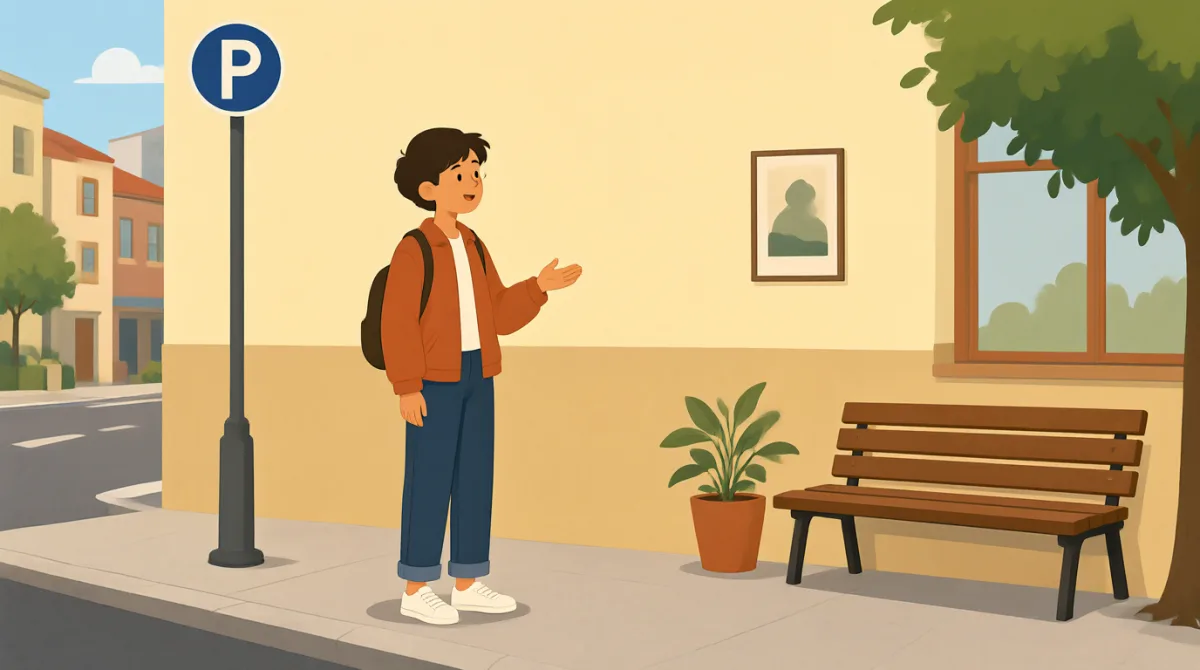

Excuse me, I'm a bit lost. Could you tell me how to get to the nearest bus stop?
ขอโทษนะครับ ผมหลงทางนิดหน่อย ช่วยบอกทางไปป้ายรถเมล์ที่ใกล้ที่สุดได้ไหมครับ

Certainly! There are a few bus stops nearby. Which direction are you heading?
ได้เลยค่ะ แถวนี้มีป้ายรถเมล์อยู่หลายป้าย คุณจะไปทางไหนคะ
I need to get to the city center, so I'm looking for a bus that goes that way.
ผมต้องไปใจกลางเมืองครับ เลยกำลังหารถเมล์ที่ไปทางนั้น
Okay, the easiest one for you would be to just walk straight down this street, past the traffic lights, and you'll see a bus stop right on the corner.
โอเคค่ะ ทางที่ง่ายที่สุดคือเดินตรงไปตามถนนเส้นนี้ ผ่านสัญญาณไฟจราจรไป แล้วก็จะเห็นป้ายรถเมล์อยู่ตรงหัวมุมเลยค่ะ
Straight down this street, past the traffic lights, on the corner. Got it. About how far is that?
เดินตรงไปตามถนนเส้นนี้ ผ่านสัญญาณไฟจราจรไป อยู่ตรงหัวมุม เข้าใจแล้วครับ ไกลแค่ไหนเหรอครับ
It's not far at all. Maybe a five-minute walk, tops. You can't miss it.
ไม่ไกลเลยค่ะ เดินประมาณห้านาทีอย่างมากก็ถึง หาเจอแน่นอนค่ะ
Perfect, thank you so much for your help! I really appreciate it.
เยี่ยมเลยครับ ขอบคุณมากที่ช่วยบอกทางนะครับ ผมซาบซึ้งจริง ๆ
You're welcome! Have a good journey.
ยินดีค่ะ ขอให้เดินทางโดยสวัสดิภาพนะคะ
คำศัพท์11
- lostหลงทาง
Feeling confused and not knowing where you are, often used when asking for directions.
รู้สึกสับสนและไม่รู้ว่าตัวเองอยู่ที่ไหน มักใช้เวลาถามทาง
- nearestใกล้ที่สุด
The closest one in distance, useful for asking about locations like stops or stations.
อยู่ใกล้กว่าที่อื่นเมื่อเทียบตามระยะทาง ใช้ถามถึงสถานที่อย่างป้ายรถเมล์หรือสถานีได้
- bus stopป้ายรถเมล์
A place on the street where buses stop to let people get on or off.
สถานที่ริมถนนที่รถเมล์จอดให้ผู้โดยสารขึ้นหรือลง
- headingมุ่งหน้าไป
The direction you are going or traveling towards, common in travel conversations.
ทิศทางที่กำลังเดินทางไป มักใช้ในการสนทนาเกี่ยวกับการเดินทาง
- city centerใจกลางเมือง
The main or central area of a city where shops, offices, and attractions are located.
บริเวณหลักหรือส่วนกลางของเมือง ซึ่งมักมีร้านค้า สำนักงาน และสถานที่ท่องเที่ยว
- straightตรงไป
In a direct line without turning left or right, often used in giving directions.
ไปตามแนวตรงโดยไม่เลี้ยวซ้ายหรือขวา มักใช้ในการบอกทาง
- traffic lightsสัญญาณไฟจราจร
Signals at intersections that control vehicle and pedestrian traffic with red, yellow, and green lights.
สัญญาณตามทางแยกที่ควบคุมการจราจรของรถและคนเดินเท้าด้วยไฟสีแดง เหลือง และเขียว
- cornerหัวมุม
The point where two streets meet, often where landmarks or stops are located.
จุดที่ถนนสองสายมาบรรจบกัน มักมีสถานที่สำคัญหรือป้ายรถเมล์อยู่บริเวณนั้น
- topsอย่างมาก
Informal for 'at the most' or the maximum time or amount, like in estimates.
คำไม่เป็นทางการที่หมายถึง “ไม่เกิน” ใช้บอกเวลา ปริมาณ หรือจำนวนสูงสุด เช่น ในการกะระยะเวลา
- can't miss itหาไม่ยาก
An expression meaning it's very easy to see or find, used to reassure someone.
สำนวนที่หมายถึงมองเห็นหรือหาเจอได้ง่าย ใช้พูดเพื่อให้อีกฝ่ายสบายใจ
- appreciateซาบซึ้ง
To feel grateful for someone's help or kindness, polite way to say thank you.
รู้สึกขอบคุณในความช่วยเหลือหรือน้ำใจของใครบางคน เป็นวิธีพูดขอบคุณอย่างสุภาพ
ประโยคสำคัญ8
- 1
Excuse me, I'm a bit lost. Could you tell me how to get to the nearest bus stop?
ขอโทษนะครับ ผมหลงทางนิดหน่อย ช่วยบอกทางไปป้ายรถเมล์ที่ใกล้ที่สุดได้ไหมครับ
This polite way to start asking for directions uses 'Excuse me' to get attention and 'Could you tell me' for a request; useful for beginners when you're unsure of your location.
ประโยคสุภาพสำหรับเริ่มถามทาง ใช้ 'Excuse me' เพื่อเรียกความสนใจ และ 'Could you tell me' เพื่อขอความช่วยเหลือ เป็นประโยคที่เหมาะสำหรับผู้เริ่มต้นใช้เมื่อไม่แน่ใจว่าตัวเองอยู่ที่ไหน
- 2
Certainly! There are a few bus stops nearby. Which direction are you heading?
ได้เลยค่ะ แถวนี้มีป้ายรถเมล์อยู่หลายป้าย คุณจะไปทางไหนคะ
A helpful response offering options; 'Certainly' means 'of course,' and 'Which direction are you heading?' asks for more details using present continuous tense for ongoing travel.
เป็นคำตอบที่เสนอทางเลือกและช่วยเหลือ 'Certainly' หมายถึง “แน่นอน” ส่วน 'Which direction are you heading?' ใช้ถามรายละเอียดเพิ่มเติม โดยใช้รูป present continuous เพื่อพูดถึงการเดินทางที่กำลังจะไป
- 3
I need to get to the city center, so I'm looking for a bus that goes that way.
ผมต้องไปใจกลางเมืองครับ เลยกำลังหารถเมล์ที่ไปทางนั้น
Explains your goal with 'I need to get to' for purpose and 'so' to connect reasons; practical for specifying destinations in transport queries.
บอกจุดหมายโดยใช้ 'I need to get to' เพื่อบอกเป้าหมาย และใช้ 'so' เชื่อมเหตุผลกับผลลัพธ์ เป็นประโยคที่ใช้บอกจุดหมายเมื่อถามเกี่ยวกับการเดินทางได้
- 4
Okay, the easiest one for you would be to just walk straight down this street, past the traffic lights, and you'll see a bus stop right on the corner.
โอเคค่ะ ทางที่ง่ายที่สุดคือเดินตรงไปตามถนนเส้นนี้ ผ่านสัญญาณไฟจราจรไป แล้วก็จะเห็นป้ายรถเมล์อยู่ตรงหัวมุมเลยค่ะ
Gives clear directions using imperative 'walk straight down' and sequence words like 'past' and 'and you'll see'; 'would be' suggests the best option conditionally.
บอกทางอย่างชัดเจนด้วยคำสั่ง 'walk straight down' และคำที่บอกลำดับอย่าง 'past' กับ 'and you'll see' ส่วน 'would be' ใช้เสนอทางเลือกที่ดีที่สุดอย่างมีเงื่อนไข
- 5
Straight down this street, past the traffic lights, on the corner. Got it. About how far is that?
เดินตรงไปตามถนนเส้นนี้ ผ่านสัญญาณไฟจราจรไป อยู่ตรงหัวมุม เข้าใจแล้วครับ ไกลแค่ไหนเหรอครับ
Repeats directions to confirm understanding with 'Got it,' then asks for distance; useful pattern for checking and clarifying in conversations.
ทวนเส้นทางเพื่อยืนยันว่าเข้าใจด้วย 'Got it' แล้วถามต่อเรื่องระยะทาง เป็นรูปแบบที่มีประโยชน์สำหรับตรวจสอบและขอคำชี้แจงในการสนทนา
- 6
It's not far at all. Maybe a five-minute walk, tops. You can't miss it.
ไม่ไกลเลยค่ะ เดินประมาณห้านาทีอย่างมากก็ถึง หาเจอแน่นอนค่ะ
Reassures with negation 'not far at all' and estimate 'five-minute walk'; 'tops' means maximum, and 'can't miss it' is idiomatic for easy to find.
ช่วยให้อีกฝ่ายสบายใจด้วยคำปฏิเสธใน 'not far at all' และบอกระยะเวลาโดยประมาณว่า 'five-minute walk' ส่วน 'tops' หมายถึงไม่เกิน และ 'can't miss it' เป็นสำนวนที่หมายถึงหาเจอได้ง่าย
- 7
Perfect, thank you so much for your help! I really appreciate it.
เยี่ยมเลยครับ ขอบคุณมากที่ช่วยบอกทางนะครับ ผมซาบซึ้งจริง ๆ
Expresses thanks emphatically with 'thank you so much' and 'I really appreciate it'; 'Perfect' shows satisfaction, common in polite endings.
แสดงความขอบคุณอย่างจริงใจด้วย 'thank you so much' และ 'I really appreciate it' ส่วน 'Perfect' แสดงว่าพอใจ มักใช้ปิดท้ายบทสนทนาอย่างสุภาพ
- 8
You're welcome! Have a good journey.
ยินดีค่ะ ขอให้เดินทางโดยสวัสดิภาพนะคะ
Standard response to thanks; 'You're welcome' is polite, and 'Have a good journey' wishes well using imperative for future travel.
เป็นคำตอบมาตรฐานเมื่อมีคนกล่าวขอบคุณ 'You're welcome' เป็นคำตอบสุภาพ ส่วน 'Have a good journey' ใช้อวยพรให้อีกฝ่ายเดินทางอย่างราบรื่น โดยใช้รูปคำสั่งเพื่อกล่าวถึงการเดินทางที่จะเกิดขึ้น