Checking for Holes
Sprawdzanie, czy nie ma dziur
Emma checks the jacket for holes and other signs of wear. Mia helps her look it over.
Emma sprawdza kurtkę pod kątem dziur i innych oznak zużycia. Mia pomaga jej ją obejrzeć.
Dialog8
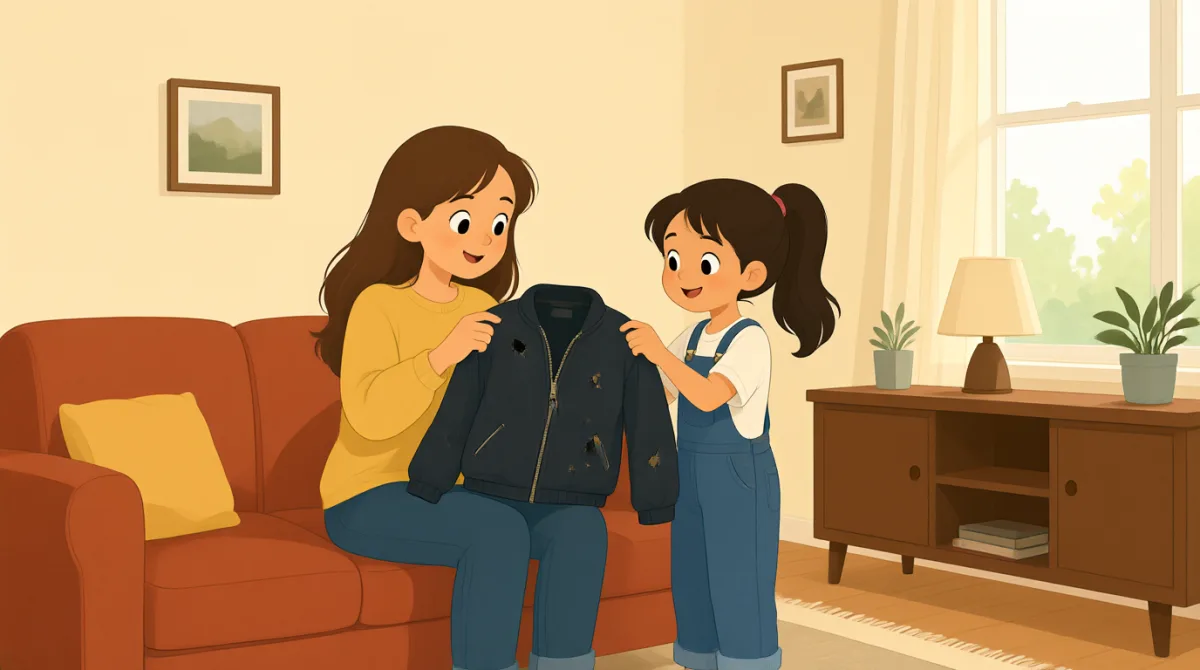

I like this jacket. Can you help me check it for holes?
Podoba mi się ta kurtka. Pomożesz mi sprawdzić, czy nie ma w niej dziur?

Sure. Let’s look at the sleeves first. I don’t see any holes.
Jasne. Najpierw obejrzyjmy rękawy. Nie widzę żadnych dziur.
What about the pockets? The fabric looks a little thin here.
A co z kieszeniami? Materiał tutaj wygląda na trochę cienki.
You’re right. But it’s not torn. Let’s check the buttons, too.
Masz rację. Ale nie jest rozdarty. Sprawdźmy też guziki.
They all look good. I see some small marks near the collar.
Wszystkie wyglądają dobrze. Widzę kilka małych śladów przy kołnierzu.
They might come out in the wash. The lining looks clean, though.
Może zejdą w praniu. Ale podszewka wygląda na czystą.
Great. I don’t mind a few marks if the jacket is in good shape.
Świetnie. Nie przeszkadza mi kilka śladów, jeśli kurtka jest w dobrym stanie.
It looks pretty good overall. Check the zipper before you decide.
Ogólnie wygląda całkiem dobrze. Sprawdź zamek, zanim zdecydujesz.
Słownictwo7
- check it for holessprawdzić, czy nie ma dziur
Look carefully to see if something has holes. You can use this phrase when checking the condition of clothing.
Wyrażenie „check it for holes” oznacza dokładne sprawdzenie, czy coś ma dziury. Możesz go użyć, gdy sprawdzasz stan ubrania.
- sleevesrękawy
The parts of a jacket or shirt that cover your arms. You can check the sleeves for holes or stains.
Słowo „sleeves” oznacza części kurtki lub koszuli, które zakrywają ramiona. Możesz sprawdzać rękawy pod kątem dziur lub plam.
- fabricmateriał
The material that clothes are made from. Use this word to describe how clothing looks or feels.
Słowo „fabric” oznacza materiał, z którego robi się ubrania. Używaj go, opisując wygląd lub dotyk ubrania.
- tornrozdarty
Damaged because the fabric has been pulled or cut apart. A small hole is not always a tear.
Słowo „torn” opisuje coś uszkodzonego, ponieważ materiał został rozciągnięty lub rozcięty. Mała dziura nie zawsze oznacza rozdarcie.
- marksślady
Small spots or lines on a surface. On clothing, marks may be dirt or stains.
Słowo „marks” oznacza małe kropki lub linie na powierzchni. Na ubraniach ślady mogą być brudem albo plamami.
- in the washw praniu
Washed in a washing machine or by hand. This phrase is often used to talk about cleaning clothes.
Wyrażenie „in the wash” oznacza pranie w pralce lub ręczne. Często używa się go, mówiąc o czyszczeniu ubrań.
- in good shapew dobrym stanie
In good condition, with little damage. You can use this phrase when deciding whether to buy something used.
Wyrażenie „in good shape” oznacza, że coś jest w dobrym stanie i ma niewiele uszkodzeń. Możesz go użyć, decydując, czy kupić używaną rzecz.
Kluczowe zdania8
- 1
Can you help me check it for holes?
Pomożesz mi sprawdzić, czy nie ma w niej dziur?
Use this question to ask someone to help inspect an item. Replace “it” with the thing you want to check.
Użyj tego pytania, gdy chcesz poprosić kogoś o pomoc w obejrzeniu rzeczy. Zastąp „it” rzeczą, którą chcesz sprawdzić.
- 2
I don’t see any holes.
Nie widzę żadnych dziur.
This is a simple way to say that you have looked and found no holes. You can replace “holes” with another problem, such as stains.
To prosty sposób, by powiedzieć, że coś zostało obejrzane i nie znaleziono żadnych dziur. Możesz zastąpić „holes” innym problemem, na przykład plamami.
- 3
The fabric looks a little thin here.
Materiał tutaj wygląda na trochę cienki.
Use this sentence to point out a part of clothing that may be worn. Replace “thin” with another description, such as “dirty” or “rough.”
Użyj tego zdania, aby wskazać część ubrania, która może być zużyta. Zastąp „thin” innym określeniem, na przykład „dirty” lub „rough”.
- 4
But it’s not torn.
Ale nie jest rozdarty.
This sentence says that something is not ripped or damaged in that way. You can use “But it’s not…” to add a reassuring detail.
To zdanie mówi, że coś nie jest rozprute ani uszkodzone w ten sposób. Możesz użyć „But it’s not…”, aby dodać uspokajającą informację.
- 5
They all look good.
Wszystkie wyglądają dobrze.
Use this sentence to say that several things seem to be in good condition. It works for buttons, shoes, or other items.
Użyj tego zdania, aby powiedzieć, że kilka rzeczy wydaje się być w dobrym stanie. Pasuje do guzików, butów i innych przedmiotów.
- 6
They might come out in the wash.
Może zejdą w praniu.
Use this sentence when you think marks or stains may disappear after washing. “Might” shows that you are not completely sure.
Użyj tego zdania, gdy sądzisz, że ślady lub plamy mogą zniknąć po praniu. „Might” pokazuje, że nie masz całkowitej pewności.
- 7
I don’t mind a few marks if the jacket is in good shape.
Nie przeszkadza mi kilka śladów, jeśli kurtka jest w dobrym stanie.
This sentence explains that a small problem is acceptable if the item is otherwise in good condition. You can replace “marks” and “jacket” with other details.
To zdanie wyjaśnia, że drobny problem jest do zaakceptowania, jeśli rzecz poza tym jest w dobrym stanie. Możesz zastąpić „marks” i „jacket” innymi szczegółami.
- 8
Check the zipper before you decide.
Sprawdź zamek, zanim zdecydujesz.
Use this sentence to suggest checking something before making a choice. Replace “the zipper” with another part or feature to inspect.
Użyj tego zdania, aby zasugerować sprawdzenie czegoś przed podjęciem decyzji. Zastąp „the zipper” inną częścią lub cechą, którą należy obejrzeć.