Packing Up What Is Left
Pakowanie tego, czego nie sprzedaliśmy
After the sale, Grace and Jack pack up the things they did not sell. They decide what to keep and what to give away.
Po wyprzedaży Grace i Jack pakują rzeczy, których nie udało im się sprzedać. Decydują, co zatrzymać, a co oddać.
Dialog8
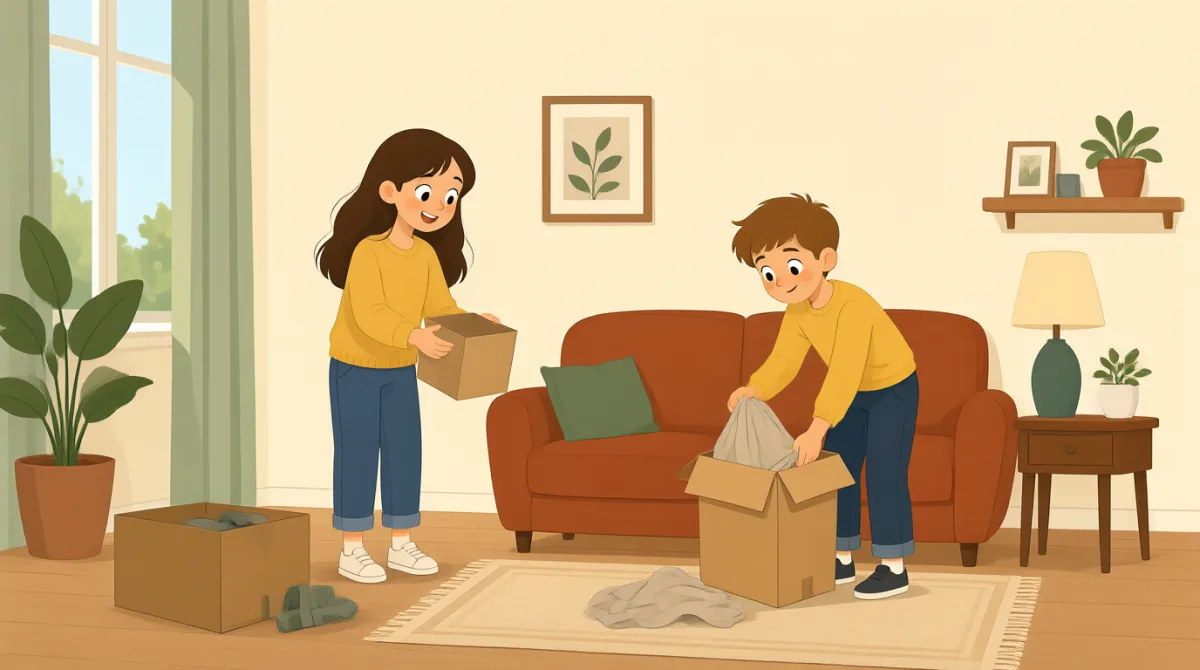

The sale is over. Let’s pack up what we didn’t sell.
Wyprzedaż się skończyła. Spakujmy to, czego nie sprzedaliśmy.

Sure. I’ll put the books in this box.
Jasne. Włożę książki do tego pudełka.
Keep the blue chair. It’s still in good shape.
Zostawmy niebieskie krzesło. Nadal jest w dobrym stanie.
Good idea. We can use it on the porch.
Dobry pomysł. Możemy używać go na werandzie.
What about these old cups? We didn’t sell any.
A co z tymi starymi kubkami? Nie sprzedaliśmy ani jednego.
Let’s give them away. Someone might need them.
Oddajmy je. Komuś mogą się przydać.
Okay. I’ll put them in a bag for the donation center.
Dobrze. Włożę je do torby dla punktu zbiórki darów.
Great. I’ll take the boxes inside, then we can clean up.
Świetnie. Zaniosę pudełka do środka, a potem możemy posprzątać.
Słownictwo7
- pack uppack up
To put things away, often into boxes or bags. Here, Grace and Jack are packing the unsold items.
Spakować rzeczy, często do pudełek lub toreb. Tutaj Grace i Jack pakują niesprzedane przedmioty.
- in good shapein good shape
In good condition and still useful. You can use this phrase to describe an item that is not broken or badly damaged.
W dobrym stanie i nadal nadający się do użytku. Tego wyrażenia możesz użyć, opisując przedmiot, który nie jest zepsuty ani poważnie uszkodzony.
- porchporch
A covered area at the entrance of a house. You can say where you plan to put or use something: “We can use it on the porch.”
Zadaszona przestrzeń przy wejściu do domu. Możesz powiedzieć, gdzie planujesz coś postawić lub używać: „We can use it on the porch.”
- give them awaygive them away
To give things to other people for free. Use “give away” when you do not want to sell or keep something.
Oddać rzeczy innym osobom za darmo. Użyj „give away”, gdy nie chcesz czegoś sprzedawać ani zatrzymywać.
- donation centerdonation center
A place where people leave things for others to use. You can take clothes, household items, or other useful things to a donation center.
Miejsce, w którym ludzie zostawiają rzeczy do wykorzystania przez innych. Do donation center możesz przynieść ubrania, przedmioty gospodarstwa domowego lub inne przydatne rzeczy.
- take the boxes insidetake the boxes inside
To carry the boxes into a building or house. You can use “take [something] inside” when moving an item indoors.
Wnieść pudełka do budynku lub domu. Możesz użyć „take [something] inside”, gdy przenosisz coś do środka.
- clean upclean up
To make a place tidy by putting things away or removing mess. It is often used after an activity or event.
Uporządkować miejsce, odkładając rzeczy na miejsce lub usuwając bałagan. Tego wyrażenia często używa się po zakończeniu jakiejś czynności lub wydarzenia.
Kluczowe zdania8
- 1
Let’s pack up what we didn’t sell.
Spakujmy to, czego nie sprzedaliśmy.
This is a useful way to suggest putting unsold things away. You can reuse “Let’s pack up what we didn’t [do]” after an event or activity.
To przydatny sposób, by zaproponować schowanie niesprzedanych rzeczy. Po wydarzeniu lub zakończeniu jakiejś czynności możesz ponownie użyć „Let’s pack up what we didn’t [do]”.
- 2
I’ll put the books in this box.
Włożę książki do tego pudełka.
Use “I’ll” to say what you plan to do. You can replace “the books” and “this box” with other items and containers.
Użyj „I’ll”, aby powiedzieć, co planujesz zrobić. Możesz zastąpić „the books” i „this box” innymi przedmiotami i pojemnikami.
- 3
Keep the blue chair.
Zostawmy niebieskie krzesło.
This is a simple way to tell someone to save an item instead of giving it away. Replace “the blue chair” with anything you want someone to keep.
To prosty sposób, by powiedzieć komuś, żeby zachował przedmiot zamiast go oddawać. Zastąp „the blue chair” dowolną rzeczą, którą chcesz zachować.
- 4
We can use it on the porch.
Możemy używać go na werandzie.
Use “We can use it” to suggest a practical purpose for something. Replace “it” and “on the porch” to talk about other items and places.
Użyj „We can use it”, aby zaproponować praktyczne zastosowanie czegoś. Zastąp „it” i „on the porch”, mówiąc o innych przedmiotach i miejscach.
- 5
What about these old cups?
A co z tymi starymi kubkami?
This is a natural way to ask what to do with something. Replace “these old cups” with the items you are deciding about.
To naturalny sposób, by zapytać, co zrobić z jakąś rzeczą. Zastąp „these old cups” przedmiotami, o których losie decydujesz.
- 6
Let’s give them away.
Oddajmy je.
Use this sentence to suggest giving items to other people for free. Replace “them” with the things you want to give away.
Użyj tego zdania, aby zaproponować oddanie rzeczy innym osobom za darmo. Zastąp „them” rzeczami, które chcesz oddać.
- 7
I’ll put them in a bag for the donation center.
Włożę je do torby dla punktu zbiórki darów.
This explains what you plan to do with items you are donating. You can change “a bag” or “the donation center” to fit your situation.
To wyjaśnia, co planujesz zrobić z rzeczami, które oddajesz. Możesz zmienić „a bag” lub „the donation center”, aby dopasować zdanie do swojej sytuacji.
- 8
I’ll take the boxes inside, then we can clean up.
Zaniosę pudełka do środka, a potem możemy posprzątać.
This sentence describes two actions in order: first taking the boxes inside, then cleaning. Use “then” to show what you plan to do next.
To zdanie opisuje dwie czynności wykonywane po kolei: najpierw wniesienie pudełek do środka, a potem sprzątanie. Użyj „then”, aby pokazać, co planujesz zrobić później.