Picking Up the Glasses
Odbiór okularów
Emma returns to collect her new glasses and tries them on. Grace checks the fit and explains how to look after them.
Emma wraca po odbiór nowych okularów i je przymierza. Grace sprawdza, czy dobrze leżą, i wyjaśnia, jak o nie dbać.
Dialog8
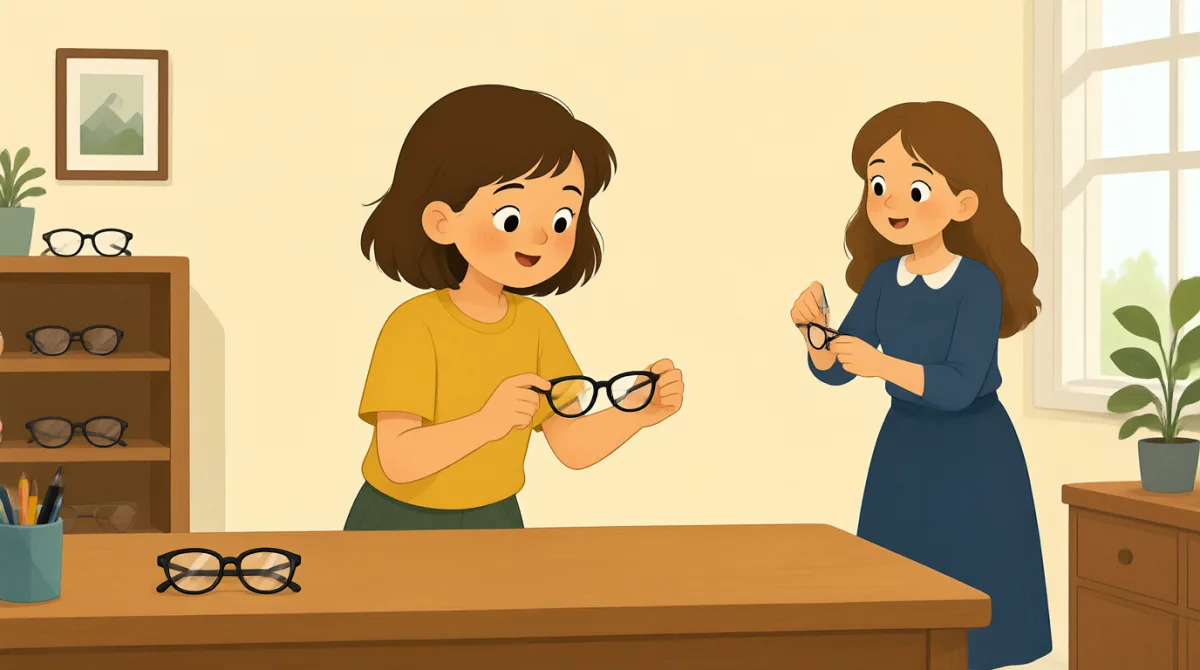

Hi, Grace. I’m here to pick up my new glasses.
Cześć, Grace. Przyszłam odebrać moje nowe okulary.

Hi, Emma. They’re ready. Please try them on and tell me how they feel.
Cześć, Emma. Są gotowe. Proszę je przymierzyć i powiedzieć, jak się Pani w nich czuje.
They feel comfortable, and everything looks much clearer now.
Są wygodne i wszystko wygląda teraz o wiele wyraźniej.
Great. Look straight ahead. Do they slip when you move your head?
Świetnie. Proszę spojrzeć prosto przed siebie. Czy zsuwają się, kiedy porusza Pani głową?
No, they stay in place. Should I clean them with a cloth?
Nie, trzymają się na miejscu. Czy powinnam czyścić je ściereczką?
Yes, use a soft cloth. Keep them in this case when you’re not wearing them.
Tak, proszę używać miękkiej ściereczki. Kiedy ich Pani nie nosi, proszę trzymać je w tym etui.
Got it. Do I need to come back if they feel uncomfortable?
Rozumiem. Czy powinnam wrócić, jeśli będą niewygodne?
Of course. Come back anytime, and we can adjust the frames for you.
Oczywiście. Proszę wrócić w każdej chwili, a dopasujemy dla Pani oprawki.
Słownictwo8
- pick up my new glassesodebrać moje nowe okulary
To pick something up means to go and collect it. Use this phrase when an item you ordered is ready.
„pick up my new glasses” oznacza pojechać lub przyjść po coś i to odebrać. Użyj tego wyrażenia, gdy zamówiony przez Ciebie przedmiot jest gotowy.
- try them onprzymierzyć je
To try something on means to put it on to see how it fits or looks. You can say this about clothes, shoes, or glasses.
„try them on” oznacza założyć coś, żeby sprawdzić, jak pasuje lub wygląda. Możesz tak powiedzieć o ubraniach, butach lub okularach.
- feel comfortableczuć się wygodnie
This means something feels good to wear and does not hurt or bother you. You can use it to describe glasses, shoes, or clothes.
„feel comfortable” oznacza, że coś dobrze się nosi i nie powoduje bólu ani dyskomfortu. Możesz użyć tego wyrażenia, opisując okulary, buty lub ubrania.
- slipzsuwać się
Here, slip means to move out of place. You can ask if glasses slip when someone moves their head.
W tym kontekście „slip” oznacza przesuwać się z właściwego miejsca. Możesz zapytać, czy okulary zsuwają się, gdy ktoś porusza głową.
- stay in placetrzymać się na miejscu
This means something does not move or fall out of position. Use it to describe glasses that fit well.
„stay in place” oznacza, że coś się nie przesuwa ani nie wypada z właściwego położenia. Użyj tego wyrażenia, opisując okulary, które dobrze pasują.
- soft clothmiękka ściereczka
A soft cloth is a gentle piece of fabric used to clean glasses. It helps avoid scratching the lenses.
„soft cloth” to delikatny kawałek materiału używany do czyszczenia okularów. Pomaga uniknąć zarysowania soczewek.
- come backwrócić
Come back means to return to a place. Use it when asking someone to return for help or another service.
„come back” oznacza wrócić w jakieś miejsce. Użyj tego wyrażenia, prosząc kogoś o powrót po pomoc lub kolejną usługę.
- adjust the framesdopasować oprawki
This means to change the shape or position of the glasses so they fit better. You can ask an optician to adjust the frames.
„adjust the frames” oznacza zmienić kształt lub położenie okularów, żeby lepiej pasowały. Możesz poprosić optyka o dopasowanie oprawek.
Kluczowe zdania8
- 1
I’m here to pick up my new glasses.
Przyszłam odebrać moje nowe okulary.
This is a simple way to explain why you are visiting a shop. You can reuse “I’m here to pick up my…” with an item that is ready.
To prosty sposób, żeby wyjaśnić, dlaczego odwiedzasz sklep. Możesz ponownie użyć konstrukcji „I’m here to pick up my…” (Przyszłam odebrać moje…), dodając nazwę gotowego przedmiotu.
- 2
Please try them on and tell me how they feel.
Proszę je przymierzyć i powiedzieć, jak się Pani w nich czuje.
Use this to ask someone to test an item and share their opinion. Replace “them” with another item, such as “the shoes.”
Użyj tego zdania, prosząc kogoś o przetestowanie przedmiotu i podzielenie się opinią. Zastąp „them” innym przedmiotem, na przykład „the shoes”.
- 3
They feel comfortable, and everything looks much clearer now.
Są wygodne i wszystko wygląda teraz o wiele wyraźniej.
This sentence describes both how glasses feel and how well they help you see. You can use “It feels comfortable” to describe another item you are wearing.
To zdanie opisuje zarówno to, jak okulary się nosi, jak i to, jak dobrze pomagają widzieć. Możesz użyć „It feels comfortable”, opisując inny noszony przedmiot.
- 4
Do they slip when you move your head?
Czy zsuwają się, kiedy porusza Pani głową?
This is a useful question for checking whether glasses fit securely. You can use “Do they slip when you…” to ask whether something moves during an action.
To przydatne pytanie, gdy sprawdzasz, czy okulary dobrze i stabilnie leżą. Możesz użyć konstrukcji „Do they slip when you…”, pytając, czy coś przesuwa się podczas wykonywania jakiejś czynności.
- 5
Should I clean them with a cloth?
Czy powinnam czyścić je ściereczką?
Use “Should I…?” to ask for advice about what to do. You can replace “clean them” with another action to ask how to care for an item.
Użyj konstrukcji „Should I…?”, żeby poprosić o radę dotyczącą tego, co zrobić. Możesz zastąpić „clean them” inną czynnością i zapytać, jak dbać o dany przedmiot.
- 6
Keep them in this case when you’re not wearing them.
Kiedy ich Pani nie nosi, proszę trzymać je w tym etui.
This gives a clear instruction for storing glasses safely. You can reuse “Keep it in this…” to explain where to put other items.
To jasna instrukcja dotycząca bezpiecznego przechowywania okularów. Możesz ponownie użyć konstrukcji „Keep it in this…”, wyjaśniając, gdzie odłożyć inne przedmioty.
- 7
Do I need to come back if they feel uncomfortable?
Czy powinnam wrócić, jeśli będą niewygodne?
This is a polite way to ask whether you should return if there is a problem. Replace “they” with another item and “uncomfortable” with a different problem.
To uprzejmy sposób, żeby zapytać, czy należy wrócić, jeśli pojawi się problem. Zastąp „they” innym przedmiotem, a „uncomfortable” innym problemem.
- 8
Come back anytime, and we can adjust the frames for you.
Proszę wrócić w każdej chwili, a dopasujemy dla Pani oprawki.
This offers help and tells the customer what the shop can do. You can reuse “Come back anytime, and we can…” when offering a service.
To propozycja pomocy i informacja o tym, co sklep może zrobić. Możesz ponownie użyć konstrukcji „Come back anytime, and we can…”, oferując wykonanie usługi.