Showing Your Ticket
Okazanie biletu
The conductor asks to see Emma’s ticket. Emma shows it and checks her seat.
Konduktor prosi Emmę o pokazanie biletu. Emma pokazuje go i sprawdza swoje miejsce.
Dialog7
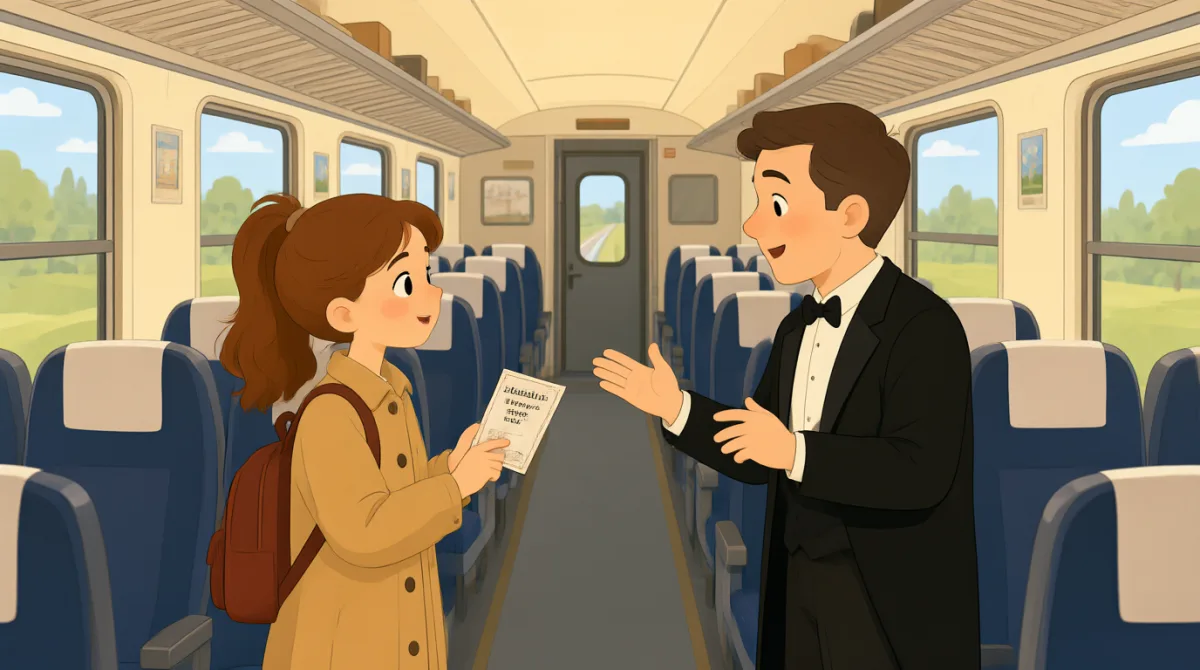

Ticket, please.
Bilet, proszę.

Here it is. Is this my train?
Proszę, oto on. Czy to mój pociąg?
Yes. It leaves at ten.
Tak. Odjeżdża o dziesiątej.
Great. What is my seat number?
Świetnie. Jaki mam numer miejsca?
Your seat is 12A, by the window.
Pani miejsce to 12A, przy oknie.
Thank you. Is this the right car?
Dziękuję. Czy to właściwy wagon?
Yes. You are in the right car.
Tak. Jest pani we właściwym wagonie.
Słownictwo6
- Ticket, please.Bilet, proszę.
The conductor says this to ask to see your ticket. You can use it when showing tickets or other documents.
Konduktor mówi tak, gdy prosi o pokazanie biletu. Możesz użyć tego zwrotu, gdy pokazujesz bilet lub inne dokumenty.
- Here it is.Proszę, oto on.
This means you are giving or showing the thing someone asked for. Use it to show your ticket.
Ten zwrot oznacza, że podajesz lub pokazujesz rzecz, o którą ktoś poprosił. Użyj go, pokazując bilet.
- leavesodjeżdża
Here, “leaves” means the train starts its journey. You can ask, “What time does the train leave?”
W tym zdaniu “leaves” oznacza, że pociąg rozpoczyna podróż. Możesz zapytać: “What time does the train leave?” (O której odjeżdża pociąg?).
- seat numbernumer miejsca
This is the number or code for your place on the train. You can ask, “What is my seat number?”
To numer lub oznaczenie twojego miejsca w pociągu. Możesz zapytać: “What is my seat number?” (Jaki mam numer miejsca?).
- by the windowprzy oknie
This means the seat is next to the window. You can use it to describe where a seat is.
To znaczy, że miejsce znajduje się obok okna. Możesz użyć tego zwrotu, aby opisać położenie miejsca.
- right carwłaściwy wagon
A train car is one section of a train. “The right car” means the correct section for your seat.
Wagon to jedna z części pociągu. “The right car” oznacza właściwy wagon, w którym znajduje się twoje miejsce.
Kluczowe zdania7
- 1
Here it is.
Proszę, oto on.
Use this short phrase when you show someone something they asked for. You can say it while handing over a ticket or ID.
Użyj tego krótkiego zwrotu, gdy pokazujesz komuś rzecz, o którą poprosił. Możesz go powiedzieć, podając bilet lub dowód tożsamości.
- 2
Is this my train?
Czy to mój pociąg?
Use this question to check that you are getting on the correct train. You can replace “train” with another thing you want to check.
Zadaj to pytanie, aby upewnić się, że wsiadasz do właściwego pociągu. Możesz zastąpić “train” inną rzeczą, którą chcesz sprawdzić.
- 3
It leaves at ten.
Odjeżdża o dziesiątej.
This tells someone when a train or bus starts its journey. Replace “ten” with the departure time.
To zdanie informuje, o której pociąg lub autobus rozpoczyna podróż. Zastąp “ten” godziną odjazdu.
- 4
What is my seat number?
Jaki mam numer miejsca?
Use this to ask which seat is yours. You can also ask, “What is my room number?” or “What is my table number?”
Użyj tego pytania, aby dowiedzieć się, które miejsce jest twoje. Możesz też zapytać: “What is my room number?” albo “What is my table number?”.
- 5
Your seat is 12A, by the window.
Pani miejsce to 12A, przy oknie.
This gives both the seat number and its location. You can use the same pattern to describe where a seat is.
To zdanie podaje zarówno numer miejsca, jak i jego położenie. Możesz użyć podobnego wzoru, aby opisać, gdzie znajduje się miejsce.
- 6
Is this the right car?
Czy to właściwy wagon?
Use this question to check that you are in the correct section of the train. Replace “car” with another place or item you want to check.
Zadaj to pytanie, aby upewnić się, że jesteś we właściwej części pociągu. Zastąp “car” innym miejscem lub przedmiotem, który chcesz sprawdzić.
- 7
You are in the right car.
Jest pani we właściwym wagonie.
This confirms that someone is in the correct train section. You can use “You are in the right…” to reassure someone about a place.
To potwierdza, że ktoś znajduje się we właściwej części pociągu. Możesz użyć zwrotu “You are in the right…” (Jesteś we właściwym…) i wskazać miejsce, aby kogoś uspokoić.