Preparing the Home
Before Milo comes home, Emma asks her practical friend Jack what supplies she needs and how to make her apartment safe. Together, they make a simple preparation plan.
Dialogue10
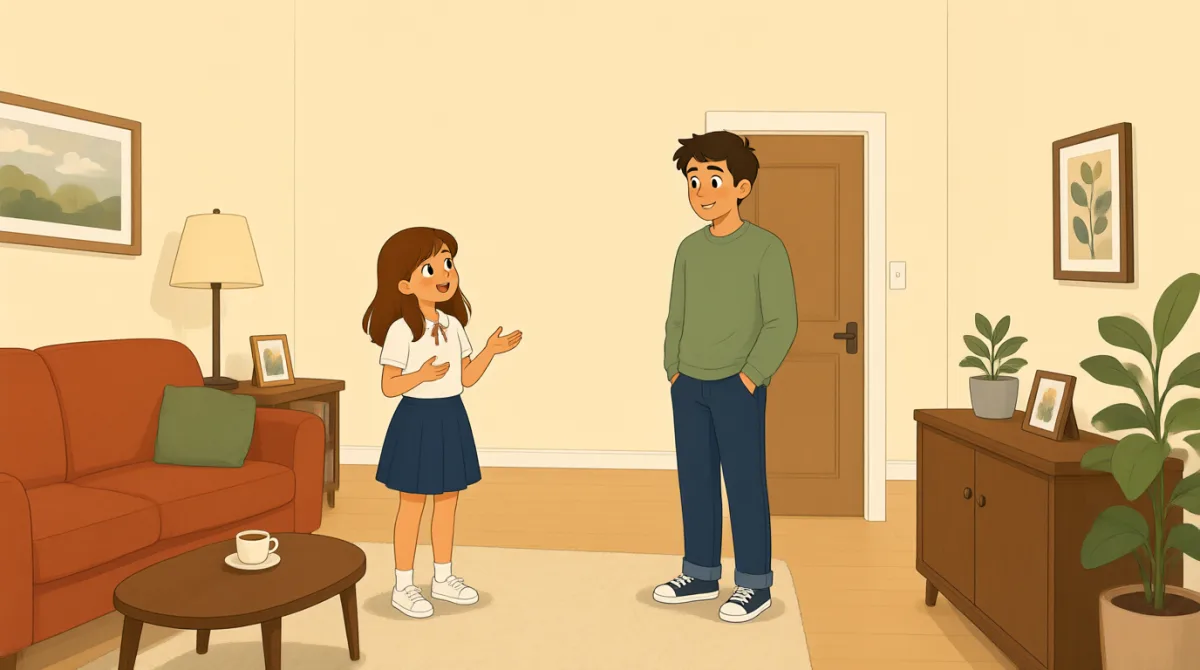

Milo comes home Saturday, and I want to make sure the apartment is ready. What should I buy first?

Start with the basics: food, bowls, a leash, a collar, and a comfortable bed. You can get toys later.
Should I get the same food the shelter uses? I don’t want to upset his stomach by changing it too quickly.
That’s a good idea. Ask the staff what he eats, then switch foods gradually if you decide to change later.
What about making the apartment safe? I have cleaning supplies under the sink and a few cables near the couch.
Move the cleaners somewhere locked, tuck away the cables, and keep shoes and small objects out of reach. Dogs love to chew.
I’ll also set up a quiet corner with his bed and water bowl. That way, he’ll have a place to settle in.
Exactly. Keep that area calm, and don’t crowd him when he first arrives. Let him explore at his own pace.
Great, I’ll make a shopping list tonight and finish the safety checks before Saturday. I’m excited, but a little nervous.
That’s normal. You’ve got the basics covered, and Milo will probably be more interested in sniffing every corner than judging your setup.
Vocabulary7
- the basics
The most important things you need to start. Here, Jack means essential supplies for Milo.
- upset his stomach
To cause someone to feel sick in their stomach. Emma is worried that changing Milo’s food too quickly could make him unwell.
- switch foods gradually
To change from one type of food to another little by little. This gives Milo time to get used to the new food.
- out of reach
In a place where someone or something cannot easily get to it. Keep small objects out of reach so Milo cannot chew or swallow them.
- settle in
To become comfortable in a new place. A quiet corner can help Milo settle in at home.
- at his own pace
As quickly or slowly as he feels comfortable. Let him explore without rushing him.
- You’ve got the basics covered
You have taken care of the most important things. This is a reassuring way to tell someone they are prepared.
Key Sentences7
- 1
What should I buy first?
Use this to ask which task or purchase to prioritize. You can replace “buy” with another action, such as “do” or “prepare.”
- 2
I don’t want to upset his stomach by changing it too quickly.
This explains a concern and gives its reason. Use “I don’t want to [negative result] by [action]” to explain why you are being careful.
- 3
Ask the staff what he eats, then switch foods gradually if you decide to change later.
This gives practical advice in two steps. You can use “Ask [person] what [subject]…, then [next step]” to describe a simple plan.
- 4
Move the cleaners somewhere locked, tuck away the cables, and keep shoes and small objects out of reach.
This sentence gives several safety instructions. Use a series of action verbs to make a clear checklist.
- 5
That way, he’ll have a place to settle in.
“That way” introduces the result of an action. Use it to explain how a choice or plan will help.
- 6
Let him explore at his own pace.
This is a gentle way to say not to rush someone or something. You can use “at your own pace” when talking about learning or adjusting to change.
- 7
I’m excited, but a little nervous.
Use this to describe two feelings at once, especially when something good is also unfamiliar. Replace the adjectives to talk about other mixed feelings.