The Teacher Has a Message
Grace, the teacher, gives Emma a short message about Leo's school day. Emma listens and asks a simple question.
Dialogue6
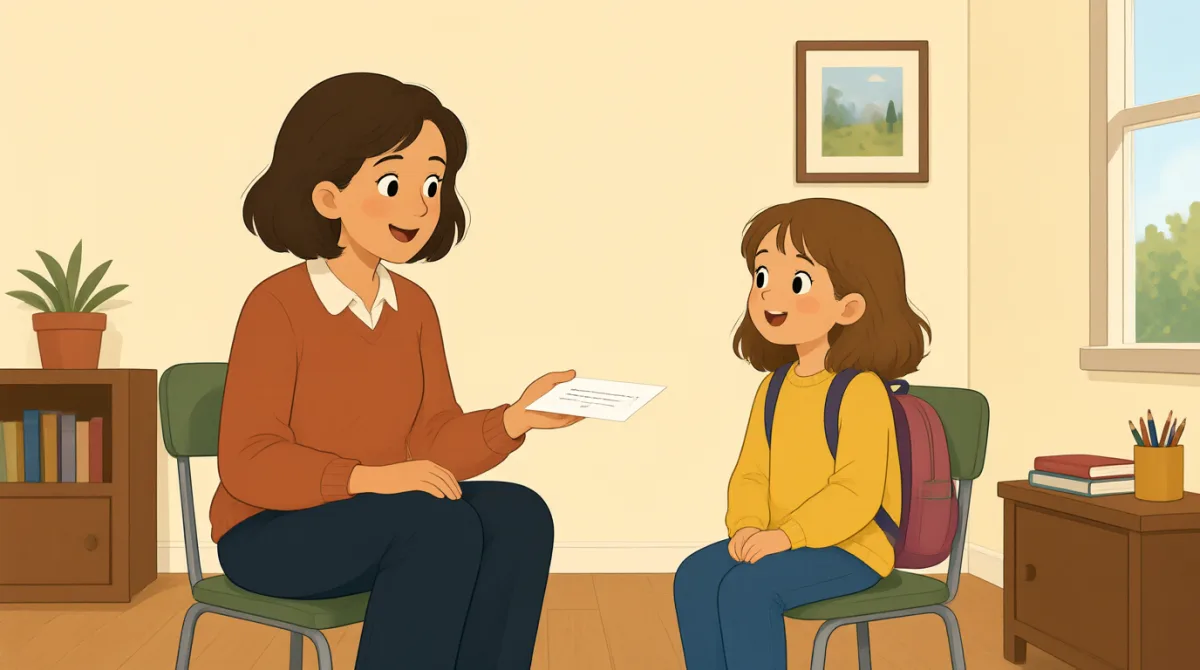

Hi, Emma. Leo had a good day today.

That’s good. What did he do?
He read a short book in class.
Did he enjoy it?
Yes, he did. He read it aloud.
Great! Thank you for telling me.
Vocabulary7
- had a good day
This means Leo's day at school went well. You can use it to describe a positive day.
- What did he do?
This is a simple way to ask what someone did. You can change “he” to “you,” “she,” or a person's name.
- in class
This means in the classroom or during a lesson. For example, you can say, “We read a book in class.”
- Did he enjoy it?
This asks if Leo liked the activity. You can use “Did you enjoy it?” to ask someone about an experience.
- Yes, he did.
This is a short answer to a question that starts with “Did he.” You can change “he” to “she” or “you.”
- read it aloud
This means to read the words so other people can hear them. You can say, “She read the story aloud.”
- Thank you for telling me.
This is a polite way to thank someone for sharing information. You can use it when a teacher gives you an update.
Key Sentences8
- 1
Leo had a good day today.
Use this sentence to tell someone that Leo's day went well. You can replace “Leo” with another person's name.
- 2
What did he do?
Use this question to ask about someone's past actions. Change “he” to “you” or another person to fit the situation.
- 3
He read a short book in class.
This sentence describes what Leo did at school. You can change the activity, such as “He drew a picture in class.”
- 4
Did he enjoy it?
Use this question to ask if someone liked an activity. Replace “he” with “you” to ask directly.
- 5
Yes, he did.
This is a brief, natural answer to “Did he enjoy it?” Use “Yes, I did” when answering about yourself.
- 6
He read it aloud.
This tells someone that Leo read so others could hear. You can replace “read” with another action, such as “said it aloud.”
- 7
Great!
This is a simple way to show that you are pleased or interested. You can use it in many everyday conversations.
- 8
Thank you for telling me.
Use this polite sentence when someone shares useful information with you. You can also say it to thank a teacher for an update.