The Teacher Has a Message
老师有话要说
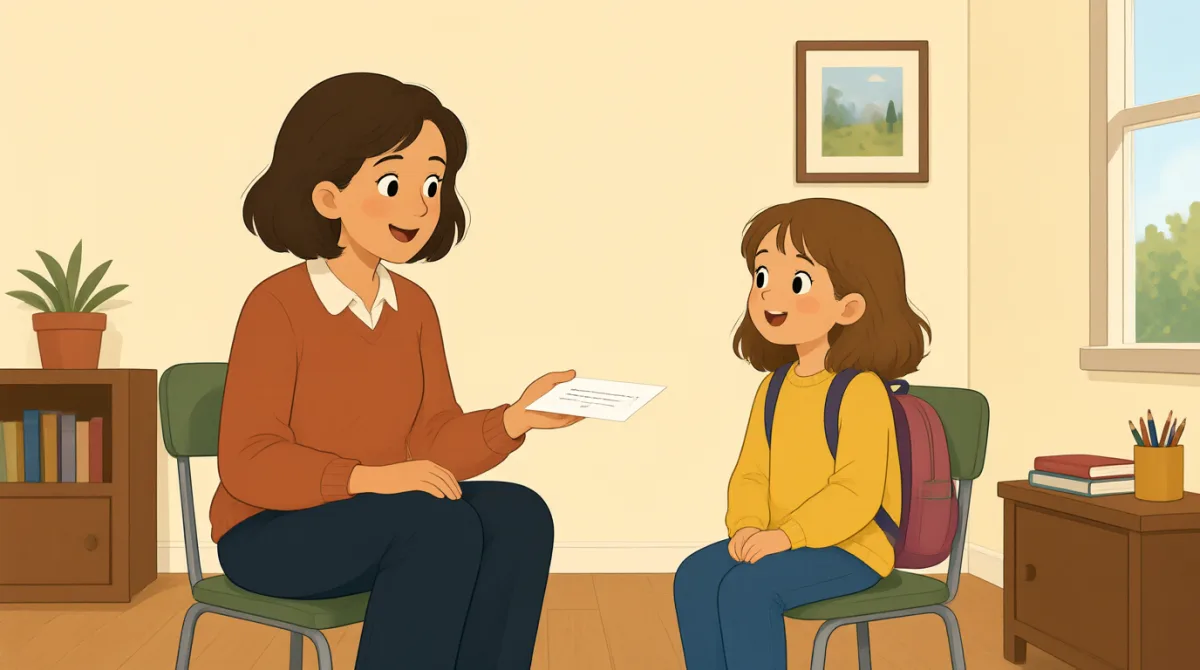
Grace, the teacher, gives Emma a short message about Leo's school day. Emma listens and asks a simple question.
老师格蕾丝向艾玛简要说明利奥今天在学校的情况。艾玛认真听着,并问了一个简单的问题。
对话6

Hi, Emma. Leo had a good day today.
你好,艾玛。利奥今天过得不错。

That’s good. What did he do?
那就好。他做了什么?
He read a short book in class.
他在课堂上读了一本小书。
Did he enjoy it?
他喜欢吗?
Yes, he did. He read it aloud.
喜欢。他还大声读了出来。
Great! Thank you for telling me.
太好了!谢谢你告诉我。
词汇7
- had a good day过得不错
This means Leo's day at school went well. You can use it to describe a positive day.
这表示利奥在学校这一天过得很顺利。你可以用它来描述愉快的一天。
- What did he do?他做了什么?
This is a simple way to ask what someone did. You can change “he” to “you,” “she,” or a person's name.
这是询问某人做了什么的一种简单说法。你可以把“he”换成“you”“she”或某个人的名字。
- in class在课堂上
This means in the classroom or during a lesson. For example, you can say, “We read a book in class.”
这表示在教室里或上课时。比如,你可以说:“We read a book in class.”(我们在课堂上读了一本书。)
- Did he enjoy it?他喜欢吗?
This asks if Leo liked the activity. You can use “Did you enjoy it?” to ask someone about an experience.
这是在问利奥喜不喜欢这项活动。你可以用“Did you enjoy it?”来询问别人对某次经历的感受。
- Yes, he did.是的,喜欢。
This is a short answer to a question that starts with “Did he.” You can change “he” to “she” or “you.”
这是对以“Did he”开头的问题的简短回答。你可以把“he”换成“she”或“you”。
- read it aloud大声读出来
This means to read the words so other people can hear them. You can say, “She read the story aloud.”
这表示把文字读出来,让别人也能听见。你可以说:“She read the story aloud.”(她大声读了这个故事。)
- Thank you for telling me.谢谢你告诉我。
This is a polite way to thank someone for sharing information. You can use it when a teacher gives you an update.
这是感谢别人分享信息的一种礼貌说法。老师向你介绍近况时,你可以这样说。
重点句子8
- 1
Leo had a good day today.
利奥今天过得不错。
Use this sentence to tell someone that Leo's day went well. You can replace “Leo” with another person's name.
用这句话告诉别人利奥这一天过得很顺利。你可以把“Leo”换成其他人的名字。
- 2
What did he do?
他做了什么?
Use this question to ask about someone's past actions. Change “he” to “you” or another person to fit the situation.
用这个问题询问某人之前做了什么。根据情况,你可以把“he”换成“you”或其他人。
- 3
He read a short book in class.
他在课堂上读了一本小书。
This sentence describes what Leo did at school. You can change the activity, such as “He drew a picture in class.”
这句话描述了利奥在学校做的事。你可以换成其他活动,比如“He drew a picture in class.”(他在课堂上画了一幅画。)
- 4
Did he enjoy it?
他喜欢吗?
Use this question to ask if someone liked an activity. Replace “he” with “you” to ask directly.
用这个问题询问某人喜不喜欢一项活动。把“he”换成“you”,就可以直接问对方。
- 5
Yes, he did.
是的,喜欢。
This is a brief, natural answer to “Did he enjoy it?” Use “Yes, I did” when answering about yourself.
这是对“Did he enjoy it?”的简短自然回答。回答自己的情况时,可以说“Yes, I did”。
- 6
He read it aloud.
他大声读了出来。
This tells someone that Leo read so others could hear. You can replace “read” with another action, such as “said it aloud.”
这句话告诉别人利奥读出了声,让其他人也能听见。你可以把“read”换成其他动作,比如“said it aloud”。
- 7
Great!
太好了!
This is a simple way to show that you are pleased or interested. You can use it in many everyday conversations.
这是表达高兴或感兴趣的一种简单说法。在许多日常对话中都可以使用。
- 8
Thank you for telling me.
谢谢你告诉我。
Use this polite sentence when someone shares useful information with you. You can also say it to thank a teacher for an update.
别人分享有用的信息时,可以用这句礼貌的话。老师告诉你近况时,也可以这样感谢对方。