The Teacher Has a Message
老師有話要說
Grace, the teacher, gives Emma a short message about Leo's school day. Emma listens and asks a simple question.
老師格蕾絲向艾瑪簡要說明利奧今天在學校的情況。艾瑪認真聽著,並問了一個簡單的問題。
對話6
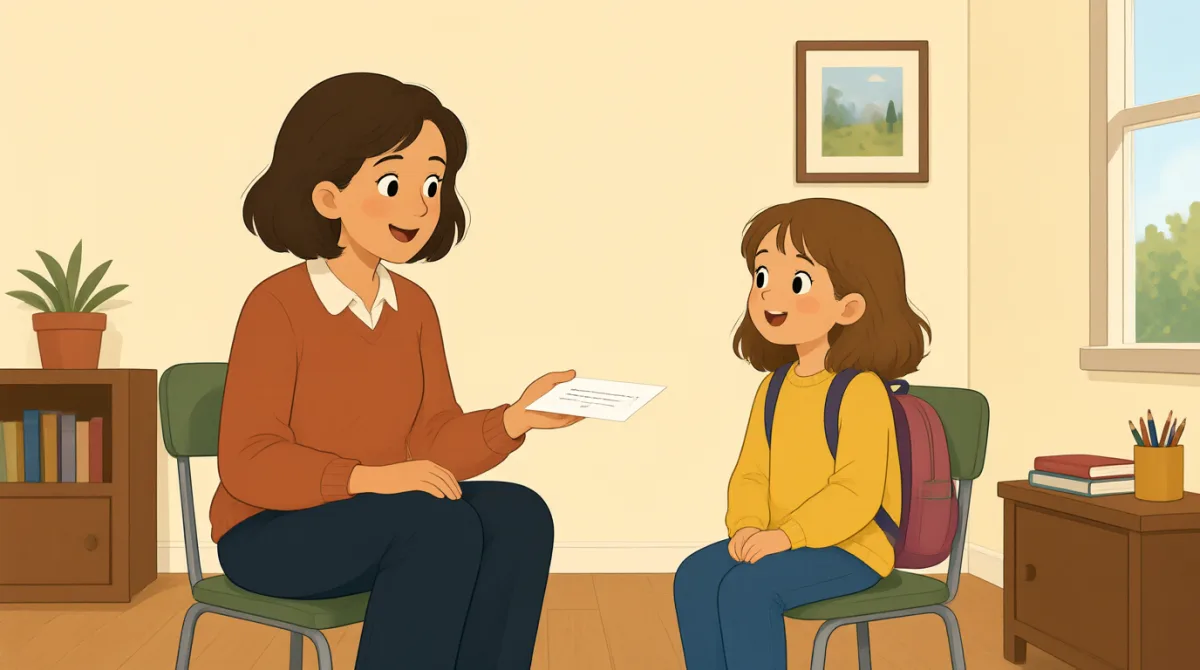

Hi, Emma. Leo had a good day today.
你好,艾瑪。利奧今天過得不錯。

That’s good. What did he do?
那就好。他做了什麼?
He read a short book in class.
他在課堂上讀了一本小書。
Did he enjoy it?
他喜歡嗎?
Yes, he did. He read it aloud.
喜歡。他還大聲讀了出來。
Great! Thank you for telling me.
太好了!謝謝你告訴我。
詞彙7
- had a good day過得不錯
This means Leo's day at school went well. You can use it to describe a positive day.
這表示利奧在學校這一天過得很順利。你可以用它來描述愉快的一天。
- What did he do?他做了什麼?
This is a simple way to ask what someone did. You can change “he” to “you,” “she,” or a person's name.
這是詢問某人做了什麼的一種簡單說法。你可以把“he”換成“you”“she”或某個人的名字。
- in class在課堂上
This means in the classroom or during a lesson. For example, you can say, “We read a book in class.”
這表示在教室裡或上課時。比如,你可以說:“We read a book in class.”(我們在課堂上讀了一本書。)
- Did he enjoy it?他喜歡嗎?
This asks if Leo liked the activity. You can use “Did you enjoy it?” to ask someone about an experience.
這是在問利奧喜不喜歡這項活動。你可以用“Did you enjoy it?”來詢問別人對某次經歷的感受。
- Yes, he did.是的,喜歡。
This is a short answer to a question that starts with “Did he.” You can change “he” to “she” or “you.”
這是對以“Did he”開頭的問題的簡短回答。你可以把“he”換成“she”或“you”。
- read it aloud大聲讀出來
This means to read the words so other people can hear them. You can say, “She read the story aloud.”
這表示把文字讀出來,讓別人也能聽見。你可以說:“She read the story aloud.”(她大聲讀了這個故事。)
- Thank you for telling me.謝謝你告訴我。
This is a polite way to thank someone for sharing information. You can use it when a teacher gives you an update.
這是感謝別人分享資訊的一種禮貌說法。老師向你介紹近況時,你可以這樣說。
關鍵句8
- 1
Leo had a good day today.
利奧今天過得不錯。
Use this sentence to tell someone that Leo's day went well. You can replace “Leo” with another person's name.
用這句話告訴別人利奧這一天過得很順利。你可以把“Leo”換成其他人的名字。
- 2
What did he do?
他做了什麼?
Use this question to ask about someone's past actions. Change “he” to “you” or another person to fit the situation.
用這個問題詢問某人之前做了什麼。根據情況,你可以把“he”換成“you”或其他人。
- 3
He read a short book in class.
他在課堂上讀了一本小書。
This sentence describes what Leo did at school. You can change the activity, such as “He drew a picture in class.”
這句話描述了利奧在學校做的事。你可以換成其他活動,比如“He drew a picture in class.”(他在課堂上畫了一幅畫。)
- 4
Did he enjoy it?
他喜歡嗎?
Use this question to ask if someone liked an activity. Replace “he” with “you” to ask directly.
用這個問題詢問某人喜不喜歡一項活動。把“he”換成“you”,就可以直接問對方。
- 5
Yes, he did.
是的,喜歡。
This is a brief, natural answer to “Did he enjoy it?” Use “Yes, I did” when answering about yourself.
這是對“Did he enjoy it?”的簡短自然回答。回答自己的情況時,可以說“Yes, I did”。
- 6
He read it aloud.
他大聲讀了出來。
This tells someone that Leo read so others could hear. You can replace “read” with another action, such as “said it aloud.”
這句話告訴別人利奧讀出了聲,讓其他人也能聽見。你可以把“read”換成其他動作,比如“said it aloud”。
- 7
Great!
太好了!
This is a simple way to show that you are pleased or interested. You can use it in many everyday conversations.
這是表達高興或感興趣的一種簡單說法。在許多日常對話中都可以使用。
- 8
Thank you for telling me.
謝謝你告訴我。
Use this polite sentence when someone shares useful information with you. You can also say it to thank a teacher for an update.
別人分享有用的資訊時,可以用這句禮貌的話。老師告訴你近況時,也可以這樣感謝對方。