The Teacher Has a Message
Öğretmenin Bir Mesajı Var
Grace, the teacher, gives Emma a short message about Leo's school day. Emma listens and asks a simple question.
Öğretmen Grace, Emma’ya Leo’nun okul günüyle ilgili kısa bir mesaj verir. Emma dinler ve basit bir soru sorar.
Diyalog6
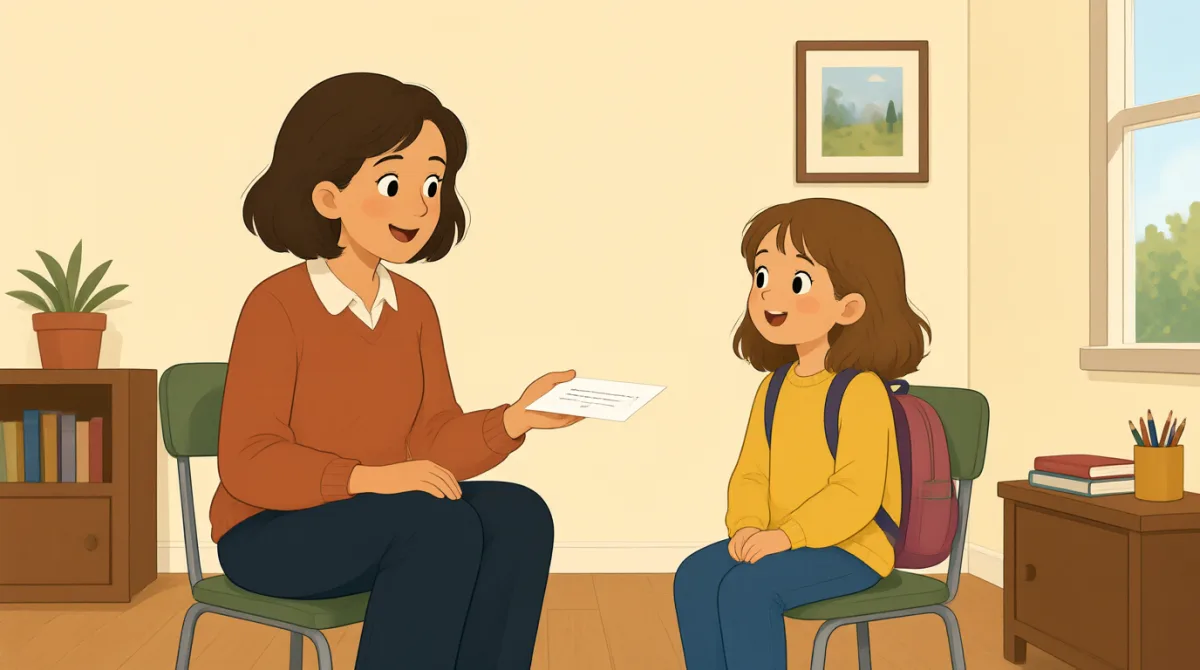

Hi, Emma. Leo had a good day today.
Merhaba Emma. Leo bugün güzel bir gün geçirdi.

That’s good. What did he do?
Güzel. Ne yaptı?
He read a short book in class.
Sınıfta kısa bir kitap okudu.
Did he enjoy it?
Hoşuna gitti mi?
Yes, he did. He read it aloud.
Evet, gitti. Kitabı sesli okudu.
Great! Thank you for telling me.
Harika! Bana söylediğin için teşekkür ederim.
Kelime Bilgisi7
- had a good daygüzel bir gün geçirdi
This means Leo's day at school went well. You can use it to describe a positive day.
Bu, Leo’nun okulda gününün iyi geçtiği anlamına gelir. Güzel geçen bir günü anlatmak için kullanabilirsin.
- What did he do?Ne yaptı?
This is a simple way to ask what someone did. You can change “he” to “you,” “she,” or a person's name.
Birinin ne yaptığını sormanın basit bir yolu. “he” yerine “you,” “she” ya da bir kişinin adını kullanabilirsin.
- in classsınıfta
This means in the classroom or during a lesson. For example, you can say, “We read a book in class.”
Bu, sınıfın içinde ya da ders sırasında demektir. Örneğin, “We read a book in class.” (Sınıfta bir kitap okuduk.) diyebilirsin.
- Did he enjoy it?Hoşuna gitti mi?
This asks if Leo liked the activity. You can use “Did you enjoy it?” to ask someone about an experience.
Bu soru, Leo’nun etkinliği sevip sevmediğini sorar. Birine yaşadığı bir deneyimi sormak için “Did you enjoy it?” diyebilirsin.
- Yes, he did.Evet, gitti.
This is a short answer to a question that starts with “Did he.” You can change “he” to “she” or “you.”
“Did he” ile başlayan bir soruya verilen kısa bir cevaptır. “he” yerine “she” ya da “you” kullanabilirsin.
- read it aloudsesli okumak
This means to read the words so other people can hear them. You can say, “She read the story aloud.”
Bu, başkalarının duyabilmesi için kelimeleri okumak demektir. “She read the story aloud.” (Hikâyeyi sesli okudu.) diyebilirsin.
- Thank you for telling me.Bana söylediğin için teşekkür ederim.
This is a polite way to thank someone for sharing information. You can use it when a teacher gives you an update.
Birinin seninle bilgi paylaşmasına teşekkür etmenin nazik bir yolu. Bir öğretmen sana bilgi verdiğinde bunu kullanabilirsin.
Önemli Cümleler8
- 1
Leo had a good day today.
Leo bugün güzel bir gün geçirdi.
Use this sentence to tell someone that Leo's day went well. You can replace “Leo” with another person's name.
Leo’nun gününün iyi geçtiğini söylemek için bu cümleyi kullan. “Leo” yerine başka bir kişinin adını koyabilirsin.
- 2
What did he do?
Ne yaptı?
Use this question to ask about someone's past actions. Change “he” to “you” or another person to fit the situation.
Birinin geçmişte ne yaptığını sormak için bu soruyu kullan. Duruma göre “he” yerine “you” ya da başka bir kişi kullanabilirsin.
- 3
He read a short book in class.
Sınıfta kısa bir kitap okudu.
This sentence describes what Leo did at school. You can change the activity, such as “He drew a picture in class.”
Bu cümle, Leo’nun okulda ne yaptığını anlatır. Etkinliği değiştirip “He drew a picture in class.” (Sınıfta resim çizdi.) diyebilirsin.
- 4
Did he enjoy it?
Hoşuna gitti mi?
Use this question to ask if someone liked an activity. Replace “he” with “you” to ask directly.
Birinin bir etkinliği sevip sevmediğini sormak için bu soruyu kullan. Doğrudan sormak için “he” yerine “you” kullan.
- 5
Yes, he did.
Evet, gitti.
This is a brief, natural answer to “Did he enjoy it?” Use “Yes, I did” when answering about yourself.
“Did he enjoy it?” sorusuna verilen kısa ve doğal bir cevaptır. Kendinle ilgili cevap verirken “Yes, I did” kullan.
- 6
He read it aloud.
Kitabı sesli okudu.
This tells someone that Leo read so others could hear. You can replace “read” with another action, such as “said it aloud.”
Bu cümle, Leo’nun başkalarının duyabileceği şekilde okuduğunu anlatır. “read” yerine “said it aloud” gibi başka bir eylem kullanabilirsin.
- 7
Great!
Harika!
This is a simple way to show that you are pleased or interested. You can use it in many everyday conversations.
Memnun olduğunu ya da ilgilendiğini göstermenin basit bir yoludur. Günlük konuşmalarda sıkça kullanabilirsin.
- 8
Thank you for telling me.
Bana söylediğin için teşekkür ederim.
Use this polite sentence when someone shares useful information with you. You can also say it to thank a teacher for an update.
Biri seninle yararlı bir bilgi paylaştığında bu nazik cümleyi kullan. Bir öğretmene verdiği bilgi için teşekkür ederken de söyleyebilirsin.