The Teacher Has a Message
선생님이 전해 주는 소식
Grace, the teacher, gives Emma a short message about Leo's school day. Emma listens and asks a simple question.
선생님인 그레이스가 레오의 학교생활에 관한 짧은 소식을 에마에게 전해요. 에마는 이야기를 듣고 간단한 질문을 해요.
대화6
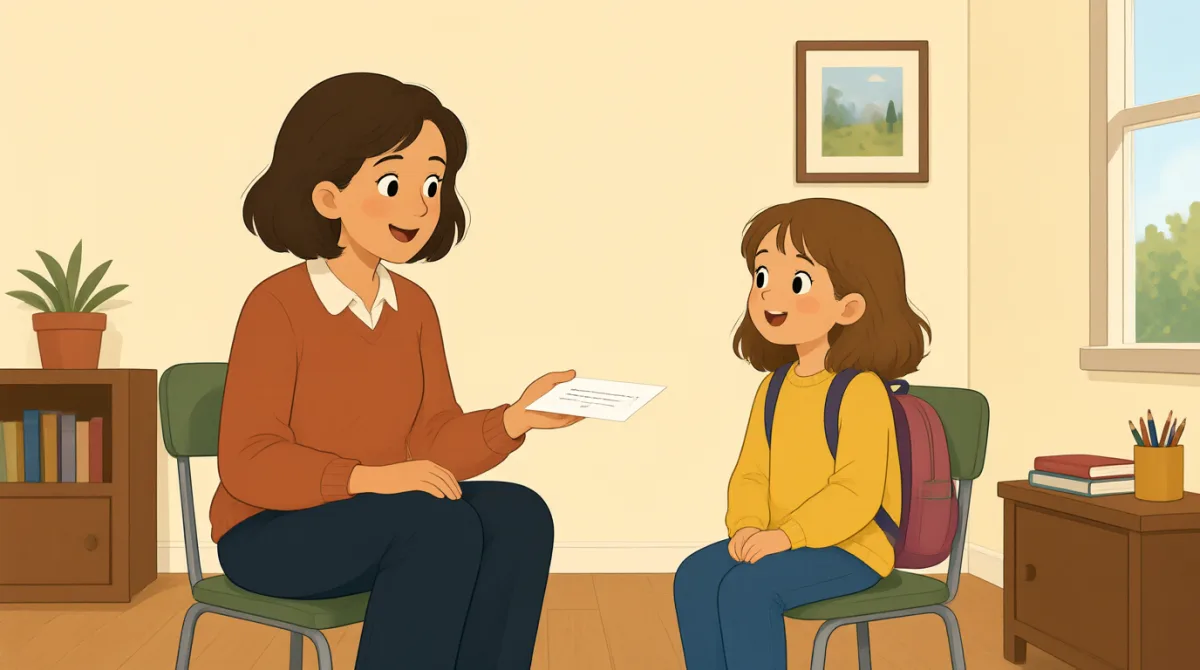

Hi, Emma. Leo had a good day today.
안녕하세요, 에마. 레오는 오늘 하루를 잘 보냈어요.

That’s good. What did he do?
다행이네요. 레오는 뭘 했어요?
He read a short book in class.
수업 시간에 짧은 책을 읽었어요.
Did he enjoy it?
재미있어했어요?
Yes, he did. He read it aloud.
네, 그랬어요. 소리 내서 읽었어요.
Great! Thank you for telling me.
정말 좋네요! 알려 주셔서 감사해요.
어휘7
- had a good day하루를 잘 보내다
This means Leo's day at school went well. You can use it to describe a positive day.
레오가 학교에서 좋은 하루를 보냈다는 뜻이에요. 기분 좋은 하루를 묘사할 때 쓸 수 있어요.
- What did he do?그는 뭘 했어요?
This is a simple way to ask what someone did. You can change “he” to “you,” “she,” or a person's name.
누군가가 무엇을 했는지 간단히 물어보는 표현이에요. “he” 대신 “you”, “she” 또는 사람 이름을 넣을 수 있어요.
- in class수업 시간에
This means in the classroom or during a lesson. For example, you can say, “We read a book in class.”
교실에서 또는 수업 중이라는 뜻이에요. 예를 들어 “We read a book in class.”라고 말할 수 있어요.
- Did he enjoy it?그는 재미있어했어요?
This asks if Leo liked the activity. You can use “Did you enjoy it?” to ask someone about an experience.
레오가 그 활동을 좋아했는지 묻는 표현이에요. 누군가에게 경험이 어땠는지 물을 때 “Did you enjoy it?”이라고 할 수 있어요.
- Yes, he did.네, 그랬어요.
This is a short answer to a question that starts with “Did he.” You can change “he” to “she” or “you.”
“Did he”로 시작하는 질문에 짧게 답하는 표현이에요. “he” 대신 “she”나 “you”를 쓸 수 있어요.
- read it aloud소리 내서 읽다
This means to read the words so other people can hear them. You can say, “She read the story aloud.”
다른 사람들이 들을 수 있도록 글을 읽는다는 뜻이에요. “She read the story aloud.”라고 말할 수 있어요.
- Thank you for telling me.알려 주셔서 감사해요.
This is a polite way to thank someone for sharing information. You can use it when a teacher gives you an update.
누군가 정보를 알려 줬을 때 감사의 뜻을 전하는 공손한 표현이에요. 선생님이 소식을 전해 주셨을 때 쓸 수 있어요.
핵심 문장8
- 1
Leo had a good day today.
레오는 오늘 하루를 잘 보냈어요.
Use this sentence to tell someone that Leo's day went well. You can replace “Leo” with another person's name.
레오가 좋은 하루를 보냈다고 말할 때 쓰는 문장이에요. “Leo” 대신 다른 사람의 이름을 넣을 수 있어요.
- 2
What did he do?
그는 뭘 했어요?
Use this question to ask about someone's past actions. Change “he” to “you” or another person to fit the situation.
누군가가 과거에 한 일을 물을 때 쓰는 질문이에요. 상황에 맞게 “he” 대신 “you”나 다른 사람을 가리키는 말을 쓰세요.
- 3
He read a short book in class.
그는 수업 시간에 짧은 책을 읽었어요.
This sentence describes what Leo did at school. You can change the activity, such as “He drew a picture in class.”
레오가 학교에서 한 일을 설명하는 문장이에요. 활동을 바꿔 “He drew a picture in class.”라고 할 수도 있어요.
- 4
Did he enjoy it?
그는 재미있어했어요?
Use this question to ask if someone liked an activity. Replace “he” with “you” to ask directly.
누군가가 어떤 활동을 좋아했는지 물을 때 쓰는 질문이에요. 상대방에게 직접 물으려면 “he”를 “you”로 바꾸세요.
- 5
Yes, he did.
네, 그랬어요.
This is a brief, natural answer to “Did he enjoy it?” Use “Yes, I did” when answering about yourself.
“Did he enjoy it?”이라는 질문에 짧고 자연스럽게 답하는 표현이에요. 자신에 관해 답할 때는 “Yes, I did.”라고 하세요.
- 6
He read it aloud.
그는 소리 내서 읽었어요.
This tells someone that Leo read so others could hear. You can replace “read” with another action, such as “said it aloud.”
레오가 다른 사람들도 들을 수 있게 읽었다고 말하는 문장이에요. “read”를 “said it aloud”처럼 다른 행동으로 바꿀 수 있어요.
- 7
Great!
정말 좋네요!
This is a simple way to show that you are pleased or interested. You can use it in many everyday conversations.
기쁘거나 관심이 있다는 걸 간단히 나타내는 표현이에요. 일상 대화에서 다양하게 쓸 수 있어요.
- 8
Thank you for telling me.
알려 주셔서 감사해요.
Use this polite sentence when someone shares useful information with you. You can also say it to thank a teacher for an update.
누군가 유용한 정보를 알려 줬을 때 쓰는 공손한 문장이에요. 선생님이 소식을 전해 주셨을 때 감사 인사로 쓸 수도 있어요.