Parents Discuss Their Worries
부모가 걱정을 나누다
Grace and David compare notes about their teenager's screen habits and the effect on sleep and schoolwork. They decide to raise the issue without turning it into a lecture.
그레이스와 데이비드는 십 대 자녀의 화면 사용 습관과 수면 및 학업에 미치는 영향을 서로 이야기한다. 잔소리처럼 들리지 않게 문제를 꺼내기로 한다.
대화9
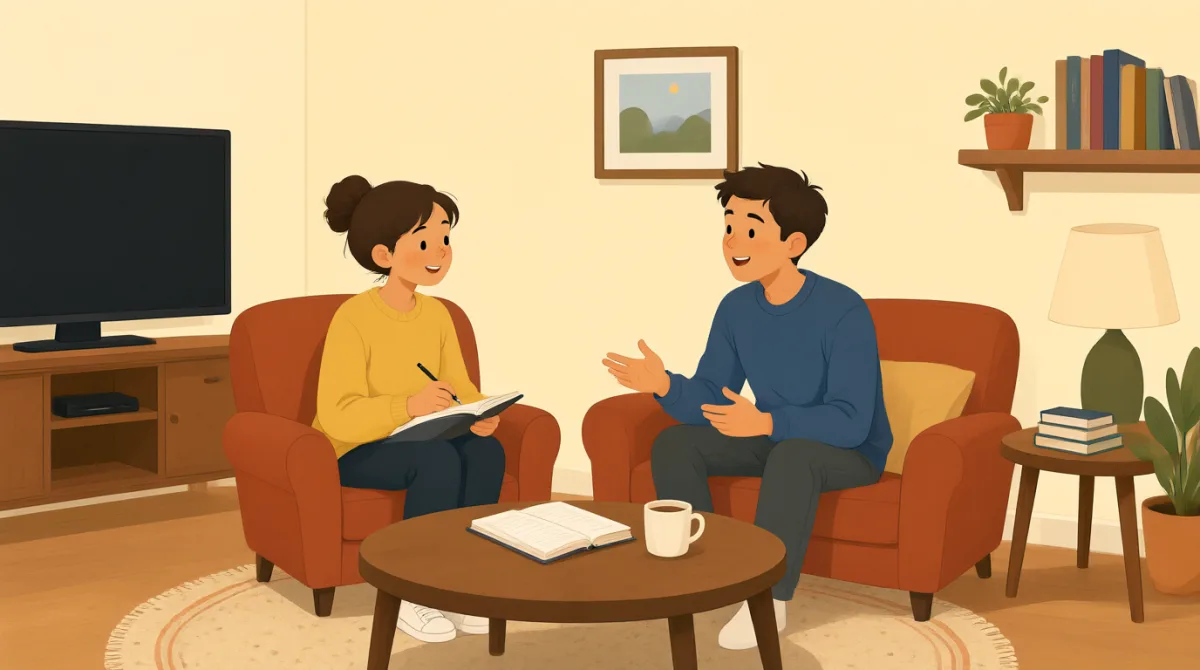

I wanted to compare notes about Leo’s screen time before we talk to him. I’ve noticed he’s often still scrolling when he should be getting ready for bed.
레오랑 이야기하기 전에 화면 사용 시간에 대해 서로 생각을 나눠 보고 싶었어. 잠자리에 들 준비를 해야 할 시간에도 아직 휴대폰을 계속 넘겨 보고 있더라고.

I’ve noticed that too, though I’m trying not to jump to conclusions. He seems tired in the mornings, but it could be a busy stretch at school, not just his phone.
나도 그건 봤어. 그래도 성급하게 단정 짓지 않으려고 해. 아침에 피곤해 보이긴 하지만, 휴대폰 때문만이 아니라 학교에서 한창 바쁠 수도 있잖아.
That’s fair. Still, he’s been putting off homework until late, and then he rushes through it. I’m worried the late nights are starting to affect both his sleep and his schoolwork.
그 말도 맞아. 그래도 요즘 숙제를 밤늦게까지 미루다가 급하게 해치우고 있어. 밤늦게까지 깨어 있는 게 수면이랑 학교 공부 모두에 영향을 주기 시작한 것 같아 걱정돼.
I’d be concerned too, but I don’t want us to make this sound like a verdict. If we lead with criticism, he may shut down before we hear what’s going on.
나라도 걱정되겠지만, 우리 말이 판결처럼 들리진 않았으면 좋겠어. 비판부터 하면 무슨 일인지 들어 보기도 전에 입을 닫아 버릴지도 몰라.
Exactly. I don’t want to launch into a lecture or make it about taking his phone away. I’d rather ask how he feels his screen habits are affecting his evenings.
맞아. 잔소리를 늘어놓거나 휴대폰을 뺏는 문제로 만들고 싶진 않아. 화면 사용 습관이 저녁 시간에 어떤 영향을 주는지 레오가 어떻게 느끼는지 물어보고 싶어.
Good approach. We should also listen for what the phone is doing for him—keeping in touch with friends, unwinding, whatever it may be—before we start talking about limits.
좋은 생각이야. 사용 시간 제한 얘기를 꺼내기 전에 휴대폰이 레오에게 어떤 역할을 하는지도 들어 보자. 친구들과 연락을 주고받거나, 긴장을 풀거나, 뭐든 말이야.
I can do that. I’ll tell him I’m not assuming he’s being irresponsible; I’ve just noticed a pattern, and I want us to figure out together whether it’s working for him.
그렇게 할게. 레오가 무책임하다고 단정하는 게 아니라, 그냥 반복되는 모습을 알아차렸고 그게 레오에게 잘 맞는지 같이 알아보고 싶다고 말할게.
And let’s be specific without keeping score. We can mention the late homework and tired mornings, then ask what he thinks would help him get enough rest.
그리고 점수를 매기듯 따지지는 말고 구체적으로 얘기하자. 숙제가 늦어지는 것과 아침에 피곤해하는 걸 언급한 다음, 충분히 쉴 수 있게 뭐가 도움이 될 것 같은지 물어보면 돼.
Agreed. We can bring it up when nobody’s in a rush, and keep the first conversation open-ended. If we understand his side, it’ll be easier to work out fair rules later.
좋아. 서로 바쁠 때가 아닐 때 얘기를 꺼내고, 처음부터 결론을 정해 두지 말자. 레오 입장을 이해하면 나중에 공평한 규칙을 정하기도 더 쉬울 거야.
어휘6
- compare notes서로 정보를 나누다
To share what you have each noticed about a situation. Here, the parents want to understand Leo’s screen habits before speaking with him.
어떤 상황에 대해 각자 알아차린 점을 서로 이야기한다는 뜻이에요. 여기서는 부모가 레오와 이야기하기 전에 레오의 화면 사용 습관을 파악하고 싶어 해요.
- jump to conclusions성급하게 결론을 내리다
To decide what something means before you have enough information. David is trying not to assume the phone is the only reason Leo seems tired.
정보가 충분하지 않은데도 어떤 일의 의미를 미리 판단한다는 뜻이에요. 데이비드는 레오가 피곤해 보이는 이유가 휴대폰 때문이라고만 단정하지 않으려고 해요.
- putting off미루다
Delaying something you need to do. Grace says Leo has been putting off his homework until late.
해야 할 일을 뒤로 늦춘다는 뜻이에요. 그레이스는 레오가 숙제를 밤늦게까지 미루고 있다고 말해요.
- shut down입을 닫다
To stop talking or engaging, often because you feel criticized or uncomfortable. David worries Leo may react this way if they begin with criticism.
비판받거나 불편하다고 느껴서 말을 멈추거나 대화에 참여하지 않는다는 뜻이에요. 데이비드는 비판부터 시작하면 레오가 그럴까 봐 걱정해요.
- launch into a lecture잔소리를 늘어놓기 시작하다
To start giving someone a long, serious talk, often in a way that feels critical. Grace wants to discuss the issue without lecturing Leo.
대개 비판처럼 들리는 길고 진지한 이야기를 누군가에게 하기 시작한다는 뜻이에요. 그레이스는 레오에게 잔소리하지 않고 문제를 이야기하고 싶어 해요.
- open-ended답을 자유롭게 할 수 있는
Allowing someone to answer freely rather than giving them only a yes-or-no choice. The parents want their first conversation to encourage Leo to explain his point of view.
예, 아니요로만 답하게 하는 대신 상대가 자유롭게 대답할 수 있도록 한다는 뜻이에요. 부모는 첫 대화에서 레오가 자기 관점을 설명할 수 있기를 바라요.
핵심 문장8
- 1
I’ve noticed he’s often still scrolling when he should be getting ready for bed.
잠자리에 들 준비를 해야 할 시간에도 아직 휴대폰을 계속 넘겨 보고 있더라고.
This is a calm way to describe a specific behavior you have observed. You can reuse “I’ve noticed…” to raise a concern without making an accusation.
직접 알아차린 구체적인 행동을 차분하게 말하는 표현이에요. “I’ve noticed…”를 활용하면 상대를 탓하지 않고 걱정되는 점을 꺼낼 수 있어요.
- 2
That’s fair. Still, he’s been putting off homework until late, and then he rushes through it.
그 말도 맞아. 그래도 요즘 숙제를 밤늦게까지 미루다가 급하게 해치우고 있어.
This sentence acknowledges someone else’s point before adding a concern. Use “That’s fair. Still…” to disagree gently or introduce another side of an issue.
상대의 의견을 인정한 뒤 걱정되는 점을 덧붙이는 문장이에요. “That’s fair. Still…”은 부드럽게 의견을 달리하거나 문제의 다른 면을 이야기할 때 쓸 수 있어요.
- 3
If we lead with criticism, he may shut down before we hear what’s going on.
비판부터 하면 무슨 일인지 들어 보기도 전에 입을 닫아 버릴지도 몰라.
This uses a conditional to explain a possible result and the reason for avoiding a particular approach. You can adapt “If we…, [someone] may…” when discussing how a choice could affect a conversation.
조건문으로 어떤 일이 일어날 수 있는지, 그리고 특정한 접근 방식을 피하려는 이유가 무엇인지 설명해요. 어떤 선택이 대화에 어떤 영향을 줄 수 있는지 말할 때 “If we…, [someone] may…”를 응용해 보세요.
- 4
I’d rather ask how he feels his screen habits are affecting his evenings.
화면 사용 습관이 저녁 시간에 어떤 영향을 주는지 레오가 어떻게 느끼는지 물어보고 싶어.
This politely expresses a preferred approach. Reuse “I’d rather ask…” when you want to suggest a question instead of making an assumption.
더 선호하는 접근 방식을 정중하게 표현하는 문장이에요. 단정하기보다 질문을 제안하고 싶을 때 “I’d rather ask…”를 활용해 보세요.
- 5
We should also listen for what the phone is doing for him—keeping in touch with friends, unwinding, whatever it may be—before we start talking about limits.
사용 시간 제한 얘기를 꺼내기 전에 휴대폰이 레오에게 어떤 역할을 하는지도 들어 보자. 친구들과 연락을 주고받거나, 긴장을 풀거나, 뭐든 말이야.
This sentence shows how to consider someone’s needs before setting rules. You can reuse “before we start talking about…” to suggest understanding a situation first.
규칙을 정하기 전에 상대의 필요를 고려하는 방법을 보여 주는 문장이에요. 먼저 상황을 이해하자고 제안할 때 “before we start talking about…”를 활용해 보세요.
- 6
I’m not assuming he’s being irresponsible; I’ve just noticed a pattern, and I want us to figure out together whether it’s working for him.
레오가 무책임하다고 단정하는 게 아니야. 그냥 반복되는 모습을 알아차렸고 그게 레오에게 잘 맞는지 같이 알아보고 싶어.
This clarifies that a concern is not meant as blame and invites collaboration. Use “I’ve just noticed…” and “figure out together” to raise a problem in a supportive way.
걱정을 비난하려는 뜻이 아니라고 밝히고 함께 해결하자고 제안하는 표현이에요. “I’ve just noticed…”와 “figure out together”를 활용하면 상대를 지지하는 태도로 문제를 꺼낼 수 있어요.
- 7
We can mention the late homework and tired mornings, then ask what he thinks would help him get enough rest.
숙제가 늦어지는 것과 아침에 피곤해하는 걸 언급한 다음, 충분히 쉴 수 있게 뭐가 도움이 될 것 같은지 물어보면 돼.
This gives a practical sequence for a respectful conversation: describe specific examples, then ask for the other person’s ideas. You can adapt “ask what [someone] thinks would help” to invite suggestions.
존중하는 대화를 위한 실용적인 순서를 보여 줘요. 구체적인 사례를 말한 다음 상대의 생각을 물어보는 거예요. 의견이나 제안을 듣고 싶을 때 “ask what [someone] thinks would help”를 응용해 보세요.
- 8
If we understand his side, it’ll be easier to work out fair rules later.
레오 입장을 이해하면 나중에 공평한 규칙을 정하기도 더 쉬울 거야.
This conditional explains why listening first can make problem-solving easier. Reuse “If we…, it’ll be easier to…” to connect an action with a likely benefit.
먼저 상대의 말을 듣는 것이 왜 문제 해결을 쉽게 하는지 조건문으로 설명해요. 어떤 행동이 가져올 수 있는 이점을 연결하고 싶을 때 “If we…, it’ll be easier to…”를 활용해 보세요.