Parents Discuss Their Worries
বাবা-মা তাঁদের উদ্বেগ নিয়ে কথা বলেন
Grace and David compare notes about their teenager's screen habits and the effect on sleep and schoolwork. They decide to raise the issue without turning it into a lecture.
গ্রেস ও ডেভিড তাঁদের কিশোর ছেলে লিওর স্ক্রিন ব্যবহারের অভ্যাস এবং তা তার ঘুম ও পড়াশোনায় কী প্রভাব ফেলছে, তা নিয়ে নিজেদের পর্যবেক্ষণ মিলিয়ে দেখেন। বিষয়টি তুলবেন ঠিক করেন, তবে যেন সেটা কোনো লম্বা উপদেশে পরিণত না হয়।
সংলাপ9
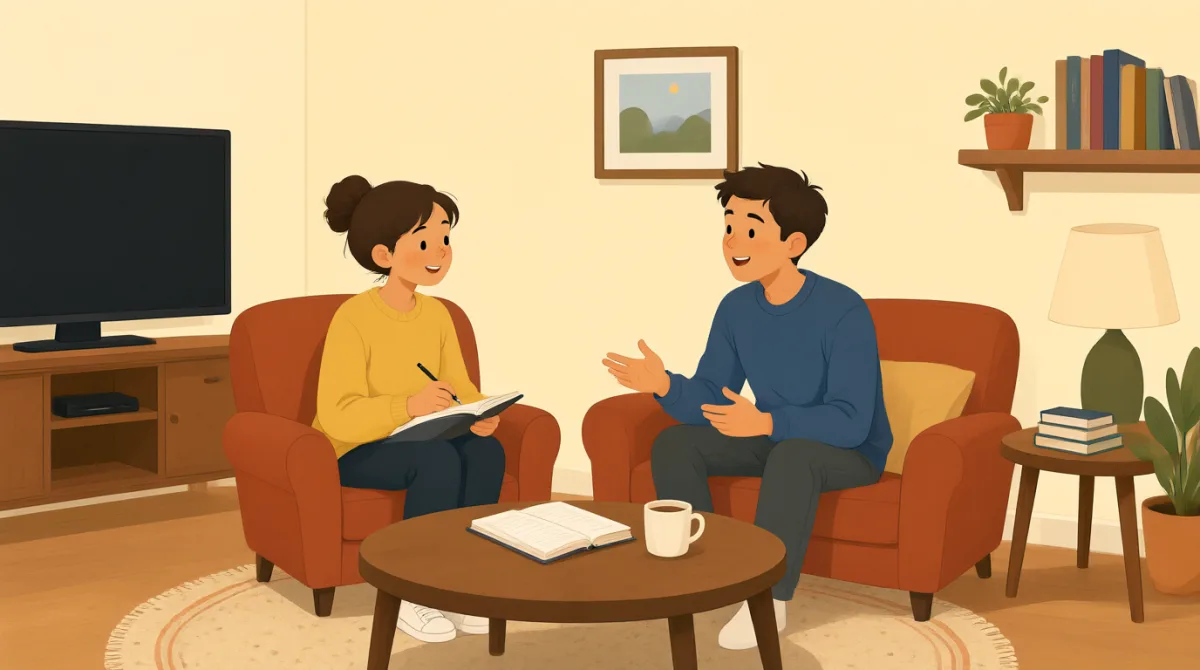

I wanted to compare notes about Leo’s screen time before we talk to him. I’ve noticed he’s often still scrolling when he should be getting ready for bed.
লিওর স্ক্রিন টাইম নিয়ে ওর সঙ্গে কথা বলার আগে তোমার সঙ্গে একটু মিলিয়ে নিতে চাই, আমরা কী কী লক্ষ করেছি। দেখছি, বিছানায় যাওয়ার প্রস্তুতি নেওয়ার কথা থাকলেও ও প্রায়ই তখনও ফোনে স্ক্রল করতে থাকে।

I’ve noticed that too, though I’m trying not to jump to conclusions. He seems tired in the mornings, but it could be a busy stretch at school, not just his phone.
আমিও সেটা লক্ষ করেছি, যদিও এখনই কোনো সিদ্ধান্তে পৌঁছাতে চাইছি না। সকালে ওকে ক্লান্ত লাগে, তবে এর কারণ স্কুলে ব্যস্ত সময় কাটানোও হতে পারে, শুধু ফোন নয়।
That’s fair. Still, he’s been putting off homework until late, and then he rushes through it. I’m worried the late nights are starting to affect both his sleep and his schoolwork.
সেটা ঠিক। তবু ও দেরি পর্যন্ত বাড়ির কাজ ফেলে রাখছে, তারপর তাড়াহুড়ো করে শেষ করছে। আমার চিন্তা হচ্ছে, রাত জাগার কারণে ওর ঘুম আর পড়াশোনা—দুটোই ক্ষতিগ্রস্ত হতে শুরু করেছে।
I’d be concerned too, but I don’t want us to make this sound like a verdict. If we lead with criticism, he may shut down before we hear what’s going on.
আমিও চিন্তিত হতাম, কিন্তু চাই না আমরা এমনভাবে বলি যেন ওর ব্যাপারে রায় দিয়ে ফেলেছি। সমালোচনা দিয়ে শুরু করলে, কী হচ্ছে সেটা আমাদের বলার আগেই ও হয়তো কথা বলা বন্ধ করে দেবে।
Exactly. I don’t want to launch into a lecture or make it about taking his phone away. I’d rather ask how he feels his screen habits are affecting his evenings.
একদম। আমি চাই না ওকে লম্বা উপদেশ দিতে শুরু করি, বা কথাটা ওর ফোন কেড়ে নেওয়ার দিকে নিয়ে যাই। বরং ওর কাছে জানতে চাই, ওর মনে হয় স্ক্রিন ব্যবহারের অভ্যাসগুলো সন্ধ্যাগুলোতে কী প্রভাব ফেলছে।
Good approach. We should also listen for what the phone is doing for him—keeping in touch with friends, unwinding, whatever it may be—before we start talking about limits.
ভালো ভাবনা। সীমা নিয়ে কথা বলার আগে ফোনটা ওর কী কাজে লাগছে, সেটাও আমাদের শোনা উচিত—বন্ধুদের সঙ্গে যোগাযোগ রাখা, মনটা হালকা করা, বা অন্য যা-ই হোক।
I can do that. I’ll tell him I’m not assuming he’s being irresponsible; I’ve just noticed a pattern, and I want us to figure out together whether it’s working for him.
আমি তা-ই করব। ওকে বলব, আমি ধরে নিচ্ছি না যে ও দায়িত্বজ্ঞানহীন আচরণ করছে; আমি শুধু একটা ধরন লক্ষ করেছি, আর আমরা একসঙ্গে বুঝে নিতে চাই এটা ওর জন্য ঠিকমতো কাজ করছে কি না।
And let’s be specific without keeping score. We can mention the late homework and tired mornings, then ask what he thinks would help him get enough rest.
আর দোষের হিসাব না কষে নির্দিষ্ট করে বলি। দেরিতে বাড়ির কাজ করা আর সকালে ক্লান্ত থাকার কথা বলতে পারি, তারপর ওকে জিজ্ঞেস করি, ওর মতে পর্যাপ্ত বিশ্রাম পেতে কী করলে সুবিধা হবে।
Agreed. We can bring it up when nobody’s in a rush, and keep the first conversation open-ended. If we understand his side, it’ll be easier to work out fair rules later.
ঠিক আছে। যখন কারও তাড়া থাকবে না, তখন কথাটা তুলতে পারি, আর প্রথম আলাপটা খোলামেলা রাখতে পারি। ওর দিকটা বুঝতে পারলে, পরে ন্যায্য নিয়ম ঠিক করা সহজ হবে।
শব্দভান্ডার6
- compare notesমতামত ও পর্যবেক্ষণ মিলিয়ে দেখা
To share what you have each noticed about a situation. Here, the parents want to understand Leo’s screen habits before speaking with him.
কোনো পরিস্থিতি নিয়ে প্রত্যেকে কী লক্ষ করেছে, তা পরস্পরের সঙ্গে ভাগ করে নেওয়া। এখানে, লিওর সঙ্গে কথা বলার আগে তার স্ক্রিন ব্যবহারের অভ্যাসটা ভালোভাবে বুঝতে চান তার বাবা-মা।
- jump to conclusionsআগেভাগে সিদ্ধান্তে পৌঁছানো
To decide what something means before you have enough information. David is trying not to assume the phone is the only reason Leo seems tired.
যথেষ্ট তথ্য পাওয়ার আগেই কোনো কিছুর মানে কী, তা ঠিক করে ফেলা। ডেভিড ধরে নিতে চাইছেন না যে লিওকে ক্লান্ত দেখানোর একমাত্র কারণ ফোন।
- putting offফেলে রাখা; পিছিয়ে দেওয়া
Delaying something you need to do. Grace says Leo has been putting off his homework until late.
যে কাজটা করা দরকার, সেটা দেরি করে করা। গ্রেস বলছেন, লিও বাড়ির কাজ দেরি পর্যন্ত ফেলে রাখছে।
- shut downকথা বলা বন্ধ করে দেওয়া
To stop talking or engaging, often because you feel criticized or uncomfortable. David worries Leo may react this way if they begin with criticism.
কথা বলা বা আলোচনায় অংশ নেওয়া বন্ধ করে দেওয়া, প্রায়ই সমালোচিত বা অস্বস্তিতে বোধ করার কারণে। ডেভিডের চিন্তা, সমালোচনা দিয়ে শুরু করলে লিও এমন প্রতিক্রিয়া দেখাতে পারে।
- launch into a lectureলম্বা উপদেশ দিতে শুরু করা
To start giving someone a long, serious talk, often in a way that feels critical. Grace wants to discuss the issue without lecturing Leo.
কাউকে দীর্ঘ ও গুরুগম্ভীর কথা বলতে শুরু করা, যা অনেক সময় সমালোচনা বলে মনে হয়। লিওকে উপদেশ না দিয়ে বিষয়টা নিয়ে কথা বলতে চান গ্রেস।
- open-endedখোলামেলা; নির্দিষ্ট উত্তর চাপিয়ে দেয় না এমন
Allowing someone to answer freely rather than giving them only a yes-or-no choice. The parents want their first conversation to encourage Leo to explain his point of view.
কাউকে শুধু হ্যাঁ বা না বলার সুযোগ না দিয়ে নিজের মতো করে উত্তর দেওয়ার সুযোগ দেওয়া। প্রথম কথোপকথনে লিও যেন নিজের দৃষ্টিভঙ্গি ব্যাখ্যা করতে পারে, সেটাই চান তার বাবা-মা।
গুরুত্বপূর্ণ বাক্য8
- 1
I’ve noticed he’s often still scrolling when he should be getting ready for bed.
দেখছি, বিছানায় যাওয়ার প্রস্তুতি নেওয়ার কথা থাকলেও ও প্রায়ই তখনও ফোনে স্ক্রল করতে থাকে।
This is a calm way to describe a specific behavior you have observed. You can reuse “I’ve noticed…” to raise a concern without making an accusation.
তুমি যা দেখেছ, তা নির্দিষ্ট করে শান্তভাবে বলার এটি একটি উপায়। কাউকে দোষারোপ না করে উদ্বেগ জানাতে “I’ve noticed…” (আমি লক্ষ করেছি…) কথাটি আবার ব্যবহার করতে পারো।
- 2
That’s fair. Still, he’s been putting off homework until late, and then he rushes through it.
সেটা ঠিক। তবু ও দেরি পর্যন্ত বাড়ির কাজ ফেলে রাখছে, তারপর তাড়াহুড়ো করে শেষ করছে।
This sentence acknowledges someone else’s point before adding a concern. Use “That’s fair. Still…” to disagree gently or introduce another side of an issue.
এই বাক্যে উদ্বেগ জানানোর আগে অন্যজনের কথার যুক্তি স্বীকার করা হয়েছে। ভদ্রভাবে দ্বিমত জানাতে বা বিষয়টির আরেকটি দিক তুলে ধরতে “That’s fair. Still…” (সেটা ঠিক। তবু…) ব্যবহার করো।
- 3
If we lead with criticism, he may shut down before we hear what’s going on.
সমালোচনা দিয়ে শুরু করলে, কী হচ্ছে সেটা আমাদের বলার আগেই ও হয়তো কথা বলা বন্ধ করে দেবে।
This uses a conditional to explain a possible result and the reason for avoiding a particular approach. You can adapt “If we…, [someone] may…” when discussing how a choice could affect a conversation.
কোনো একটি পদ্ধতি এড়িয়ে চলার কারণ ও তার সম্ভাব্য ফল বোঝাতে এখানে শর্তযুক্ত বাক্য ব্যবহার করা হয়েছে। কোনো সিদ্ধান্ত কথোপকথনে কী প্রভাব ফেলতে পারে, তা বলতে “If we…, [someone] may…” (আমরা যদি…, [কেউ] হয়তো…) কাঠামোটি নিজের মতো করে ব্যবহার করতে পারো।
- 4
I’d rather ask how he feels his screen habits are affecting his evenings.
বরং ওর কাছে জানতে চাই, ওর মনে হয় স্ক্রিন ব্যবহারের অভ্যাসগুলো সন্ধ্যাগুলোতে কী প্রভাব ফেলছে।
This politely expresses a preferred approach. Reuse “I’d rather ask…” when you want to suggest a question instead of making an assumption.
কোনো পছন্দের পদ্ধতি ভদ্রভাবে জানানো হয়েছে এই বাক্যে। অনুমান না করে কোনো প্রশ্ন করার প্রস্তাব দিতে “I’d rather ask…” (বরং আমি জানতে চাই…) আবার ব্যবহার করতে পারো।
- 5
We should also listen for what the phone is doing for him—keeping in touch with friends, unwinding, whatever it may be—before we start talking about limits.
সীমা নিয়ে কথা বলার আগে ফোনটা ওর কী কাজে লাগছে—বন্ধুদের সঙ্গে যোগাযোগ রাখা, মনটা হালকা করা, বা অন্য যা-ই হোক—সেটাও আমাদের শোনা উচিত।
This sentence shows how to consider someone’s needs before setting rules. You can reuse “before we start talking about…” to suggest understanding a situation first.
নিয়ম ঠিক করার আগে কারও প্রয়োজন বিবেচনা করার উপায় এই বাক্যে দেখানো হয়েছে। আগে পরিস্থিতিটা বুঝে নেওয়ার কথা বলতে “before we start talking about…” (আমরা … নিয়ে কথা বলা শুরু করার আগে) আবার ব্যবহার করতে পারো।
- 6
I’m not assuming he’s being irresponsible; I’ve just noticed a pattern, and I want us to figure out together whether it’s working for him.
আমি ধরে নিচ্ছি না যে ও দায়িত্বজ্ঞানহীন আচরণ করছে; আমি শুধু একটা ধরন লক্ষ করেছি, আর আমরা একসঙ্গে বুঝে নিতে চাই এটা ওর জন্য ঠিকমতো কাজ করছে কি না।
This clarifies that a concern is not meant as blame and invites collaboration. Use “I’ve just noticed…” and “figure out together” to raise a problem in a supportive way.
এখানে বোঝানো হয়েছে যে উদ্বেগের কথা বলা মানে দোষ চাপানো নয়, বরং একসঙ্গে সমাধান খুঁজে নেওয়ার আমন্ত্রণ। সহায়কভাবে কোনো সমস্যা তুলতে “I’ve just noticed…” (আমি শুধু লক্ষ করেছি…) এবং “figure out together” (একসঙ্গে বুঝে নেওয়া) ব্যবহার করো।
- 7
We can mention the late homework and tired mornings, then ask what he thinks would help him get enough rest.
দেরিতে বাড়ির কাজ করা আর সকালে ক্লান্ত থাকার কথা বলতে পারি, তারপর ওকে জিজ্ঞেস করি, ওর মতে পর্যাপ্ত বিশ্রাম পেতে কী করলে সুবিধা হবে।
This gives a practical sequence for a respectful conversation: describe specific examples, then ask for the other person’s ideas. You can adapt “ask what [someone] thinks would help” to invite suggestions.
সম্মানজনক কথোপকথনের একটি ব্যবহারিক ধাপ এই বাক্যে দেওয়া হয়েছে: নির্দিষ্ট উদাহরণ বলা, তারপর অন্যজনের মতামত জানতে চাওয়া। পরামর্শ জানতে “ask what [someone] thinks would help” ([কারও] মতে কী করলে সুবিধা হবে, তা জিজ্ঞেস করা) কাঠামোটি নিজের মতো করে ব্যবহার করতে পারো।
- 8
If we understand his side, it’ll be easier to work out fair rules later.
ওর দিকটা বুঝতে পারলে, পরে ন্যায্য নিয়ম ঠিক করা সহজ হবে।
This conditional explains why listening first can make problem-solving easier. Reuse “If we…, it’ll be easier to…” to connect an action with a likely benefit.
সমস্যা সমাধানের আগে মন দিয়ে শোনা কেন কাজে লাগে, তা এই শর্তযুক্ত বাক্যে বোঝানো হয়েছে। কোনো কাজের সঙ্গে তার সম্ভাব্য সুফলের যোগ দেখাতে “If we…, it’ll be easier to…” (আমরা যদি…, তাহলে … করা সহজ হবে) আবার ব্যবহার করতে পারো।