Parents Discuss Their Worries
माता-पिता अपनी चिंताओं पर चर्चा करते हैं
Grace and David compare notes about their teenager's screen habits and the effect on sleep and schoolwork. They decide to raise the issue without turning it into a lecture.
ग्रेस और डेविड अपने किशोर लियो की स्क्रीन इस्तेमाल करने की आदतों और उसके नींद व स्कूल के काम पर पड़ने वाले असर के बारे में एक-दूसरे से जानकारी साझा करते हैं। वे तय करते हैं कि इस मुद्दे को उठाएँगे, लेकिन इसे भाषण में नहीं बदलेंगे।
संवाद9
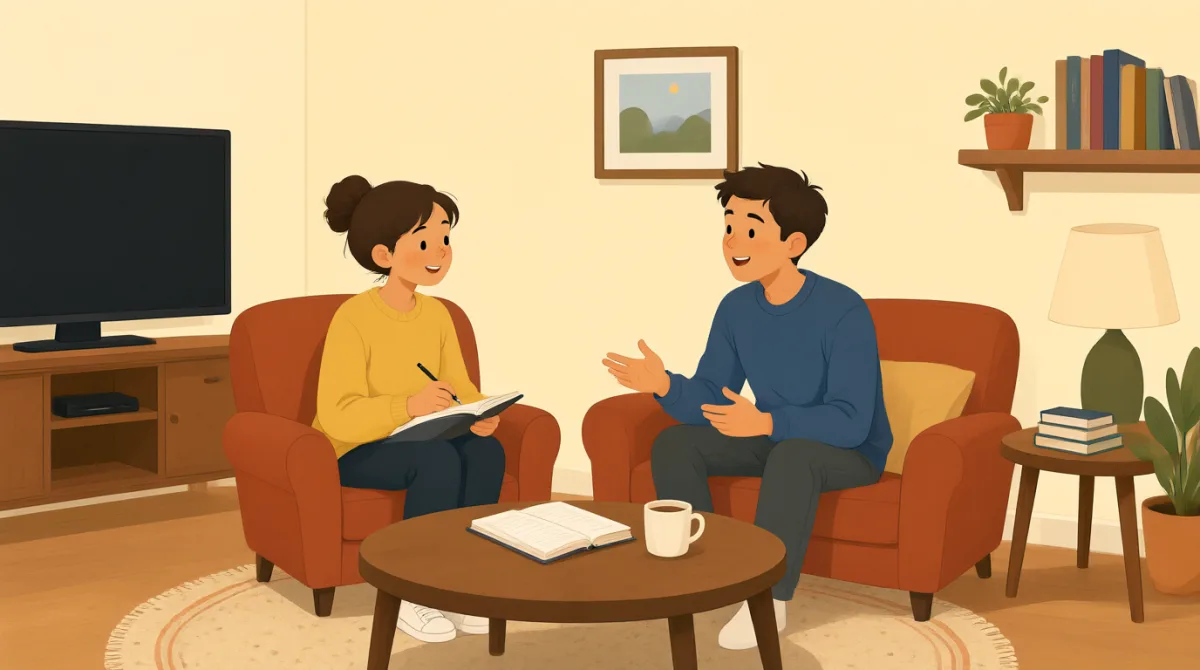

I wanted to compare notes about Leo’s screen time before we talk to him. I’ve noticed he’s often still scrolling when he should be getting ready for bed.
लियो के स्क्रीन टाइम के बारे में उससे बात करने से पहले मैं अपनी देखी हुई बातें तुमसे साझा करना चाहती थी। मैंने देखा है कि जब उसे सोने की तैयारी करनी चाहिए, तब भी वह अक्सर स्क्रीन पर स्क्रॉल कर रहा होता है।

I’ve noticed that too, though I’m trying not to jump to conclusions. He seems tired in the mornings, but it could be a busy stretch at school, not just his phone.
मैंने भी यह देखा है, हालांकि मैं जल्दबाज़ी में कोई निष्कर्ष नहीं निकालना चाहता। वह सुबह थका हुआ लगता है, लेकिन हो सकता है कि स्कूल में इन दिनों काम ज़्यादा हो, सिर्फ़ उसके फ़ोन की वजह न हो।
That’s fair. Still, he’s been putting off homework until late, and then he rushes through it. I’m worried the late nights are starting to affect both his sleep and his schoolwork.
यह बात सही है। फिर भी, वह अपना होमवर्क देर तक टालता रहता है और फिर उसे जल्दी-जल्दी करता है। मुझे चिंता है कि देर रात तक जागने का असर अब उसकी नींद और स्कूल के काम, दोनों पर पड़ने लगा है।
I’d be concerned too, but I don’t want us to make this sound like a verdict. If we lead with criticism, he may shut down before we hear what’s going on.
मुझे भी चिंता होती, लेकिन मैं नहीं चाहता कि हम ऐसा जताएँ जैसे फैसला पहले ही हो चुका है। अगर हम शुरुआत ही आलोचना से करेंगे, तो हो सकता है कि हम यह समझ पाएँ कि क्या हो रहा है, उससे पहले ही वह बात करना बंद कर दे।
Exactly. I don’t want to launch into a lecture or make it about taking his phone away. I’d rather ask how he feels his screen habits are affecting his evenings.
बिल्कुल। मैं लंबा-चौड़ा भाषण शुरू नहीं करना चाहती और न ही इसे उसका फ़ोन छीनने की बात बनाना चाहती हूँ। मैं उससे यह पूछना पसंद करूँगी कि उसे क्या लगता है, उसकी स्क्रीन इस्तेमाल करने की आदतें उसकी शामों को कैसे प्रभावित कर रही हैं।
Good approach. We should also listen for what the phone is doing for him—keeping in touch with friends, unwinding, whatever it may be—before we start talking about limits.
अच्छा तरीका है। सीमाओं की बात शुरू करने से पहले हमें यह भी समझने की कोशिश करनी चाहिए कि फ़ोन उसके लिए क्या करता है—दोस्तों के संपर्क में रहने में मदद करता है, उसे आराम देता है, या कुछ और—जो भी वजह हो।
I can do that. I’ll tell him I’m not assuming he’s being irresponsible; I’ve just noticed a pattern, and I want us to figure out together whether it’s working for him.
मैं ऐसा कर सकती हूँ। मैं उससे कहूँगी कि मैं यह मानकर नहीं चल रही कि वह गैर-जिम्मेदार है; मैंने बस एक पैटर्न देखा है और चाहती हूँ कि हम मिलकर समझें कि यह उसके लिए ठीक काम कर रहा है या नहीं।
And let’s be specific without keeping score. We can mention the late homework and tired mornings, then ask what he thinks would help him get enough rest.
और बिना हिसाब-किताब गिनाए, हमें ठोस उदाहरण देने चाहिए। हम देर से किए गए होमवर्क और सुबह की थकान का ज़िक्र कर सकते हैं, फिर पूछ सकते हैं कि उसके विचार से पर्याप्त आराम पाने में उसे क्या मदद मिलेगी।
Agreed. We can bring it up when nobody’s in a rush, and keep the first conversation open-ended. If we understand his side, it’ll be easier to work out fair rules later.
सहमत हूँ। जब किसी को जल्दी न हो, तब हम यह बात उठा सकते हैं और पहली बातचीत को खुला रख सकते हैं। अगर हम उसका पक्ष समझ लें, तो बाद में उचित नियम तय करना आसान होगा।
शब्दावली6
- compare notescompare notes
To share what you have each noticed about a situation. Here, the parents want to understand Leo’s screen habits before speaking with him.
किसी स्थिति के बारे में हर व्यक्ति ने जो देखा है, उसे एक-दूसरे से साझा करना। यहाँ माता-पिता लियो से बात करने से पहले उसकी स्क्रीन इस्तेमाल करने की आदतों को समझना चाहते हैं।
- jump to conclusionsjump to conclusions
To decide what something means before you have enough information. David is trying not to assume the phone is the only reason Leo seems tired.
पर्याप्त जानकारी मिलने से पहले ही किसी बात का अर्थ तय कर लेना। डेविड यह मान लेना नहीं चाहता कि लियो के थके हुए दिखने की एकमात्र वजह उसका फ़ोन है।
- putting offputting off
Delaying something you need to do. Grace says Leo has been putting off his homework until late.
किसी ज़रूरी काम को टालते रहना। ग्रेस कहती है कि लियो अपना होमवर्क देर तक टालता रहता है।
- shut downshut down
To stop talking or engaging, often because you feel criticized or uncomfortable. David worries Leo may react this way if they begin with criticism.
बात करना या बातचीत में शामिल होना बंद कर देना, अक्सर इसलिए क्योंकि आपको आलोचना या असहजता महसूस हो रही हो। डेविड को चिंता है कि अगर वे आलोचना से शुरुआत करेंगे, तो लियो इस तरह प्रतिक्रिया दे सकता है।
- launch into a lecturelaunch into a lecture
To start giving someone a long, serious talk, often in a way that feels critical. Grace wants to discuss the issue without lecturing Leo.
किसी को लंबी और गंभीर बातें समझाना शुरू कर देना, अक्सर ऐसे तरीके से जो आलोचनात्मक लगे। ग्रेस इस मुद्दे पर लियो को भाषण दिए बिना चर्चा करना चाहती है।
- open-endedopen-ended
Allowing someone to answer freely rather than giving them only a yes-or-no choice. The parents want their first conversation to encourage Leo to explain his point of view.
किसी को केवल हाँ या नहीं में जवाब देने के बजाय स्वतंत्र रूप से जवाब देने का अवसर देना। माता-पिता चाहते हैं कि उनकी पहली बातचीत लियो को अपना दृष्टिकोण समझाने के लिए प्रोत्साहित करे।
मुख्य वाक्य8
- 1
I’ve noticed he’s often still scrolling when he should be getting ready for bed.
मैंने देखा है कि जब उसे सोने की तैयारी करनी चाहिए, तब भी वह अक्सर स्क्रीन पर स्क्रॉल कर रहा होता है।
This is a calm way to describe a specific behavior you have observed. You can reuse “I’ve noticed…” to raise a concern without making an accusation.
यह आपके देखे हुए किसी खास व्यवहार का शांतिपूर्वक वर्णन करने का तरीका है। बिना आरोप लगाए चिंता जताने के लिए आप “I’ve noticed…” का दोबारा इस्तेमाल कर सकते हैं।
- 2
That’s fair. Still, he’s been putting off homework until late, and then he rushes through it.
यह बात सही है। फिर भी, वह अपना होमवर्क देर तक टालता रहता है और फिर उसे जल्दी-जल्दी करता है।
This sentence acknowledges someone else’s point before adding a concern. Use “That’s fair. Still…” to disagree gently or introduce another side of an issue.
यह वाक्य अपनी चिंता जोड़ने से पहले दूसरे व्यक्ति की बात को स्वीकार करता है। किसी बात से धीरे से असहमति जताने या मुद्दे का दूसरा पहलू सामने रखने के लिए “That’s fair. Still…” का इस्तेमाल करें।
- 3
If we lead with criticism, he may shut down before we hear what’s going on.
अगर हम शुरुआत ही आलोचना से करेंगे, तो हो सकता है कि हम यह समझ पाएँ कि क्या हो रहा है, उससे पहले ही वह बात करना बंद कर दे।
This uses a conditional to explain a possible result and the reason for avoiding a particular approach. You can adapt “If we…, [someone] may…” when discussing how a choice could affect a conversation.
इसमें किसी संभावित परिणाम और किसी खास तरीके से बचने की वजह समझाने के लिए शर्तिया वाक्य का इस्तेमाल किया गया है। किसी फैसले का बातचीत पर असर समझाते समय “If we…, [someone] may…” को अपने अनुसार बदल सकते हैं।
- 4
I’d rather ask how he feels his screen habits are affecting his evenings.
मैं उससे यह पूछना पसंद करूँगी कि उसे क्या लगता है, उसकी स्क्रीन इस्तेमाल करने की आदतें उसकी शामों को कैसे प्रभावित कर रही हैं।
This politely expresses a preferred approach. Reuse “I’d rather ask…” when you want to suggest a question instead of making an assumption.
यह अपनी पसंदीदा approach को विनम्रता से व्यक्त करता है। जब आप कोई धारणा बनाने के बजाय सवाल सुझाना चाहते हैं, तब “I’d rather ask…” का दोबारा इस्तेमाल करें।
- 5
We should also listen for what the phone is doing for him—keeping in touch with friends, unwinding, whatever it may be—before we start talking about limits.
सीमाओं की बात शुरू करने से पहले हमें यह भी समझने की कोशिश करनी चाहिए कि फ़ोन उसके लिए क्या करता है—दोस्तों के संपर्क में रहने में मदद करता है, उसे आराम देता है, या कुछ और—जो भी वजह हो।
This sentence shows how to consider someone’s needs before setting rules. You can reuse “before we start talking about…” to suggest understanding a situation first.
यह वाक्य नियम तय करने से पहले किसी की ज़रूरतों पर विचार करने का तरीका दिखाता है। पहले स्थिति को समझने का सुझाव देने के लिए “before we start talking about…” का दोबारा इस्तेमाल कर सकते हैं।
- 6
I’m not assuming he’s being irresponsible; I’ve just noticed a pattern, and I want us to figure out together whether it’s working for him.
मैं यह मानकर नहीं चल रही कि वह गैर-जिम्मेदार है; मैंने बस एक पैटर्न देखा है और चाहती हूँ कि हम मिलकर समझें कि यह उसके लिए ठीक काम कर रहा है या नहीं।
This clarifies that a concern is not meant as blame and invites collaboration. Use “I’ve just noticed…” and “figure out together” to raise a problem in a supportive way.
यह स्पष्ट करता है कि चिंता का उद्देश्य दोष देना नहीं है और साथ मिलकर समाधान खोजने का निमंत्रण देता है। सहायक तरीके से कोई समस्या उठाने के लिए “I’ve just noticed…” और “figure out together” का इस्तेमाल करें।
- 7
We can mention the late homework and tired mornings, then ask what he thinks would help him get enough rest.
हम देर से किए गए होमवर्क और सुबह की थकान का ज़िक्र कर सकते हैं, फिर पूछ सकते हैं कि उसके विचार से पर्याप्त आराम पाने में उसे क्या मदद मिलेगी।
This gives a practical sequence for a respectful conversation: describe specific examples, then ask for the other person’s ideas. You can adapt “ask what [someone] thinks would help” to invite suggestions.
यह सम्मानजनक बातचीत का एक व्यावहारिक क्रम बताता है: ठोस उदाहरण दें, फिर दूसरे व्यक्ति के विचार पूछें। सुझाव आमंत्रित करने के लिए “ask what [someone] thinks would help” को अपने अनुसार बदल सकते हैं।
- 8
If we understand his side, it’ll be easier to work out fair rules later.
अगर हम उसका पक्ष समझ लें, तो बाद में उचित नियम तय करना आसान होगा।
This conditional explains why listening first can make problem-solving easier. Reuse “If we…, it’ll be easier to…” to connect an action with a likely benefit.
यह शर्तिया वाक्य बताता है कि पहले ध्यान से सुनने से समस्या सुलझाना आसान क्यों हो सकता है। किसी काम को उसके संभावित लाभ से जोड़ने के लिए “If we…, it’ll be easier to…” का दोबारा इस्तेमाल करें।