Where Did You Go?
어디에 다녀왔어?
Emma asks Mia about her last vacation. Mia says she went to the coast and tells her what the town was like.
에마가 미아에게 지난 휴가가 어땠는지 물어봐요. 미아는 해안가에 있는 곳에 다녀왔다고 하며 그 마을이 어땠는지 이야기해요.
대화8
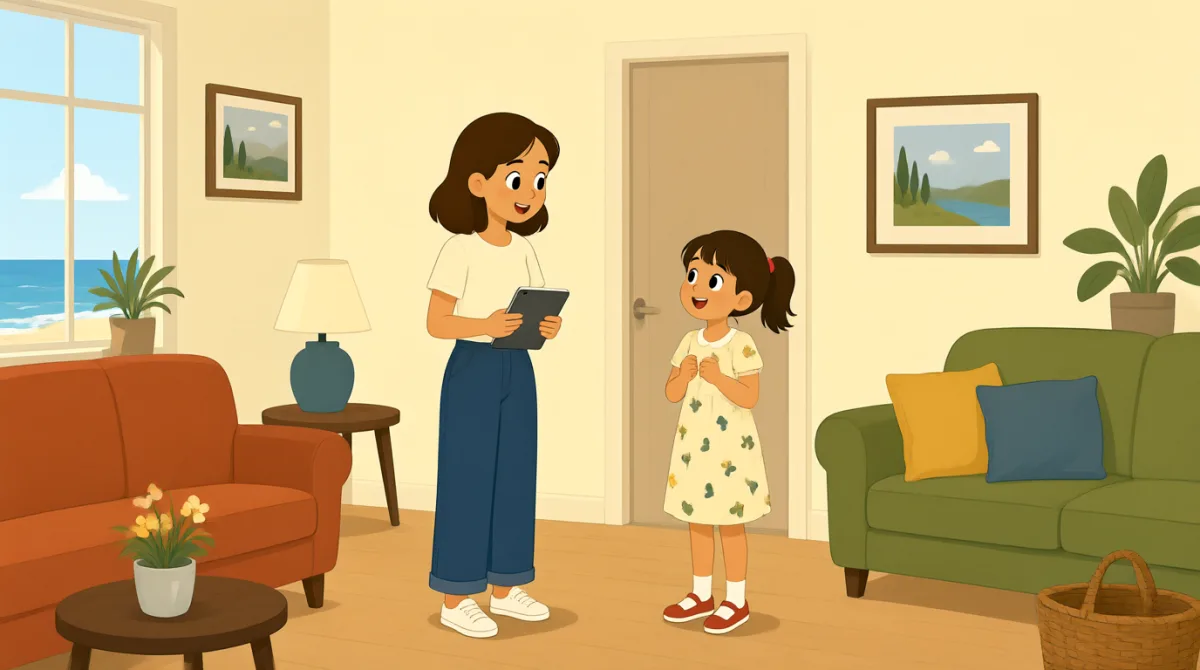

Hi, Mia! How was your last vacation?
안녕, 미아! 지난번 휴가는 어땠어?

It was great. I went to a small town on the coast.
정말 좋았어. 해안가에 있는 작은 마을에 다녀왔어.
That sounds nice! What was the town like?
좋았겠다! 그 마을은 어땠어?
It was quiet and pretty, with small shops and colorful houses.
조용하고 예뻤어. 작은 가게들이랑 알록달록한 집들이 있었어.
Was it busy with tourists?
관광객들로 붐볐어?
Not too busy. I went in early summer, so it was peaceful.
그렇게 붐비진 않았어. 초여름에 갔거든. 그래서 평화로웠어.
Did you like staying there?
거기서 지내는 거 좋았어?
Yes, I did. I loved the fresh air and the ocean views.
응, 좋았어. 맑은 공기랑 바다 풍경이 정말 좋더라.
어휘7
- on the coast해안가에
This means beside the sea. Use it to say where a town or place is.
바다 옆이라는 뜻이에요. 마을이나 장소가 어디에 있는지 말할 때 써요.
- What was the town like?그 마을은 어땠어?
This question asks someone to describe a place in the past. You can use “What was [place] like?” to ask about other places, too.
과거의 장소가 어땠는지 설명해 달라고 묻는 표현이에요. 다른 장소에 대해서도 “What was [place] like?”라고 물어볼 수 있어요.
- quiet and pretty조용하고 예쁜
These words describe a place that is peaceful and attractive. You can use them to describe a town, street, or park.
평화롭고 보기 좋은 장소를 묘사하는 말이에요. 마을, 거리, 공원을 설명할 때 쓸 수 있어요.
- busy with tourists관광객들로 붐비는
This describes a place with many visitors. You can ask, “Was it busy with tourists?” about a vacation spot.
방문객이 많은 장소를 묘사하는 표현이에요. 휴가지에 대해 “Was it busy with tourists?”라고 물어볼 수 있어요.
- early summer초여름
This means the beginning part of summer. Use it to say when something happened.
여름이 시작되는 무렵을 뜻해요. 어떤 일이 언제 있었는지 말할 때 써요.
- fresh air맑은 공기
This means clean, pleasant air outside. People often use this phrase when talking about nature or the countryside.
깨끗하고 기분 좋은 바깥 공기를 뜻해요. 자연이나 시골에 관해 이야기할 때 자주 쓰는 표현이에요.
- ocean views바다 풍경
This means sights of the ocean from a place. You can use it to describe what you see from a hotel, house, or town.
어떤 장소에서 바라보는 바다 풍경을 뜻해요. 호텔, 집, 마을에서 무엇이 보이는지 설명할 때 쓸 수 있어요.
핵심 문장7
- 1
How was your last vacation?
지난번 휴가는 어땠어?
This is a friendly way to ask someone about a past trip. You can replace “vacation” with another event, such as “weekend” or “holiday.”
누군가의 지난 여행에 대해 친근하게 물어보는 표현이에요. “vacation” 대신 “weekend”나 “holiday” 같은 다른 일을 넣어 말할 수도 있어요.
- 2
I went to a small town on the coast.
해안가에 있는 작은 마을에 다녀왔어.
This sentence tells where someone traveled. Use “I went to…” to talk about a place you visited.
누군가 어디로 여행했는지 말하는 문장이에요. 내가 방문한 장소를 이야기할 때 “I went to…”를 써요.
- 3
What was the town like?
그 마을은 어땠어?
This question asks for a description of a place in the past. You can ask, “What was the hotel like?” or “What was the beach like?”
과거의 장소가 어땠는지 설명해 달라고 묻는 질문이에요. “What was the hotel like?” 또는 “What was the beach like?”라고 물어볼 수 있어요.
- 4
It was quiet and pretty, with small shops and colorful houses.
조용하고 예뻤어. 작은 가게들이랑 알록달록한 집들이 있었어.
This is a useful way to describe a place and give examples of what it had. You can use “It was [description], with [details]” for other places.
장소를 묘사하고 그곳에 무엇이 있었는지 예를 들어 말할 때 유용한 표현이에요. 다른 장소에 대해서도 “It was [description], with [details]”라는 형태를 쓸 수 있어요.
- 5
Was it busy with tourists?
관광객들로 붐볐어?
This is a yes-or-no question about how many visitors were in a place. Use “Was it busy with…?” to ask about crowds or activity.
어떤 장소에 방문객이 얼마나 많았는지 묻는 예·아니요 질문이에요. 사람들로 붐볐는지 또는 활동이 많았는지 물을 때 “Was it busy with…?”를 써요.
- 6
I went in early summer, so it was peaceful.
초여름에 갔거든. 그래서 평화로웠어.
This sentence explains when someone went and describes the result. Use “so” to connect a reason or situation with its outcome.
누군가 언제 갔는지 설명하고 그 결과가 어땠는지도 말하는 문장이에요. 이유나 상황과 그 결과를 연결할 때 “so”를 써요.
- 7
I loved the fresh air and the ocean views.
맑은 공기랑 바다 풍경이 정말 좋았어.
This sentence says what someone enjoyed about a place. You can use “I loved…” to talk about favorite parts of a trip.
장소에서 무엇을 즐겼는지 말하는 문장이에요. 여행에서 가장 좋았던 부분을 이야기할 때 “I loved…”를 쓸 수 있어요.