Asking About the Day
오늘 하루 어땠어?
Emma greets her child, Leo, and asks about his day at school. He tells her what he did.
에마가 아이 레오에게 인사하고 학교에서 하루를 어떻게 보냈는지 물어봐요. 레오는 오늘 한 일을 이야기해요.
대화8
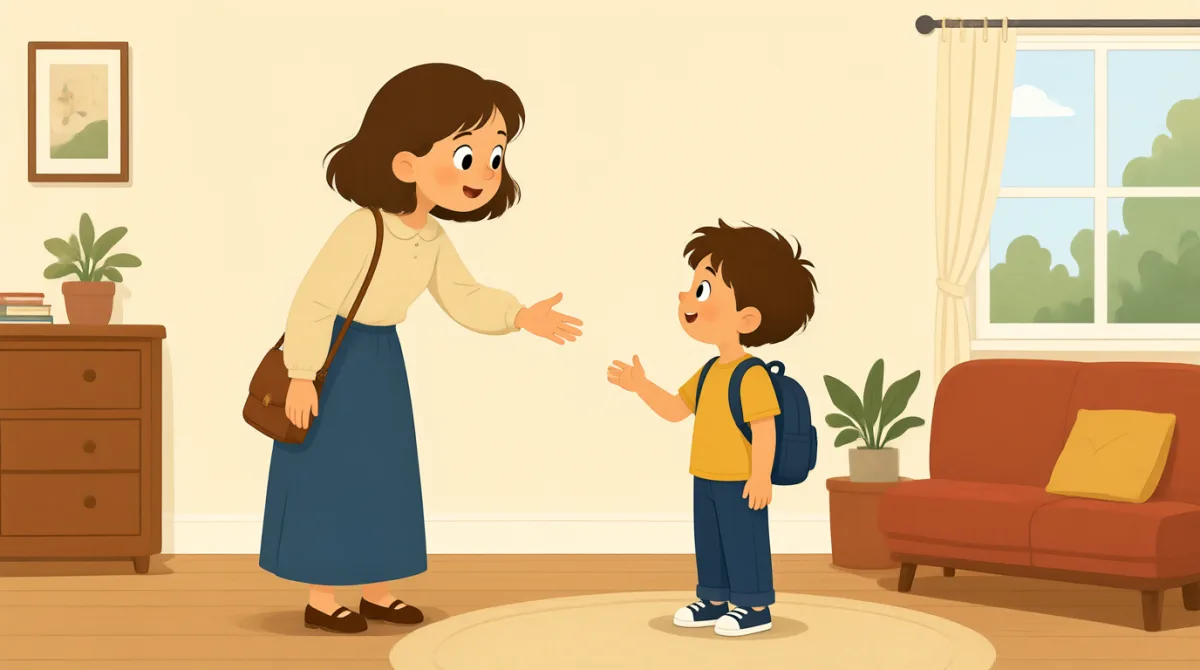

Hi, Leo! How was school today?
안녕, 레오! 오늘 학교 어땠어?

It was good! We read a fun story.
좋았어! 재미있는 이야기를 읽었어.
That sounds nice. What else did you do?
재밌었겠다. 또 뭐 했어?
We drew pictures and played outside.
그림도 그리고 밖에서 놀았어.
What did you draw?
뭘 그렸어?
I drew a big blue dog.
커다란 파란 개를 그렸어.
Great! Are you hungry now?
좋네! 지금 배고파?
Yes. Can we have a snack?
응. 간식 먹어도 돼?
어휘7
- How was school today?오늘 학교 어땠어?
This is a friendly way to ask about someone's school day. You can change “school” to another place or activity.
누군가 학교에서 하루를 어떻게 보냈는지 친근하게 물어보는 표현이에요. “school” 대신 다른 장소나 활동을 넣어 말할 수도 있어요.
- It was good!좋았어!
This is a simple way to say that something went well. You can use it to answer questions about your day or an event.
어떤 일이 잘됐다고 간단히 말하는 표현이에요. 하루나 행사가 어땠는지 묻는 질문에 답할 때 쓸 수 있어요.
- read a fun story재미있는 이야기를 읽다
This means to look at and understand a story that is enjoyable. You can say “read a fun book” or “read a fun story” to talk about reading.
재미있는 이야기를 읽고 이해한다는 뜻이에요. 독서에 대해 말할 때 “read a fun book”이나 “read a fun story”라고 할 수 있어요.
- What else did you do?또 뭐 했어?
Use this question to ask about more activities. You can replace “do” with another action, such as “What else did you see?”
이 질문으로 다른 활동도 물어볼 수 있어요. “do”를 “What else did you see?”의 “see”처럼 다른 동사로 바꿔도 돼요.
- played outside밖에서 놀다
This means to play outdoors, not inside a building. You can use it to talk about where you played.
건물 안이 아니라 야외에서 논다는 뜻이에요. 어디에서 놀았는지 말할 때 쓸 수 있어요.
- Are you hungry now?지금 배고파?
This is a way to ask if someone wants food at this time. You can change “hungry” to another feeling, such as “tired”.
상대가 지금 먹을 것을 원하는지 물어보는 표현이에요. “hungry” 대신 “tired”처럼 다른 기분을 나타내는 말을 넣을 수 있어요.
- have a snack간식을 먹다
A snack is a small amount of food between meals. You can use “have a snack” to ask or talk about eating one.
간식은 식사와 식사 사이에 먹는 적은 양의 음식이에요. 간식을 먹는 것에 대해 묻거나 말할 때 “have a snack”을 쓸 수 있어요.
핵심 문장8
- 1
Hi, Leo! How was school today?
안녕, 레오! 오늘 학교 어땠어?
This is a warm greeting and an easy way to ask about someone's day. Use “How was [place or activity] today?” to ask about another experience.
따뜻하게 인사하면서 상대의 하루에 대해 편하게 물어보는 표현이에요. 다른 경험을 물어보고 싶을 때는 “How was [place or activity] today?”라고 말해 보세요.
- 2
It was good! We read a fun story.
좋았어! 재미있는 이야기를 읽었어.
This gives a simple answer and tells one thing that happened. You can use “It was [feeling]!” and add an activity you did.
간단히 대답하면서 있었던 일 한 가지를 알려주는 문장이에요. “It was [feeling]!”이라고 말한 뒤 자신이 한 활동을 덧붙일 수 있어요.
- 3
That sounds nice.
재밌었겠다.
This is a friendly response when someone tells you about something pleasant. You can use it to show interest in their news.
누군가 즐거운 일을 이야기할 때 친근하게 반응하는 표현이에요. 상대의 이야기에 관심이 있다는 걸 보여줄 수 있어요.
- 4
What else did you do?
또 뭐 했어?
Use this question to invite someone to share another activity. You can ask it after they tell you one thing they did.
상대가 다른 활동도 이야기하도록 권하는 질문이에요. 상대가 자신이 한 일을 하나 말한 뒤에 물어볼 수 있어요.
- 5
We drew pictures and played outside.
그림도 그리고 밖에서 놀았어.
This sentence names two past activities. You can use “We [past action] and [past action]” to describe things you did with a group.
과거에 한 활동 두 가지를 말하는 문장이에요. 다른 사람들과 함께 한 일을 설명할 때 “We [past action] and [past action]” 패턴을 쓸 수 있어요.
- 6
What did you draw?
뭘 그렸어?
This asks someone to say what they made with a pencil, crayons, or paint. You can use “What did you [action]?” to ask about a past activity.
연필이나 크레용, 물감으로 무엇을 만들었는지 묻는 표현이에요. 과거에 한 활동을 물어볼 때 “What did you [action]?”이라고 할 수 있어요.
- 7
Are you hungry now?
지금 배고파?
This asks about someone's feeling at the present time. Use “Are you [feeling] now?” to ask how someone feels.
상대가 지금 어떤 기분인지 묻는 표현이에요. 기분을 물어볼 때 “Are you [feeling] now?” 패턴을 써 보세요.
- 8
Yes. Can we have a snack?
응. 간식 먹어도 돼?
This is a simple way to say yes and politely ask for something to eat. You can use “Can we have [food]?” to ask for food or a drink.
간단히 긍정한 뒤 먹을 것을 정중하게 부탁하는 표현이에요. 음식이나 음료를 달라고 할 때 “Can we have [food]?”라고 말할 수 있어요.