A Dinner to Build Trust
信頼を築く夕食
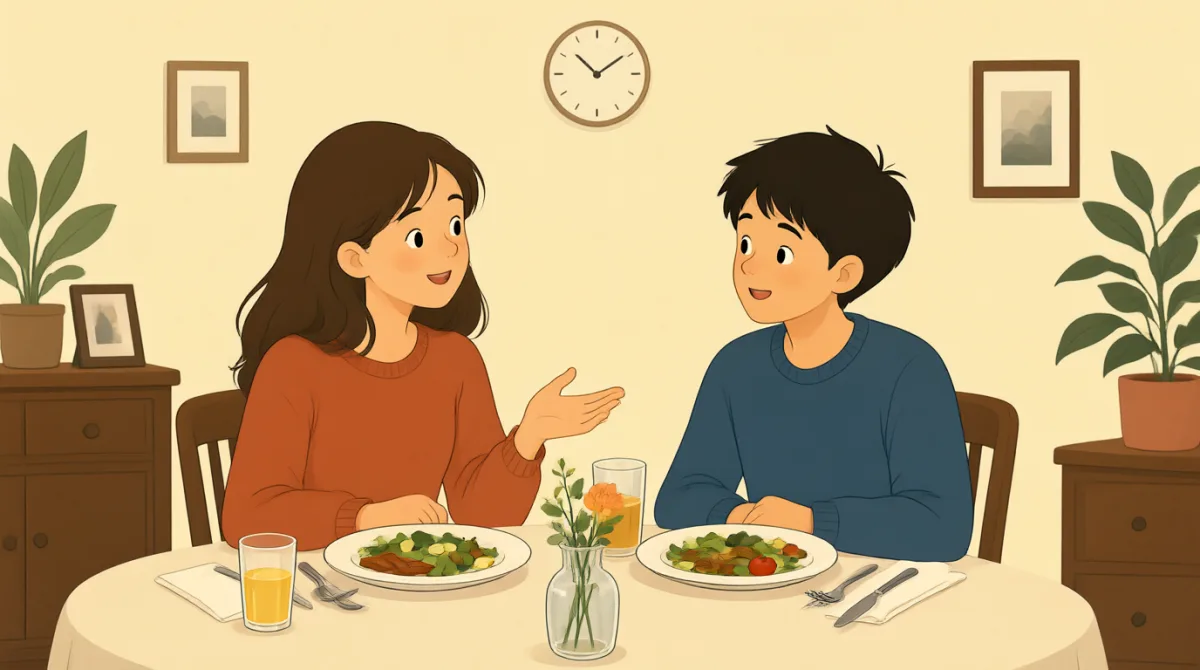
Over dinner, Mia and Leo talk about their teams’ working styles and what a dependable partnership looks like in practice. Their candid but considerate exchange helps ease tension after the difficult negotiations.
夕食をともにしながら、ミアとレオはそれぞれのチームの働き方や、実際に信頼できるパートナーシップとはどのようなものかについて話します。率直でありながら思いやりのあるやり取りを通じて、難しい交渉の後に残った緊張が和らいでいきます。
会話12

I’m glad we could step away from the conference room. We covered the contract in detail, but I don’t think a spreadsheet tells us how people prefer to work together.
会議室を離れて話せてよかったです。契約については細かく話し合いましたけど、スプレッドシートだけでは、みんながどう協力して働きたいかまでは分からないと思うんです。

I agree. Though I should admit, when the exclusivity discussion got tense, I wasn’t sure whether to push back or let the point breathe. I didn’t want caution to sound like distrust.
そうですね。実は、独占権の話が緊迫したとき、反論すべきか、それとも少し間を置くべきか迷っていたんです。慎重な姿勢が、不信感だと思われるのは避けたかったので。
That’s useful to hear. On our side, a pause can sometimes mean we’re considering the proposal, not quietly rejecting it. We should probably be more explicit about that.
そう言ってもらえて参考になります。私たちの場合、少し間を置くのは、提案を静かに拒んでいるのではなく、検討しているということもあります。その点は、もう少しはっきり伝えたほうがよさそうですね。
And I can be clearer when I have reservations. I’ve sometimes softened them so much that the other side might hear, “This is basically fine,” when I mean, “We need to work through this.”
それに、懸念があるときは、もっとはっきり伝えるようにします。これまで、相手に「基本的には問題ありません」と受け取られるくらい、懸念を和らげて伝えすぎたことがありました。本当は「ここは一緒に詰めていく必要があります」という意味なのに。
It’s a delicate balance. Directness can save time, but if it arrives without context, it may sound more adversarial than intended. What helps your team feel that a difficult question is asked in good faith?
さじ加減が難しいですね。率直に話せば時間を節約できますが、背景を伝えずに切り出すと、意図した以上に対立的に聞こえることがあります。難しい質問を誠意をもって尋ねていると、チームに感じてもらうには何が役立ちますか?
For us, it helps to hear the reason behind the question. If you explain what risk you’re trying to manage, we can respond to the concern rather than wonder whether you’re testing our loyalty.
私たちの場合、質問の理由が分かると助かります。どんなリスクに対処しようとしているのか説明してもらえれば、忠誠心を試されているのかと考えるのではなく、その懸念に応えることができます。
That makes sense. And what does dependability look like to you once the agreement is signed? I mean in the everyday decisions, not just the milestones we’ve put on paper.
なるほど。契約に署名した後、あなたにとって信頼できるパートナーシップとは、どんな形で表れますか?書面に記した節目だけでなく、日々の判断について聞きたいんです。
It means no surprises that could have been shared earlier. If a deadline is at risk, I’d rather hear that while there’s still room to adjust than receive a polished explanation after it slips.
前もって共有できたはずのことで、あとから驚かされないことです。期限に間に合わない可能性があるなら、遅れた後にもっともらしい説明を聞くより、まだ調整できるうちに知らせてもらいたいです。
I appreciate that. We can commit to raising risks early, even when we don’t yet have a complete solution. In return, it would help if concerns came with a proposed next step, however tentative.
それは大切ですね。解決策がまだまとまっていなくても、リスクは早めに伝えると約束できます。その代わり、懸念を伝えるときは、仮の案でもいいので、次に何をするか提案してもらえると助かります。
That seems fair. And if either team reads a pause or a careful phrase as agreement, we should check rather than build on the assumption. A quick clarification could save us a much longer conversation later.
それなら公平だと思います。どちらかのチームが、沈黙や慎重な言い回しを同意だと受け取ったら、その前提で話を進めるのではなく、確認するようにしましょう。ひと言確認するだけで、後の長い話し合いを避けられるかもしれません。
Exactly. Trust doesn’t require us to agree on every point; it requires us to make room for honest disagreement and follow through on what we do agree to. That feels like a workable foundation.
そのとおりです。信頼を築くために、すべての点で同意する必要はありません。率直に意見が食い違う余地をつくり、合意したことを実行する必要があります。それなら、うまくやっていけそうですね。
I can work with that. I came into dinner hoping we’d get beyond the clauses, and I think we have. Next time something sounds uncertain, I’ll ask what you mean instead of filling in the blanks myself.
それなら一緒にやっていけそうです。契約条項の話だけで終わらない夕食にしたいと思って来ましたが、そうできたと思います。次に何かが曖昧に聞こえたら、自分で勝手に意味を補わず、どういう意味か尋ねます。
語彙5
- let the point breathe少し間を置く
To pause before responding so an idea can be considered. Here, Leo is unsure whether to keep discussing a tense issue or give Mia’s team time to think.
考えを検討できるよう、返事をする前に間を置くことです。ここではレオは、緊張した話題を続けるべきか、ミアのチームに考える時間を与えるべきか迷っています。
- reservations懸念
Doubts or concerns about a proposal. In this conversation, Leo wants to express them clearly rather than make the proposal sound acceptable.
提案に対する疑問や不安のことです。この会話ではレオは、提案を受け入れられるように聞こえさせるのではなく、懸念をはっきり伝えたいと思っています。
- in good faith誠意をもって
Honestly and with a sincere intention to understand or cooperate. Asking a difficult question in good faith means it is not meant as a test of loyalty.
正直に、理解したり協力したりする意思をもって、という意味です。難しい質問を誠意をもって尋ねるというのは、相手の忠誠心を試すためではないということです。
- at risk危険にさらされている
Likely to be harmed, delayed, or unsuccessful. Leo uses it to describe a deadline that may not be met.
損なわれたり、遅れたり、うまくいかなかったりする可能性が高いことです。レオは、期限に間に合わない可能性を表すために使っています。
- follow through on約束を実行する
To do what you have promised or agreed to do. Mia says trust depends on keeping commitments, even when the teams disagree.
約束したことや合意したことを実際に行うことです。ミアは、チーム同士の意見が食い違っても、約束を守ることが信頼につながると言っています。
重要な文7
- 1
We covered the contract in detail, but I don’t think a spreadsheet tells us how people prefer to work together.
契約については細かく話し合いましたけど、スプレッドシートだけでは、みんながどう協力して働きたいかまでは分からないと思うんです。
This sentence contrasts formal details with human working styles. Use “I don’t think [thing] tells us [something]” to point out what a document or measure cannot capture.
この文では、形式的な詳細と、人と一緒に働くときのスタイルを対比しています。「I don’t think [thing] tells us [something]」は、書類や数値だけでは何が分からないかを伝えるときに使えます。
- 2
On our side, a pause can sometimes mean we’re considering the proposal, not quietly rejecting it.
私たちの場合、少し間を置くのは、提案を静かに拒んでいるのではなく、検討しているということもあります。
This is a tactful way to explain how your team’s behavior may be interpreted. You can reuse the structure “On our side, [behavior] can mean [intention], not [possible misunderstanding].”
自分たちのチームの行動がどう受け取られるかを、角を立てずに説明する表現です。「On our side, [behavior] can mean [intention], not [possible misunderstanding].」という形で、「私たちの場合、[行動]は[意図]を意味することがあり、[誤解される可能性のあること]ではありません」と伝えられます。
- 3
If you explain what risk you’re trying to manage, we can respond to the concern rather than wonder whether you’re testing our loyalty.
どんなリスクに対処しようとしているのか説明してもらえれば、忠誠心を試されているのかと考えるのではなく、その懸念に応えることができます。
This sentence asks for context so a difficult question feels constructive rather than personal. Use “If you explain [reason], we can [helpful response] rather than [unhelpful reaction].”
難しい質問が個人的な攻撃ではなく、建設的なものだと伝わるよう、背景を求める文です。「If you explain [reason], we can [helpful response] rather than [unhelpful reaction].」を使うと、「[理由]を説明してもらえれば、[望ましい対応]ができます。[望ましくない反応]をするのではなく」と伝えられます。
- 4
If a deadline is at risk, I’d rather hear that while there’s still room to adjust than receive a polished explanation after it slips.
期限に間に合わない可能性があるなら、遅れた後にもっともらしい説明を聞くより、まだ調整できるうちに知らせてもらいたいです。
This gives clear feedback about when and how to communicate a problem. “I’d rather [preferred action] than [less helpful alternative]” is useful for stating a preference diplomatically.
問題をいつ、どのように伝えてほしいかを明確に伝える文です。「I’d rather [preferred action] than [less helpful alternative]」は、希望を丁寧に述べるときに便利です。
- 5
We can commit to raising risks early, even when we don’t yet have a complete solution.
解決策がまだまとまっていなくても、リスクは早めに伝えると約束できます。
This is a practical commitment that acknowledges uncertainty without delaying communication. Use “We can commit to [action], even when [difficulty or limitation].”
不確かな点があることを認めつつ、連絡を遅らせないという実際的な約束です。「We can commit to [action], even when [difficulty or limitation].」を使うと、「[困難や制約]があっても、[行動]すると約束できます」と伝えられます。
- 6
A quick clarification could save us a much longer conversation later.
ひと言確認するだけで、後の長い話し合いを避けられるかもしれません。
This explains the value of checking an assumption before it creates a bigger problem. Use “A quick [action] could save us [larger cost or effort] later.”
思い込みが大きな問題になる前に確認することの大切さを説明しています。「A quick [action] could save us [larger cost or effort] later.」を使うと、「簡単な[行動]で、後々の大きな[負担や手間]を避けられるかもしれません」と伝えられます。
- 7
Trust doesn’t require us to agree on every point; it requires us to make room for honest disagreement and follow through on what we do agree to.
信頼を築くために、すべての点で同意する必要はありません。率直に意見が食い違う余地をつくり、合意したことを実行する必要があります。
This sentence defines trust through behavior rather than complete agreement. The structure “X doesn’t require [unrealistic condition]; it requires [practical actions]” is useful in negotiations.
この文は、完全に意見が一致することではなく、行動を通じて信頼を説明しています。「X doesn’t require [unrealistic condition]; it requires [practical actions]」という形は、交渉の場面で役立ちます。「Xには[現実的でない条件]は必要ありません。[実際にできる行動]が必要です」と伝えられます。