A Dinner to Build Trust
신뢰를 쌓는 저녁 식사
Over dinner, Mia and Leo talk about their teams’ working styles and what a dependable partnership looks like in practice. Their candid but considerate exchange helps ease tension after the difficult negotiations.
저녁 식사를 하며 미아와 레오는 각자 팀의 업무 방식과 실제로 믿을 수 있는 파트너십이 어떤 모습인지 이야기합니다. 솔직하면서도 배려심 있는 대화로 힘겨운 협상 후의 긴장을 누그러뜨립니다.
대화12
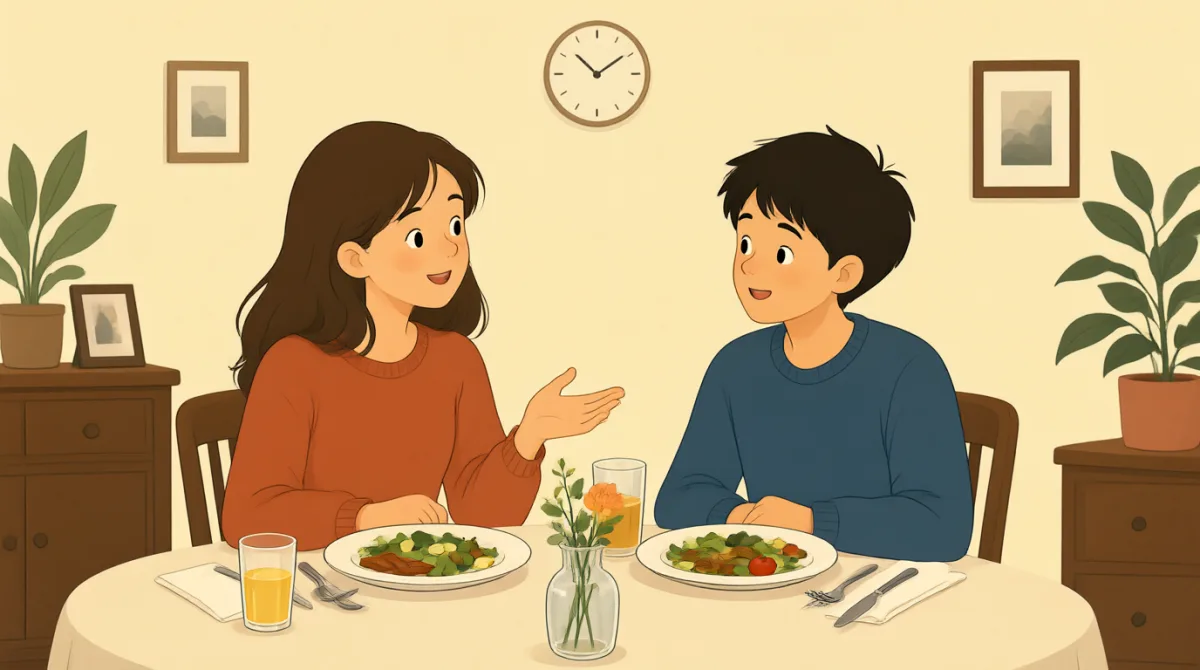

I’m glad we could step away from the conference room. We covered the contract in detail, but I don’t think a spreadsheet tells us how people prefer to work together.
회의실을 벗어나 이렇게 이야기할 수 있어서 좋네요. 계약 내용을 자세히 검토하긴 했지만, 엑셀 표만으로는 사람들이 어떤 방식으로 함께 일하기를 선호하는지 알 수 없다고 생각해요.

I agree. Though I should admit, when the exclusivity discussion got tense, I wasn’t sure whether to push back or let the point breathe. I didn’t want caution to sound like distrust.
저도 동의해요. 다만 독점권 논의가 팽팽해졌을 때는 제가 반대 의견을 내야 할지, 아니면 잠시 생각할 시간을 드려야 할지 솔직히 잘 모르겠더라고요. 신중한 태도가 불신으로 들리길 바라진 않았어요.
That’s useful to hear. On our side, a pause can sometimes mean we’re considering the proposal, not quietly rejecting it. We should probably be more explicit about that.
그렇게 말씀해 주셔서 도움이 되네요. 저희 쪽에서는 잠시 멈추는 게 제안을 조용히 거절한다는 뜻이 아니라, 검토하고 있다는 뜻일 때가 있어요. 그 점을 좀 더 분명히 설명해야겠네요.
And I can be clearer when I have reservations. I’ve sometimes softened them so much that the other side might hear, “This is basically fine,” when I mean, “We need to work through this.”
저도 우려가 있을 때 더 분명히 말할 수 있겠네요. 가끔 너무 완곡하게 표현해서 상대방이 ‘대체로 괜찮다는 뜻이구나’라고 받아들일 수 있겠더라고요. 제가 실제로 말하고 싶은 건 ‘이 부분은 함께 더 논의해야 합니다’인데요.
It’s a delicate balance. Directness can save time, but if it arrives without context, it may sound more adversarial than intended. What helps your team feel that a difficult question is asked in good faith?
균형을 잡기가 쉽지 않죠. 직접적으로 말하면 시간을 절약할 수 있지만, 맥락 없이 전달되면 의도보다 더 대립적으로 들릴 수도 있어요. 어려운 질문도 선의로 하는 말이라고 팀에서 느끼게 하려면 무엇이 도움이 될까요?
For us, it helps to hear the reason behind the question. If you explain what risk you’re trying to manage, we can respond to the concern rather than wonder whether you’re testing our loyalty.
저희는 질문을 하는 이유를 들으면 도움이 돼요. 어떤 위험을 관리하려는 건지 설명해 주시면, 충성심을 시험하는 건가 하고 의심하기보다 우려하시는 부분에 답할 수 있으니까요.
That makes sense. And what does dependability look like to you once the agreement is signed? I mean in the everyday decisions, not just the milestones we’ve put on paper.
이해가 되네요. 계약서에 서명한 뒤에 믿을 수 있는 파트너십은 어떤 모습이라고 생각하세요? 문서에 적힌 주요 일정 말고, 일상적인 의사결정에서요.
It means no surprises that could have been shared earlier. If a deadline is at risk, I’d rather hear that while there’s still room to adjust than receive a polished explanation after it slips.
미리 공유할 수 있었던 일을 나중에 갑자기 알게 되는 일이 없는 거죠. 마감일을 맞추기 어려울 것 같다면, 일정이 지난 뒤에 잘 다듬어진 설명을 듣기보다 아직 조정할 여지가 있을 때 알려 주시는 게 좋아요.
I appreciate that. We can commit to raising risks early, even when we don’t yet have a complete solution. In return, it would help if concerns came with a proposed next step, however tentative.
그렇게 말씀해 주셔서 고마워요. 아직 완전한 해결책이 없더라도 위험 요소를 일찍 공유하겠다고 약속드릴 수 있어요. 대신 우려를 제기하실 때는, 아직 확실하지 않더라도 다음에 취할 수 있는 조치도 함께 제안해 주시면 도움이 될 것 같아요.
That seems fair. And if either team reads a pause or a careful phrase as agreement, we should check rather than build on the assumption. A quick clarification could save us a much longer conversation later.
합리적인 제안이네요. 어느 한쪽 팀이 잠시 멈추거나 조심스럽게 표현한 말을 동의로 받아들인다면, 그걸 전제로 일을 진행하기보다 먼저 확인해야겠어요. 짧게 확인하는 것만으로도 나중에 훨씬 긴 대화를 피할 수 있으니까요.
Exactly. Trust doesn’t require us to agree on every point; it requires us to make room for honest disagreement and follow through on what we do agree to. That feels like a workable foundation.
맞아요. 신뢰를 쌓으려면 모든 사안에 동의해야 하는 건 아니에요. 솔직하게 의견이 다를 수 있도록 여지를 두고, 서로 동의한 사항은 책임지고 이행해야 하죠. 그렇게 하면 함께 일할 수 있는 든든한 기반이 될 것 같아요.
I can work with that. I came into dinner hoping we’d get beyond the clauses, and I think we have. Next time something sounds uncertain, I’ll ask what you mean instead of filling in the blanks myself.
그렇게라면 저도 좋습니다. 오늘 저녁에는 조항을 넘어 서로를 더 잘 이해할 수 있으면 했는데, 그런 것 같네요. 다음에 뭔가 불확실하게 들리면 혼자 짐작하지 않고 무슨 뜻인지 여쭤볼게요.
어휘5
- let the point breathe잠시 생각할 시간을 주다
To pause before responding so an idea can be considered. Here, Leo is unsure whether to keep discussing a tense issue or give Mia’s team time to think.
어떤 생각이나 제안을 검토할 수 있도록 바로 답하지 않고 잠시 기다리는 거예요. 여기서 레오는 긴장된 사안을 계속 논의할지, 미아의 팀에 생각할 시간을 줄지 고민하고 있어요.
- reservations우려 사항
Doubts or concerns about a proposal. In this conversation, Leo wants to express them clearly rather than make the proposal sound acceptable.
제안에 대해 느끼는 의문이나 걱정을 뜻해요. 이 대화에서 레오는 제안을 괜찮은 것처럼 들리게 하기보다 우려를 분명하게 표현하고 싶어 해요.
- in good faith선의로, 진심으로
Honestly and with a sincere intention to understand or cooperate. Asking a difficult question in good faith means it is not meant as a test of loyalty.
솔직하고 진정성 있는 태도로 이해하거나 협력하려는 마음을 뜻해요. 어려운 질문을 “in good faith”로 한다면, 상대의 충성심을 시험하려는 의도가 아니라는 의미예요.
- at risk위험에 처한, 차질이 생길 수 있는
Likely to be harmed, delayed, or unsuccessful. Leo uses it to describe a deadline that may not be met.
피해를 입거나 지연되거나 실패할 가능성이 있는 상태를 뜻해요. 레오는 기한을 지키지 못할 수도 있는 상황을 설명할 때 이 표현을 써요.
- follow through on약속한 일을 이행하다
To do what you have promised or agreed to do. Mia says trust depends on keeping commitments, even when the teams disagree.
하겠다고 약속하거나 동의한 일을 실제로 하는 거예요. 미아는 서로 의견이 다르더라도 약속을 지키는 것이 신뢰의 바탕이라고 말해요.
핵심 문장7
- 1
We covered the contract in detail, but I don’t think a spreadsheet tells us how people prefer to work together.
계약 내용을 자세히 검토하긴 했지만, 엑셀 표만으로는 사람들이 어떤 방식으로 함께 일하기를 선호하는지 알 수 없다고 생각해요.
This sentence contrasts formal details with human working styles. Use “I don’t think [thing] tells us [something]” to point out what a document or measure cannot capture.
이 문장은 공식적인 세부 사항과 사람들의 업무 방식이 서로 다르다는 점을 보여 줘요. “I don’t think [thing] tells us [something]”은 문서나 수치만으로는 무엇을 알 수 없는지 짚을 때 쓸 수 있어요.
- 2
On our side, a pause can sometimes mean we’re considering the proposal, not quietly rejecting it.
저희 쪽에서는 잠시 멈추는 게 제안을 조용히 거절한다는 뜻이 아니라, 검토하고 있다는 뜻일 때가 있어요.
This is a tactful way to explain how your team’s behavior may be interpreted. You can reuse the structure “On our side, [behavior] can mean [intention], not [possible misunderstanding].”
자신의 팀이 보이는 행동이 어떻게 해석될 수 있는지 정중하게 설명하는 표현이에요. “On our side, [behavior] can mean [intention], not [possible misunderstanding].” 구조를 활용하면 ‘저희 쪽에서는 [행동]이 [의도]를 뜻할 수 있고, [잘못 이해할 수 있는 뜻]은 아니에요’라고 말할 수 있어요.
- 3
If you explain what risk you’re trying to manage, we can respond to the concern rather than wonder whether you’re testing our loyalty.
어떤 위험을 관리하려는 건지 설명해 주시면, 충성심을 시험하는 건가 하고 의심하기보다 우려하시는 부분에 답할 수 있어요.
This sentence asks for context so a difficult question feels constructive rather than personal. Use “If you explain [reason], we can [helpful response] rather than [unhelpful reaction].”
이 문장은 어려운 질문이 개인적인 공격이 아니라 건설적인 대화로 느껴지도록 맥락을 요청해요. “If you explain [reason], we can [helpful response] rather than [unhelpful reaction].”은 ‘[이유]를 설명해 주시면, [도움이 되는 대응]을 할 수 있고 [바람직하지 않은 반응]은 하지 않을 수 있어요’라는 뜻이에요.
- 4
If a deadline is at risk, I’d rather hear that while there’s still room to adjust than receive a polished explanation after it slips.
마감일을 맞추기 어려울 것 같다면, 일정이 지난 뒤에 잘 다듬어진 설명을 듣기보다 아직 조정할 여지가 있을 때 알려 주시는 게 좋아요.
This gives clear feedback about when and how to communicate a problem. “I’d rather [preferred action] than [less helpful alternative]” is useful for stating a preference diplomatically.
문제를 언제, 어떻게 알리면 좋을지 분명하게 전달하는 문장이에요. “I’d rather [preferred action] than [less helpful alternative]”은 덜 바람직한 방법보다 선호하는 방법을 정중하게 말할 때 유용해요.
- 5
We can commit to raising risks early, even when we don’t yet have a complete solution.
아직 완전한 해결책이 없더라도 위험 요소를 일찍 공유하겠다고 약속드릴 수 있어요.
This is a practical commitment that acknowledges uncertainty without delaying communication. Use “We can commit to [action], even when [difficulty or limitation].”
불확실한 점을 인정하면서도 소통을 미루지 않겠다는 실질적인 약속이에요. “We can commit to [action], even when [difficulty or limitation].”은 ‘[어려움이나 제약]이 있더라도 [행동]하겠다고 약속할 수 있어요’라는 뜻이에요.
- 6
A quick clarification could save us a much longer conversation later.
짧게 확인하는 것만으로도 나중에 훨씬 긴 대화를 피할 수 있으니까요.
This explains the value of checking an assumption before it creates a bigger problem. Use “A quick [action] could save us [larger cost or effort] later.”
가정이나 오해가 더 큰 문제로 이어지기 전에 확인하는 것이 왜 유용한지 설명해요. “A quick [action] could save us [larger cost or effort] later.”는 ‘간단한 [행동]으로 나중에 더 큰 [비용이나 수고]를 줄일 수 있어요’라는 뜻이에요.
- 7
Trust doesn’t require us to agree on every point; it requires us to make room for honest disagreement and follow through on what we do agree to.
신뢰를 쌓으려면 모든 사안에 동의해야 하는 건 아니에요. 솔직하게 의견이 다를 수 있도록 여지를 두고, 서로 동의한 사항은 책임지고 이행해야 하죠.
This sentence defines trust through behavior rather than complete agreement. The structure “X doesn’t require [unrealistic condition]; it requires [practical actions]” is useful in negotiations.
이 문장은 완벽한 의견 일치가 아니라 행동을 통해 신뢰를 정의해요. “X doesn’t require [unrealistic condition]; it requires [practical actions]” 구조는 협상에서 ‘X에 [현실적이지 않은 조건]이 필요한 건 아니고, [실질적인 행동]이 필요하다’고 말할 때 유용해요.