Asking About Their Health
ถามไถ่เรื่องสุขภาพ
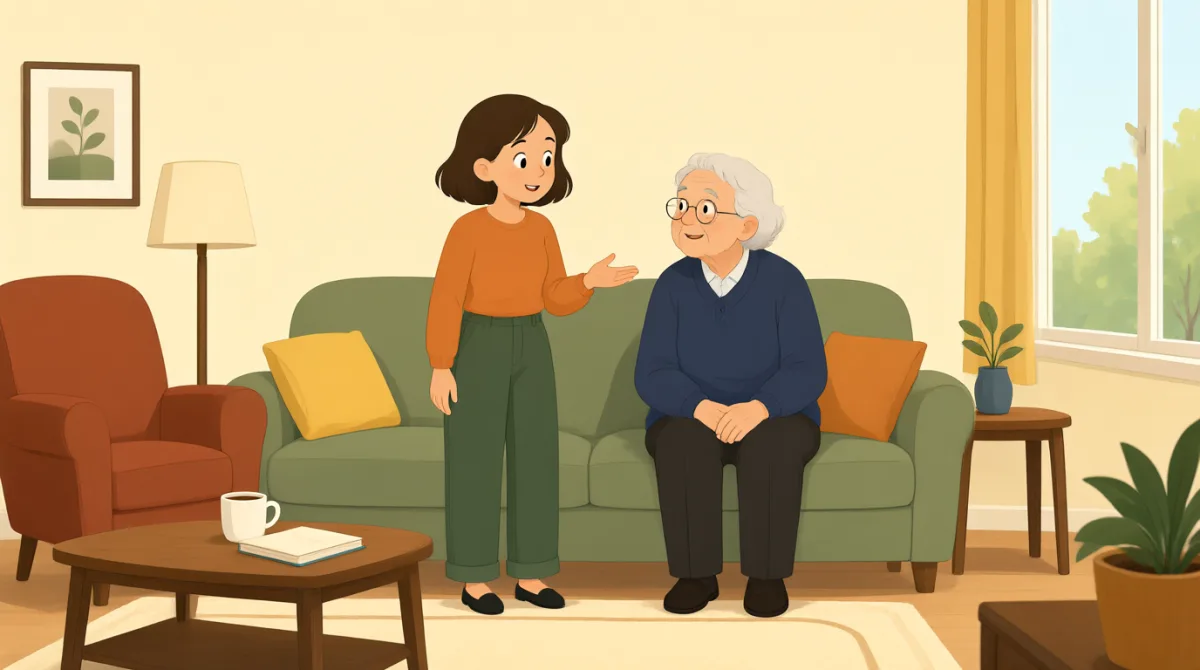
Emma asks how her grandparents have been feeling. They talk about a recent checkup and their daily walks.
เอมมาถามคุณปู่คุณย่าว่าช่วงนี้รู้สึกเป็นอย่างไรบ้าง พวกเขาคุยกันเรื่องการตรวจสุขภาพเมื่อไม่นานมานี้และการเดินเล่นทุกวัน
บทสนทนา9

How have you both been feeling lately? Are you getting enough rest?
ช่วงนี้คุณปู่คุณย่ารู้สึกเป็นยังไงบ้าง พักผ่อนเพียงพอไหม

I’ve been feeling well, thank you. I went for a checkup last week.
ย่าสบายดีจ้ะ ขอบใจนะ อาทิตย์ก่อนย่าไปตรวจสุขภาพมา
That’s good. What did the doctor say?
ดีจัง แล้วหมอว่าไงบ้าง
Everything looked fine. I just need to drink more water and keep walking.
ทุกอย่างดูปกติดีจ้ะ แค่ต้องดื่มน้ำให้มากขึ้นแล้วก็เดินต่อไป

We walk around the park every morning, unless it rains.
พวกเราเดินรอบสวนสาธารณะทุกเช้า ถ้าฝนไม่ตกนะ
How far do you walk? Does it make you tired?
เดินไกลแค่ไหนเหรอ เหนื่อยไหม
Not too far. We take our time and sit down if we need to.
ไม่ไกลมากหรอก เราค่อย ๆ เดิน แล้วก็นั่งพักถ้าจำเป็น
Walking helps us feel strong. You should come with us tomorrow.
การเดินช่วยให้พวกเราแข็งแรงนะ พรุ่งนี้มาเดินด้วยกันสิ
I’d love to! I’ll bring my walking shoes.
ยินดีเลย! หนูจะเอารองเท้าเดินมาด้วย
คำศัพท์8
- feeling wellรู้สึกสบายดี
This means being in good health. Use it to tell someone how you are doing.
หมายถึงมีสุขภาพดี ใช้บอกใครสักคนว่าช่วงนี้เราสบายดี
- checkupการตรวจสุขภาพ
A checkup is a visit to the doctor to see if you are healthy. You can say, “I have a checkup next week.”
“checkup” คือการไปพบแพทย์เพื่อตรวจดูว่าสุขภาพแข็งแรงดีไหม พูดได้ว่า “I have a checkup next week.” (อาทิตย์หน้าฉันมีนัดตรวจสุขภาพ)
- everything looked fineทุกอย่างดูปกติดี
This means the doctor did not find a problem. Use it to share reassuring news after a visit or test.
หมายถึงหมอตรวจแล้วไม่พบปัญหา ใช้บอกข่าวที่ทำให้อีกฝ่ายสบายใจหลังไปพบแพทย์หรือเข้ารับการตรวจ
- keep walkingเดินต่อไป
This means to continue walking regularly. Use “keep” with an -ing verb to encourage someone to continue an activity.
หมายถึงเดินเป็นประจำต่อไป ใช้ “keep” ตามด้วยคำกริยาที่เติม -ing เพื่อสนับสนุนให้ใครสักคนทำกิจกรรมนั้นต่อ
- unless it rainsถ้าฝนไม่ตก
This means something will happen if it does not rain. Use “unless” to describe an exception to a plan.
หมายถึงบางอย่างจะเกิดขึ้นถ้าฝนไม่ตก ใช้ “unless” เพื่อบอกข้อยกเว้นของแผนที่วางไว้
- take our timeค่อย ๆ ทำ ไม่ต้องรีบ
This means to do something slowly and without rushing. You can use it when you want to go at a comfortable pace.
หมายถึงทำบางอย่างอย่างช้า ๆ โดยไม่เร่งรีบ ใช้เมื่อต้องการทำสิ่งต่าง ๆ ไปตามจังหวะที่สบาย
- sit downนั่งลง
This means to move into a sitting position. Use it when you need to rest.
หมายถึงขยับตัวลงไปอยู่ในท่านั่ง ใช้เมื่อจำเป็นต้องพัก
- walking shoesรองเท้าสำหรับเดิน
These are comfortable shoes for walking. You can use this phrase when talking about what to wear for a walk.
หมายถึงรองเท้าที่ใส่สบายสำหรับเดิน ใช้คำนี้เมื่อพูดถึงเสื้อผ้าหรือรองเท้าที่จะใส่ไปเดินเล่น
ประโยคสำคัญ8
- 1
How have you both been feeling lately?
ช่วงนี้คุณปู่คุณย่ารู้สึกเป็นยังไงบ้าง
This is a friendly way to ask two people about their health recently. You can change “both” to “you” when speaking to one person.
ประโยคนี้ใช้ถามคนสองคนอย่างเป็นกันเองว่าช่วงนี้สุขภาพเป็นอย่างไรบ้าง ถ้าพูดกับคนเดียว เปลี่ยน “both” เป็น “you” ได้
- 2
I went for a checkup last week.
อาทิตย์ก่อนฉันไปตรวจสุขภาพมา
Use this sentence to say that you visited a doctor for a health check. Change “last week” to another time phrase to say when it happened.
ใช้ประโยคนี้บอกว่าไปพบแพทย์เพื่อตรวจสุขภาพ เปลี่ยน “last week” เป็นคำบอกเวลาอื่นเพื่อระบุว่าไปตรวจเมื่อไหร่
- 3
What did the doctor say?
หมอว่าไงบ้าง
This is a simple way to ask about the results or advice from a doctor. You can also use it to ask what another person said.
เป็นวิธีถามง่าย ๆ เกี่ยวกับผลตรวจหรือคำแนะนำจากแพทย์ นอกจากนี้ยังใช้ถามได้ว่าคนอื่นพูดอะไร
- 4
Everything looked fine.
ทุกอย่างดูปกติดี
Use this to say that there did not seem to be a problem. It is a reassuring reply after a checkup or test.
ใช้บอกว่าดูเหมือนไม่มีปัญหา เป็นคำตอบที่ช่วยให้อีกฝ่ายสบายใจหลังตรวจสุขภาพหรือเข้ารับการตรวจ
- 5
We walk around the park every morning, unless it rains.
พวกเราเดินรอบสวนสาธารณะทุกเช้า ถ้าฝนไม่ตก
This sentence describes a regular routine and an exception to it. Use “unless” to explain when a routine may not happen.
ประโยคนี้พูดถึงกิจวัตรประจำและข้อยกเว้นของกิจวัตรนั้น ใช้ “unless” เพื่ออธิบายว่าในกรณีใดกิจวัตรอาจไม่เกิดขึ้น
- 6
We take our time and sit down if we need to.
พวกเราค่อย ๆ เดิน แล้วก็นั่งพักถ้าจำเป็น
This explains how the speakers walk at a comfortable pace and rest when needed. You can reuse “if we need to” to talk about doing something only when necessary.
ประโยคนี้อธิบายว่าผู้พูดเดินอย่างสบาย ๆ และพักเมื่อจำเป็น นำ “if we need to” ไปใช้ซ้ำได้เมื่อต้องการบอกว่าจะทำบางอย่างเฉพาะเวลาที่จำเป็น
- 7
You should come with us tomorrow.
พรุ่งนี้มาเดินด้วยกันสิ
This is a friendly way to invite someone to join an activity. Change “tomorrow” to say when you want them to come.
เป็นวิธีชวนใครสักคนมาร่วมกิจกรรมอย่างเป็นกันเอง เปลี่ยน “tomorrow” เพื่อบอกเวลาที่อยากให้เขามาได้
- 8
I’ll bring my walking shoes.
ฉันจะเอารองเท้าสำหรับเดินมาด้วย
Use “I’ll bring…” to say what you plan to take with you. You can replace “walking shoes” with another useful item.
ใช้ “I’ll bring…” เพื่อบอกว่าจะเอาอะไรติดตัวไปด้วย เปลี่ยน “walking shoes” เป็นสิ่งของที่มีประโยชน์อย่างอื่นได้