Asking About Their Health
건강은 어떠신지 여쭤보기
Emma asks how her grandparents have been feeling. They talk about a recent checkup and their daily walks.
에마가 조부모님께 요즘 어떻게 지내시는지 묻는다. 두 분은 최근 건강검진과 매일 걷는 것에 대해 이야기한다.
대화9
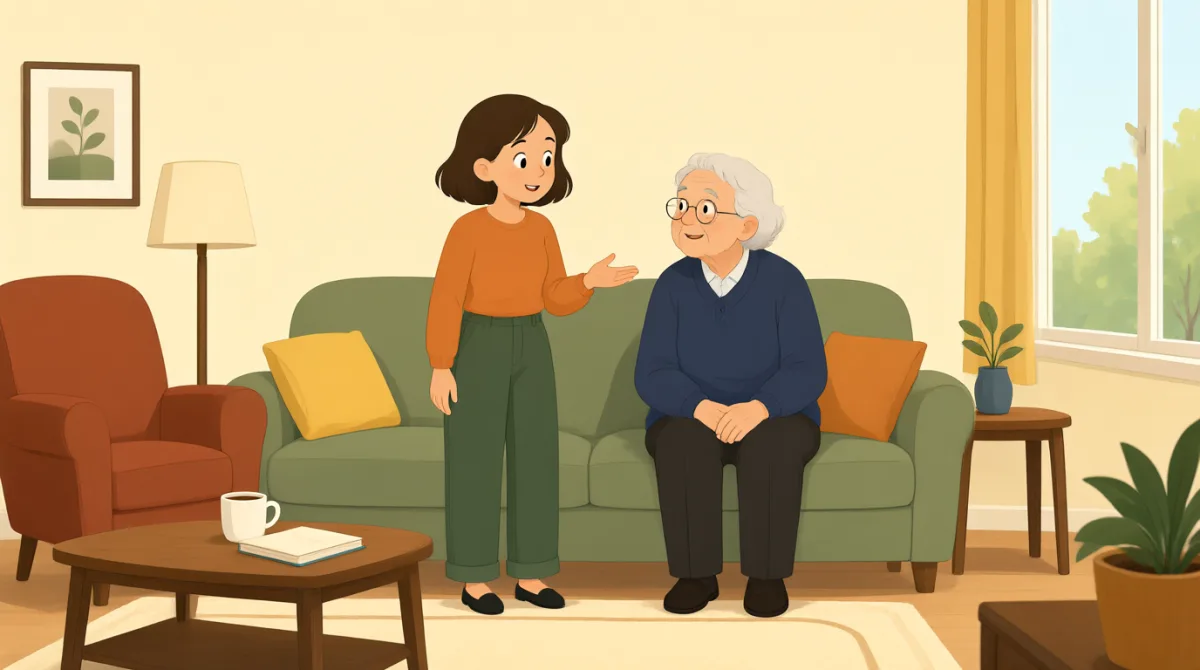

How have you both been feeling lately? Are you getting enough rest?
요즘 두 분 다 건강은 어떠세요? 충분히 쉬고 계세요?

I’ve been feeling well, thank you. I went for a checkup last week.
난 잘 지내고 있어, 고마워. 지난주에 건강검진을 받았어.
That’s good. What did the doctor say?
잘됐네요. 의사 선생님이 뭐라고 하셨어요?
Everything looked fine. I just need to drink more water and keep walking.
다 괜찮아 보였어. 물을 더 많이 마시고 계속 걸으면 된대.

We walk around the park every morning, unless it rains.
비가 오지 않으면 매일 아침 공원 주변을 걸어.
How far do you walk? Does it make you tired?
얼마나 걸으세요? 걷고 나면 피곤하세요?
Not too far. We take our time and sit down if we need to.
그렇게 멀리는 안 걸어. 서두르지 않고, 필요하면 앉아서 쉬어.
Walking helps us feel strong. You should come with us tomorrow.
걸으면 몸이 튼튼해지는 기분이 들어. 내일 우리랑 같이 가면 좋겠다.
I’d love to! I’ll bring my walking shoes.
저도 같이 가고 싶어요! 운동화 가져갈게요.
어휘8
- feeling well건강하게 지내다
This means being in good health. Use it to tell someone how you are doing.
건강 상태가 좋다는 뜻이에요. 안부를 전할 때 자신의 상태를 말하는 데 써요.
- checkup건강검진
A checkup is a visit to the doctor to see if you are healthy. You can say, “I have a checkup next week.”
건강검진은 건강한지 확인하기 위해 의사를 만나 진찰받는 거예요. “I have a checkup next week.”(다음 주에 건강검진이 있어요.)처럼 말할 수 있어요.
- everything looked fine다 괜찮아 보였다
This means the doctor did not find a problem. Use it to share reassuring news after a visit or test.
의사가 문제를 발견하지 않았다는 뜻이에요. 진료나 검사 후에 안심되는 소식을 전할 때 써요.
- keep walking계속 걷다
This means to continue walking regularly. Use “keep” with an -ing verb to encourage someone to continue an activity.
규칙적으로 걷기를 이어 간다는 뜻이에요. “keep” 뒤에 -ing형 동사를 붙이면 어떤 활동을 계속하라고 권할 수 있어요.
- unless it rains비가 오지 않으면
This means something will happen if it does not rain. Use “unless” to describe an exception to a plan.
비가 오지 않는 경우에 어떤 일이 일어난다는 뜻이에요. “unless”는 계획에 예외가 있음을 말할 때 써요.
- take our time서두르지 않다
This means to do something slowly and without rushing. You can use it when you want to go at a comfortable pace.
급하게 하지 않고 천천히 한다는 뜻이에요. 편안한 속도로 하고 싶을 때 쓸 수 있어요.
- sit down앉다
This means to move into a sitting position. Use it when you need to rest.
앉은 자세로 몸을 옮긴다는 뜻이에요. 쉬어야 할 때 쓸 수 있어요.
- walking shoes걷기 편한 신발
These are comfortable shoes for walking. You can use this phrase when talking about what to wear for a walk.
걸을 때 신기 편한 신발이에요. 산책할 때 무엇을 신을지 이야기할 때 이 표현을 쓸 수 있어요.
핵심 문장8
- 1
How have you both been feeling lately?
How have you both been feeling lately? (요즘 두 분 다 건강은 어떠세요?)
This is a friendly way to ask two people about their health recently. You can change “both” to “you” when speaking to one person.
두 사람에게 최근 건강이 어땠는지 친근하게 물어보는 표현이에요. 한 사람에게 말할 때는 “both”를 “you”로 바꿀 수 있어요.
- 2
I went for a checkup last week.
I went for a checkup last week. (지난주에 건강검진을 받았어요.)
Use this sentence to say that you visited a doctor for a health check. Change “last week” to another time phrase to say when it happened.
건강을 확인하려고 의사를 찾아갔다고 말할 때 쓰는 문장이에요. 검진을 받은 시점을 바꾸고 싶다면 “last week”를 다른 시간 표현으로 바꾸세요.
- 3
What did the doctor say?
What did the doctor say? (의사 선생님이 뭐라고 하셨어요?)
This is a simple way to ask about the results or advice from a doctor. You can also use it to ask what another person said.
의사의 검사 결과나 조언을 간단하게 물어보는 표현이에요. 다른 사람이 뭐라고 했는지 물을 때도 쓸 수 있어요.
- 4
Everything looked fine.
Everything looked fine. (다 괜찮아 보였어요.)
Use this to say that there did not seem to be a problem. It is a reassuring reply after a checkup or test.
문제가 없어 보였다고 말할 때 쓰는 표현이에요. 건강검진이나 검사 후에 안심시키는 대답으로 잘 어울려요.
- 5
We walk around the park every morning, unless it rains.
We walk around the park every morning, unless it rains. (비가 오지 않으면 매일 아침 공원 주변을 걸어요.)
This sentence describes a regular routine and an exception to it. Use “unless” to explain when a routine may not happen.
이 문장은 규칙적으로 하는 일과 그 일의 예외를 설명해요. 일과가 지켜지지 않을 수 있는 경우를 말할 때 “unless”를 써요.
- 6
We take our time and sit down if we need to.
We take our time and sit down if we need to. (우리는 서두르지 않고 걷다가 필요하면 앉아서 쉬어요.)
This explains how the speakers walk at a comfortable pace and rest when needed. You can reuse “if we need to” to talk about doing something only when necessary.
편안한 속도로 걷고 필요할 때 쉬는 방법을 설명하는 문장이에요. “if we need to”는 필요한 경우에만 무언가를 한다고 말할 때 활용할 수 있어요.
- 7
You should come with us tomorrow.
You should come with us tomorrow. (내일 우리랑 같이 가면 좋겠어요.)
This is a friendly way to invite someone to join an activity. Change “tomorrow” to say when you want them to come.
누군가에게 활동에 함께하자고 친근하게 권하는 표현이에요. 오라고 초대하고 싶은 시점에 맞춰 “tomorrow”를 바꾸면 돼요.
- 8
I’ll bring my walking shoes.
I’ll bring my walking shoes. (걷기 편한 신발을 가져갈게요.)
Use “I’ll bring…” to say what you plan to take with you. You can replace “walking shoes” with another useful item.
“I’ll bring…”은 무엇을 가져갈 계획인지 말할 때 써요. “walking shoes”를 다른 필요한 물건으로 바꿔 말할 수 있어요.