Asking About Their Health
Sağlıkları Hakkında Soru Sormak
Emma asks how her grandparents have been feeling. They talk about a recent checkup and their daily walks.
Emma, büyükanne ve büyükbabasının son zamanlarda nasıl hissettiğini sorar. Yakın zamanda yaptırdıkları kontrolden ve her gün yaptıkları yürüyüşlerden söz ederler.
Diyalog9
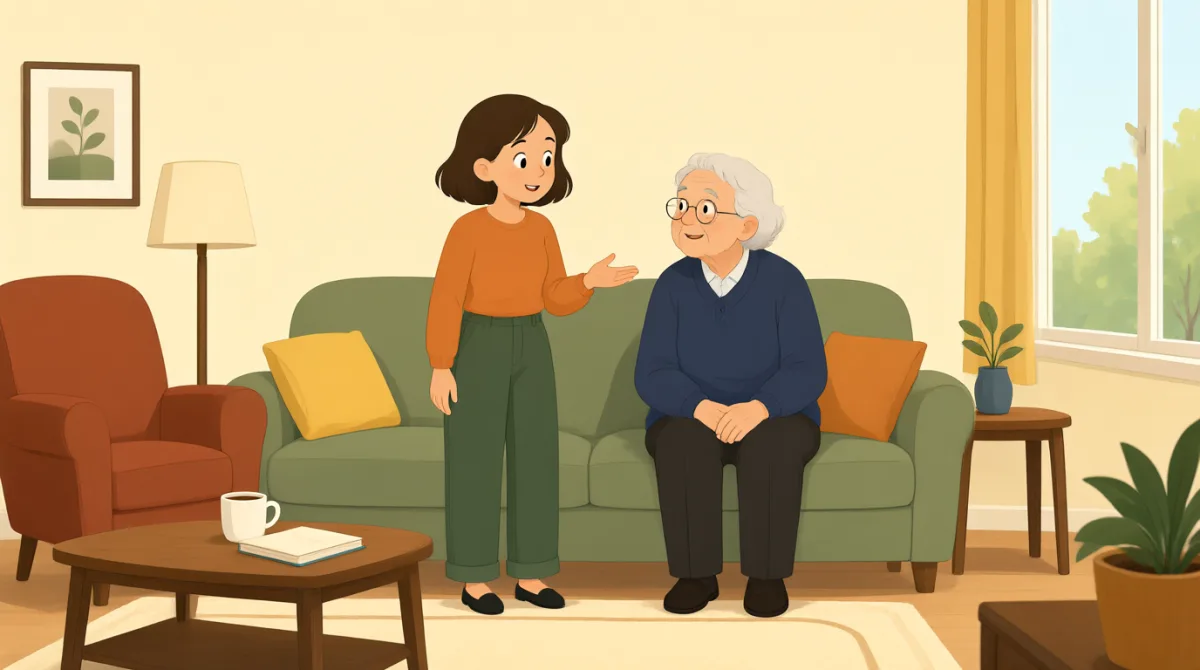

How have you both been feeling lately? Are you getting enough rest?
Son zamanlarda ikiniz de nasıl hissediyorsunuz? Yeterince dinleniyor musunuz?

I’ve been feeling well, thank you. I went for a checkup last week.
Kendimi iyi hissediyorum, teşekkür ederim. Geçen hafta kontrol için doktora gittim.
That’s good. What did the doctor say?
İyiymiş. Doktor ne dedi?
Everything looked fine. I just need to drink more water and keep walking.
Her şey yolunda görünüyordu. Sadece daha fazla su içmem ve yürüyüşlere devam etmem gerekiyor.

We walk around the park every morning, unless it rains.
Yağmur yağmadığı sürece her sabah parkta yürüyoruz.
How far do you walk? Does it make you tired?
Ne kadar yürüyorsunuz? Sizi yoruyor mu?
Not too far. We take our time and sit down if we need to.
Çok uzaklara gitmiyoruz. Ağır ağır yürüyoruz, gerekirse oturup dinleniyoruz.
Walking helps us feel strong. You should come with us tomorrow.
Yürümek kendimizi güçlü hissetmemize yardımcı oluyor. Yarın bize katılsana.
I’d love to! I’ll bring my walking shoes.
Çok isterim! Yürüyüş ayakkabılarımı getireceğim.
Kelime Bilgisi8
- feeling wellkendini iyi hissetmek
This means being in good health. Use it to tell someone how you are doing.
Bu ifade sağlıklı olmayı anlatır. Birine nasıl olduğunu söylerken kullanabilirsin.
- checkupkontrol (muayenesi)
A checkup is a visit to the doctor to see if you are healthy. You can say, “I have a checkup next week.”
“Checkup”, sağlıklı olup olmadığını kontrol ettirmek için doktora gitmektir. “I have a checkup next week.” (Gelecek hafta kontrolüm var.) diyebilirsin.
- everything looked fineher şey yolunda görünüyordu
This means the doctor did not find a problem. Use it to share reassuring news after a visit or test.
Bu ifade doktorun bir sorun bulmadığı anlamına gelir. Muayene ya da test sonrasında iç rahatlatan bir haber verirken kullanabilirsin.
- keep walkingyürümeye devam etmek
This means to continue walking regularly. Use “keep” with an -ing verb to encourage someone to continue an activity.
Bu ifade düzenli olarak yürümeyi sürdürmek anlamına gelir. Birini bir etkinliği sürdürmeye teşvik ederken “keep” sözcüğünü -ing ile biten bir fiille birlikte kullanabilirsin: “keep walking” (yürümeye devam et).
- unless it rainsyağmur yağmadığı sürece
This means something will happen if it does not rain. Use “unless” to describe an exception to a plan.
Bu ifade, yağmur yağmazsa bir şeyin olacağını anlatır. Bir planın istisnasını belirtmek için “unless” kullanılır.
- take our timeacele etmemek
This means to do something slowly and without rushing. You can use it when you want to go at a comfortable pace.
Bu ifade bir şeyi yavaşça ve acele etmeden yapmak demektir. Rahat bir tempoda ilerlemek istediğinde kullanabilirsin.
- sit downoturmak
This means to move into a sitting position. Use it when you need to rest.
Bu, oturma pozisyonuna geçmek demektir. Dinlenmen gerektiğinde kullanabilirsin.
- walking shoesyürüyüş ayakkabıları
These are comfortable shoes for walking. You can use this phrase when talking about what to wear for a walk.
Bunlar yürüyüş için rahat ayakkabılardır. Yürüyüşe giderken ne giyeceğinden söz ederken bu ifadeyi kullanabilirsin.
Önemli Cümleler8
- 1
How have you both been feeling lately?
Son zamanlarda ikiniz de nasıl hissediyorsunuz?
This is a friendly way to ask two people about their health recently. You can change “both” to “you” when speaking to one person.
Bu, iki kişiye yakın zamandaki sağlık durumlarını sormanın samimi bir yoludur. Tek kişiye sorarken “both” yerine “you” diyebilirsin.
- 2
I went for a checkup last week.
Geçen hafta kontrol için doktora gittim.
Use this sentence to say that you visited a doctor for a health check. Change “last week” to another time phrase to say when it happened.
Doktora sağlık kontrolü için gittiğini söylemek için bu cümleyi kullan. Ne zaman olduğunu belirtmek için “last week” yerine başka bir zaman ifadesi koyabilirsin.
- 3
What did the doctor say?
Doktor ne dedi?
This is a simple way to ask about the results or advice from a doctor. You can also use it to ask what another person said.
Bu, doktorun sonuçlarını ya da tavsiyesini sormanın basit bir yoludur. Başka birinin ne söylediğini sormak için de kullanabilirsin.
- 4
Everything looked fine.
Her şey yolunda görünüyordu.
Use this to say that there did not seem to be a problem. It is a reassuring reply after a checkup or test.
Bir sorun yokmuş gibi göründüğünü söylemek için bu cümleyi kullan. Kontrol ya da test sonrasında iç rahatlatan bir yanıt olarak söylenir.
- 5
We walk around the park every morning, unless it rains.
Yağmur yağmadığı sürece her sabah parkta yürüyoruz.
This sentence describes a regular routine and an exception to it. Use “unless” to explain when a routine may not happen.
Bu cümle düzenli bir rutini ve bu rutinin istisnasını anlatır. Rutinin hangi durumda gerçekleşmeyebileceğini açıklamak için “unless” kullanılır.
- 6
We take our time and sit down if we need to.
Ağır ağır yürüyoruz ve gerekirse oturup dinleniyoruz.
This explains how the speakers walk at a comfortable pace and rest when needed. You can reuse “if we need to” to talk about doing something only when necessary.
Bu cümle, konuşanların rahat bir tempoda yürüdüğünü ve gerektiğinde dinlendiğini anlatır. Yalnızca gerektiğinde bir şey yaptığını söylemek için “if we need to” ifadesini yeniden kullanabilirsin.
- 7
You should come with us tomorrow.
Yarın bize katılsana.
This is a friendly way to invite someone to join an activity. Change “tomorrow” to say when you want them to come.
Bu, birini bir etkinliğe davet etmenin samimi bir yoludur. Ne zaman gelmesini istediğini söylemek için “tomorrow” yerine başka bir zaman ifadesi kullanabilirsin.
- 8
I’ll bring my walking shoes.
Yürüyüş ayakkabılarımı getireceğim.
Use “I’ll bring…” to say what you plan to take with you. You can replace “walking shoes” with another useful item.
Yanında ne götürmeyi planladığını söylemek için “I’ll bring…” kalıbını kullan. “Walking shoes” yerine başka bir kullanışlı eşya koyabilirsin.