Talking About a Favorite Painting
お気に入りの絵について話す
After seeing the exhibits, Emma and Jack talk about their favorite painting. They share what they liked about it.
展示を見たあと、エマとジャックはお気に入りの絵について話し、気に入ったところを伝え合う。
会話8
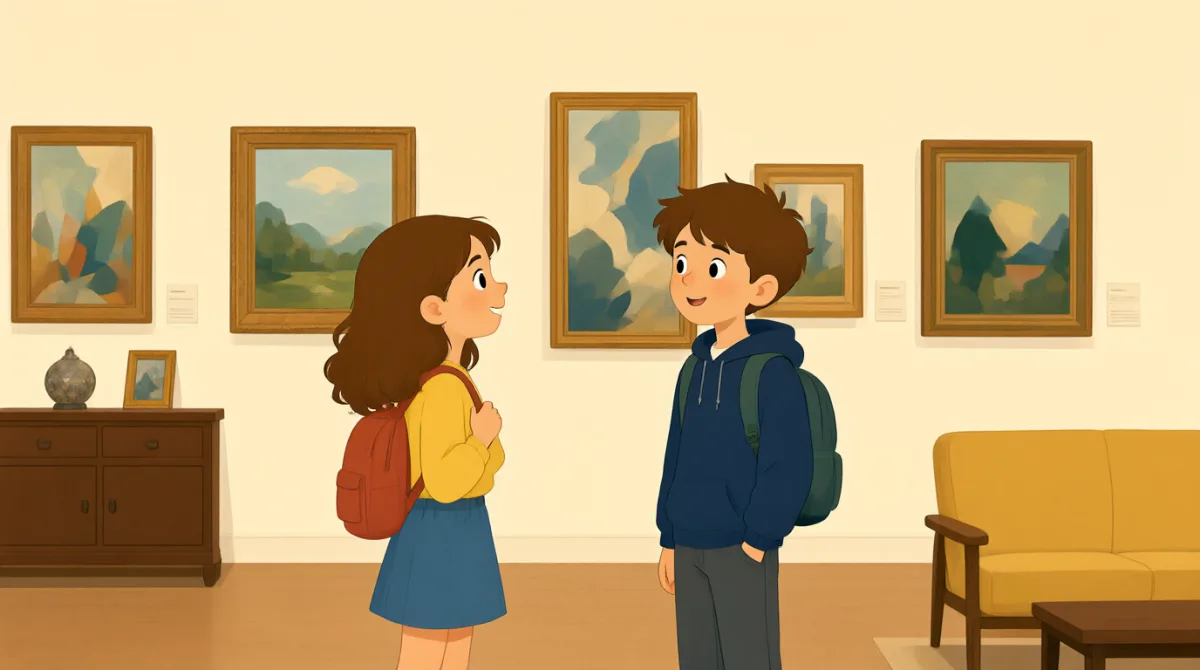

That blue painting was my favorite. The little boat looked so real.
あの青い絵が一番好きだったな。小さなボートがすごく本物みたいだった。

I liked it too. The colors were bright, but the scene felt peaceful.
僕も好きだったよ。色は鮮やかだけど、風景は穏やかな感じがしたね。
Yes, and I noticed the waves near the boat. They looked like they were moving.
うん、それにボートの近くの波にも気づいたよ。動いているみたいだった。
The artist did a great job. I wanted to look at it for a long time.
画家はすごくうまく描いたね。ずっと見ていたくなったよ。
Did you see the small house on the hill? I almost missed it.
丘の上の小さな家、見た?もう少しで見逃すところだったよ。
I saw it. It made me wonder who lived there.
見たよ。あそこに誰が住んでいたのか気になったな。
I wish we knew the story behind the painting. Maybe the sign said more.
あの絵の背景にある物語が分かったらいいのにね。説明の札にもっと書いてあったのかも。
Maybe. We can read about it online later. I took a photo of the sign.
そうかもね。あとでネットで調べられるよ。説明の札の写真を撮ったんだ。
語彙8
- my favorite一番好き
This means the one you like best. Use it to say which painting or other thing you enjoyed most.
「my favorite」は、自分が一番好きなものという意味です。どの絵や物が一番気に入ったかを伝えるときに使います。
- looked so realすごく本物みたいに見えた
This means something seemed very lifelike. Use it to describe a picture or object that looks true to life.
「looked so real」は、とても生き生きとして本物のように見えた、という意味です。本物そっくりに見える絵や物を説明するときに使います。
- felt peaceful穏やかな感じがした
This means it gave you a calm feeling. Use it to describe a place, picture, or moment.
「felt peaceful」は、穏やかな気持ちにさせてくれた、という意味です。場所や絵、ひとときの雰囲気を表すときに使います。
- did a great jobとてもよくやった
This means someone did something very well. Use it to praise an artist or another person's work.
「did a great job」は、誰かが何かをとても上手にやった、という意味です。画家や、よい仕事をした人を褒めるときに使います。
- for a long time長い間
This means for a long period. Use it to say how long you looked at or did something.
「for a long time」は、長い時間という意味です。何かをどれくらい長く見たり、したりしたかを伝えるときに使います。
- almost missed itもう少しで見逃すところだった
This means you nearly did not notice or see something. Use it when a detail is easy to overlook.
「almost missed it」は、もう少しで気づかなかった、または見逃すところだった、という意味です。見落としやすい細部について話すときに使います。
- the story behind〜の背景にある物語
This means the background or events connected to something. Use it to ask about the meaning or history of a painting.
「the story behind」は、何かに関係する背景や出来事という意味です。絵の意味や歴史について尋ねるときに使えます。
- read about itそれについて調べる
This means to find information about something by reading. Use it when you want to learn more about a place, person, or artwork.
「read about it」は、何かについて読むことで情報を得る、という意味です。場所や人、作品についてもっと知りたいときに使います。
重要な文8
- 1
That blue painting was my favorite.
あの青い絵が一番好きだった。
Use this sentence to say which artwork you liked best. You can replace “blue painting” with another thing, such as “that sculpture” or “the landscape.”
どの作品が一番気に入ったかを伝える文です。“blue painting”を“that sculpture”(あの彫刻)や“the landscape”(その風景画)のような別のものに置き換えられます。
- 2
The colors were bright, but the scene felt peaceful.
色は鮮やかだけど、風景は穏やかな感じがした。
This sentence describes two different qualities of a painting. Use “but” to connect a contrast, such as bright colors and a calm feeling.
絵の異なる二つの特徴を説明する文です。“but”を使うと、鮮やかな色と穏やかな印象のように、対照的な内容をつなげられます。
- 3
I noticed the waves near the boat.
ボートの近くの波に気づいた。
Use this sentence to point out a detail you saw. Replace “the waves near the boat” with another feature or object.
見つけた細部を伝えるときに使う文です。“the waves near the boat”を、別の特徴や物に置き換えてみましょう。
- 4
The artist did a great job.
画家はすごくうまく描いたね。
This is a simple way to praise an artist's work. You can also use it to praise someone who did something well.
画家の作品を褒めるシンプルな言い方です。何かを上手にやった人を褒めるときにも使えます。
- 5
I almost missed it.
もう少しで見逃すところだった。
Use this sentence when you nearly failed to see or notice something. It is useful for talking about small or hidden details.
何かを見たり気づいたりできないところだったときに使う文です。小さな細部や隠れた部分について話すときに便利です。
- 6
It made me wonder who lived there.
あそこに誰が住んでいたのか気になった。
Use this sentence to say that something made you curious. You can change “who lived there” to another question, such as “what happened there.”
何かがきっかけで好奇心を持ったことを伝える文です。“who lived there”を“what happened there”(そこで何があったのか)のような別の疑問に変えられます。
- 7
I wish we knew the story behind the painting.
あの絵の背景にある物語が分かったらいいのに。
Use “I wish we knew” to express that you would like to have information you do not have. You can replace “the story behind the painting” with another unknown detail.
“I wish we knew”は、知らない情報を知りたいという気持ちを表します。“the story behind the painting”を、別のまだ分からないことに置き換えられます。
- 8
We can read about it online later.
あとでネットで調べられるよ。
Use this sentence to suggest finding information on the internet at a later time. Replace “it” with the subject you want to learn about.
あとでインターネットで情報を探そうと提案するときに使う文です。知りたい対象に合わせて“it”を置き換えましょう。