Talking About a Favorite Painting
좋아하는 그림에 대해 이야기하기
After seeing the exhibits, Emma and Jack talk about their favorite painting. They share what they liked about it.
전시를 관람한 뒤, 에마와 잭은 가장 마음에 들었던 그림에 대해 이야기해요. 그림에서 어떤 점이 좋았는지 서로 나눠요.
대화8
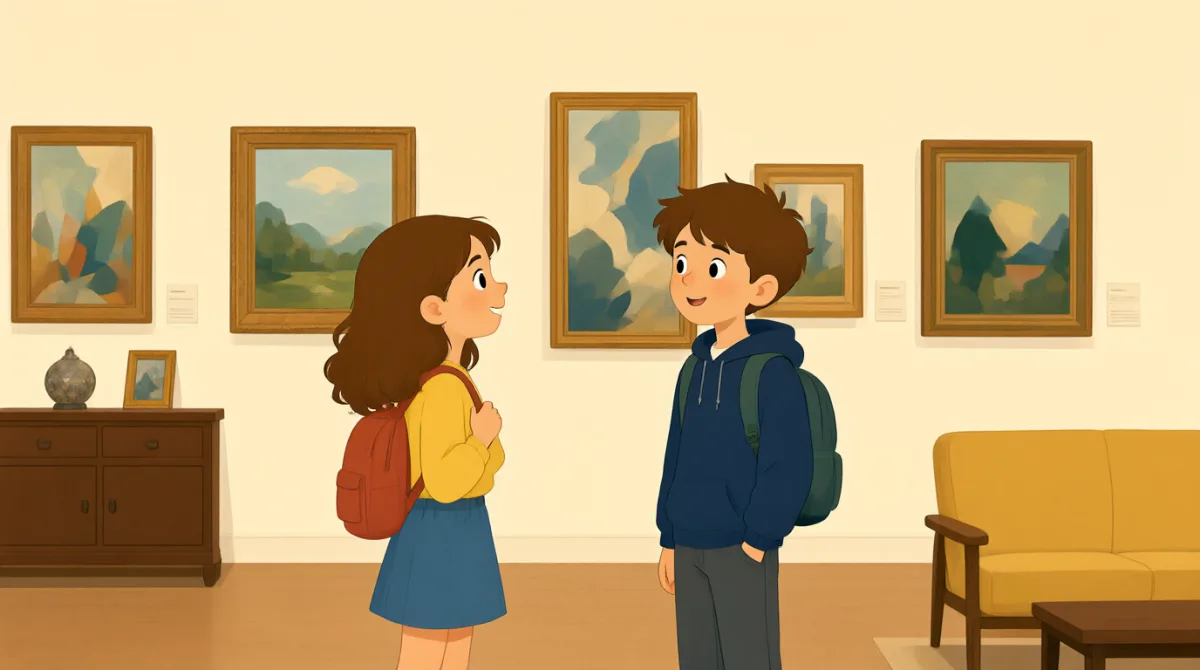

That blue painting was my favorite. The little boat looked so real.
저 파란 그림이 제일 좋았어. 작은 배가 정말 진짜 같았어.

I liked it too. The colors were bright, but the scene felt peaceful.
나도 좋았어. 색은 밝았는데, 풍경은 평화롭게 느껴졌어.
Yes, and I noticed the waves near the boat. They looked like they were moving.
맞아, 그리고 배 근처의 파도도 눈에 들어왔어. 움직이는 것 같았어.
The artist did a great job. I wanted to look at it for a long time.
화가가 정말 잘 그렸어. 한참 동안 바라보고 싶었어.
Did you see the small house on the hill? I almost missed it.
언덕 위에 작은 집 봤어? 하마터면 못 볼 뻔했어.
I saw it. It made me wonder who lived there.
봤어. 거기 누가 살았을지 궁금해지더라.
I wish we knew the story behind the painting. Maybe the sign said more.
그림에 얽힌 이야기를 알면 좋을 텐데. 안내판에 더 적혀 있었을지도 몰라.
Maybe. We can read about it online later. I took a photo of the sign.
그럴지도. 나중에 인터넷에서 찾아보면 되지. 안내판 사진 찍어 뒀어.
어휘8
- my favorite제일 좋아하는 것
This means the one you like best. Use it to say which painting or other thing you enjoyed most.
가장 마음에 드는 것을 뜻해요. 어떤 그림이나 다른 것 중 무엇을 가장 좋아했는지 말할 때 써요.
- looked so real정말 진짜 같아 보였다
This means something seemed very lifelike. Use it to describe a picture or object that looks true to life.
무언가가 아주 생생하고 실제처럼 보였다는 뜻이에요. 그림이나 물건이 실물처럼 보일 때 묘사하는 표현이에요.
- felt peaceful평화롭게 느껴졌다
This means it gave you a calm feeling. Use it to describe a place, picture, or moment.
마음이 차분해지는 느낌을 줬다는 뜻이에요. 장소나 그림, 순간을 묘사할 때 쓸 수 있어요.
- did a great job정말 잘했다
This means someone did something very well. Use it to praise an artist or another person's work.
누군가가 어떤 일을 아주 잘했다는 뜻이에요. 화가나 다른 사람의 작품을 칭찬할 때 써요.
- for a long time한참 동안
This means for a long period. Use it to say how long you looked at or did something.
긴 시간 동안이라는 뜻이에요. 무언가를 얼마나 오래 바라보거나 했는지 말할 때 써요.
- almost missed it하마터면 못 볼 뻔했다
This means you nearly did not notice or see something. Use it when a detail is easy to overlook.
무언가를 거의 알아차리지 못하거나 보지 못할 뻔했다는 뜻이에요. 놓치기 쉬운 세부 사항을 이야기할 때 써요.
- the story behind~에 얽힌 이야기
This means the background or events connected to something. Use it to ask about the meaning or history of a painting.
어떤 것과 관련된 배경이나 사건을 뜻해요. 그림의 의미나 역사에 대해 물어볼 때 쓸 수 있어요.
- read about it그것에 대해 읽어 보다
This means to find information about something by reading. Use it when you want to learn more about a place, person, or artwork.
읽으면서 무언가에 대한 정보를 알아본다는 뜻이에요. 장소나 사람, 작품에 대해 더 알고 싶을 때 써요.
핵심 문장8
- 1
That blue painting was my favorite.
저 파란 그림이 제일 좋았어.
Use this sentence to say which artwork you liked best. You can replace “blue painting” with another thing, such as “that sculpture” or “the landscape.”
가장 마음에 든 작품이 무엇인지 말할 때 쓰는 문장이에요. “blue painting” 대신 “that sculpture”나 “the landscape”처럼 다른 대상을 넣어도 돼요.
- 2
The colors were bright, but the scene felt peaceful.
색은 밝았는데, 풍경은 평화롭게 느껴졌어.
This sentence describes two different qualities of a painting. Use “but” to connect a contrast, such as bright colors and a calm feeling.
그림의 서로 다른 두 가지 특징을 묘사하는 문장이에요. 밝은 색과 차분한 느낌처럼 대비되는 내용을 연결할 때 “but”을 써요.
- 3
I noticed the waves near the boat.
배 근처의 파도가 눈에 들어왔어.
Use this sentence to point out a detail you saw. Replace “the waves near the boat” with another feature or object.
본 세부 사항을 짚어 말할 때 쓰는 문장이에요. “the waves near the boat” 대신 다른 특징이나 대상을 넣어 보세요.
- 4
The artist did a great job.
화가가 정말 잘 그렸어.
This is a simple way to praise an artist's work. You can also use it to praise someone who did something well.
화가의 작품을 칭찬하는 간단한 표현이에요. 무언가를 잘 해낸 사람을 칭찬할 때도 쓸 수 있어요.
- 5
I almost missed it.
하마터면 못 볼 뻔했어.
Use this sentence when you nearly failed to see or notice something. It is useful for talking about small or hidden details.
무언가를 거의 보지 못하거나 알아차리지 못할 뻔했을 때 쓰는 문장이에요. 작거나 숨겨진 세부 사항을 이야기할 때 유용해요.
- 6
It made me wonder who lived there.
거기 누가 살았을지 궁금해지더라.
Use this sentence to say that something made you curious. You can change “who lived there” to another question, such as “what happened there.”
무언가 때문에 궁금해졌다고 말할 때 쓰는 문장이에요. “who lived there”를 “what happened there”처럼 다른 질문으로 바꿔도 돼요.
- 7
I wish we knew the story behind the painting.
그림에 얽힌 이야기를 알면 좋을 텐데.
Use “I wish we knew” to express that you would like to have information you do not have. You can replace “the story behind the painting” with another unknown detail.
“I wish we knew”는 지금 모르는 정보를 알고 싶다는 마음을 표현해요. “the story behind the painting” 대신 다른 궁금한 내용을 넣을 수 있어요.
- 8
We can read about it online later.
나중에 인터넷에서 그것에 대해 찾아볼 수 있어.
Use this sentence to suggest finding information on the internet at a later time. Replace “it” with the subject you want to learn about.
나중에 인터넷에서 정보를 찾아보자고 제안할 때 쓰는 문장이에요. 알고 싶은 대상에 맞춰 “it”을 바꿔 보세요.