Talking About a Favorite Painting
聊聊最喜歡的畫作
After seeing the exhibits, Emma and Jack talk about their favorite painting. They share what they liked about it.
參觀完展覽後,艾瑪和傑克聊起各自最喜歡的畫作,並分享喜歡它的原因。
對話8
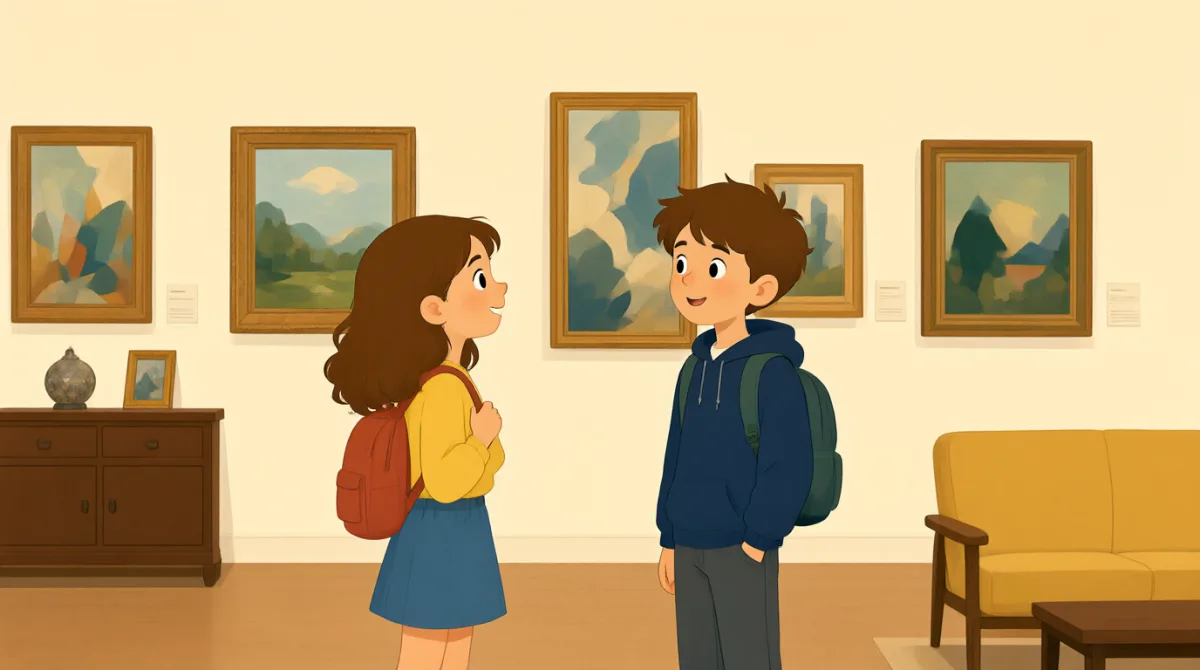

That blue painting was my favorite. The little boat looked so real.
那幅藍色的畫是我最喜歡的。那艘小船看起來特別真實。

I liked it too. The colors were bright, but the scene felt peaceful.
我也喜歡。顏色很鮮豔,但畫面讓人覺得很平靜。
Yes, and I noticed the waves near the boat. They looked like they were moving.
是啊,我還注意到小船旁邊的浪花。它們看起來像是在動。
The artist did a great job. I wanted to look at it for a long time.
那位畫家畫得真好。我想多看一會兒。
Did you see the small house on the hill? I almost missed it.
你看到山坡上的小房子了嗎?我差點沒注意到。
I saw it. It made me wonder who lived there.
看到了。我很好奇那裡住著什麼人。
I wish we knew the story behind the painting. Maybe the sign said more.
真希望我們知道這幅畫背後的故事。也許旁邊的說明牌上寫得更詳細。
Maybe. We can read about it online later. I took a photo of the sign.
也許吧。我們晚點可以上網查查。我拍了說明牌的照片。
詞彙8
- my favorite我最喜歡的
This means the one you like best. Use it to say which painting or other thing you enjoyed most.
這表示你最喜歡的那一個。可以用它來說明你最喜歡哪幅畫或其他東西。
- looked so real看起來特別逼真
This means something seemed very lifelike. Use it to describe a picture or object that looks true to life.
這表示某樣東西看起來很逼真,像真的一樣。可以用來形容一幅畫或一件物品栩栩如生。
- felt peaceful讓人覺得很平靜
This means it gave you a calm feeling. Use it to describe a place, picture, or moment.
這表示某樣東西給人一種平靜的感覺。可以用來形容一個地方、一幅畫或某個時刻。
- did a great job做得很棒
This means someone did something very well. Use it to praise an artist or another person's work.
這表示某人把一件事做得非常好。可以用來稱讚畫家或別人的作品。
- for a long time很長時間
This means for a long period. Use it to say how long you looked at or did something.
這表示持續了很長一段時間。可以用來說明你看某樣東西或做某件事持續了多久。
- almost missed it差點沒注意到
This means you nearly did not notice or see something. Use it when a detail is easy to overlook.
這表示你差一點就沒發現或沒看到某樣東西。可以用來描述容易被忽略的細節。
- the story behind背後的故事
This means the background or events connected to something. Use it to ask about the meaning or history of a painting.
這表示與某樣東西相關的背景或經歷。可以用來詢問一幅畫的含義或來歷。
- read about it閱讀相關介紹
This means to find information about something by reading. Use it when you want to learn more about a place, person, or artwork.
這表示透過閱讀來了解某樣東西。想進一步瞭解一個地方、一個人或一件藝術品時,可以這樣說。
關鍵句8
- 1
That blue painting was my favorite.
那幅藍色的畫是我最喜歡的。
Use this sentence to say which artwork you liked best. You can replace “blue painting” with another thing, such as “that sculpture” or “the landscape.”
用這句話說出你最喜歡哪件藝術品。你可以把“blue painting”換成其他東西,比如“that sculpture”或“the landscape”。
- 2
The colors were bright, but the scene felt peaceful.
顏色很鮮豔,但畫面讓人覺得很平靜。
This sentence describes two different qualities of a painting. Use “but” to connect a contrast, such as bright colors and a calm feeling.
這句話描述了畫作的兩種不同特點。用“but”連線對比,比如鮮豔的顏色和寧靜的感覺。
- 3
I noticed the waves near the boat.
我注意到了小船旁邊的浪花。
Use this sentence to point out a detail you saw. Replace “the waves near the boat” with another feature or object.
用這句話指出你看到的一個細節。你可以把“the waves near the boat”換成其他特點或物品。
- 4
The artist did a great job.
那位畫家畫得真好。
This is a simple way to praise an artist's work. You can also use it to praise someone who did something well.
這是一種簡單的方式,可以用來稱讚畫家的作品。也可以用來稱讚把事情做得很好的人。
- 5
I almost missed it.
我差點沒注意到。
Use this sentence when you nearly failed to see or notice something. It is useful for talking about small or hidden details.
差點沒看到或沒注意到某樣東西時,可以用這句話。談論細小或隱藏的細節時很實用。
- 6
It made me wonder who lived there.
這讓我很好奇那裡住著什麼人。
Use this sentence to say that something made you curious. You can change “who lived there” to another question, such as “what happened there.”
用這句話說明某件事引起了你的好奇心。你可以把“who lived there”換成其他問題,比如“what happened there”。
- 7
I wish we knew the story behind the painting.
真希望我們知道這幅畫背後的故事。
Use “I wish we knew” to express that you would like to have information you do not have. You can replace “the story behind the painting” with another unknown detail.
用“I wish we knew”表達你希望知道某些目前還不知道的資訊。你可以把“the story behind the painting”換成其他未知的細節。
- 8
We can read about it online later.
我們晚點可以上網查查。
Use this sentence to suggest finding information on the internet at a later time. Replace “it” with the subject you want to learn about.
用這句話提議稍後上網查詢資訊。你可以把“it”換成你想了解的內容。