Talking About Your Bedtime
寝る時間について話す
Mia asks Leo when he goes to bed and what keeps him awake. Leo explains his bedtime habits.
ミアがレオに何時に寝るのか、何が原因で眠れないのかを尋ねます。レオは寝る前の習慣について話します。
会話8
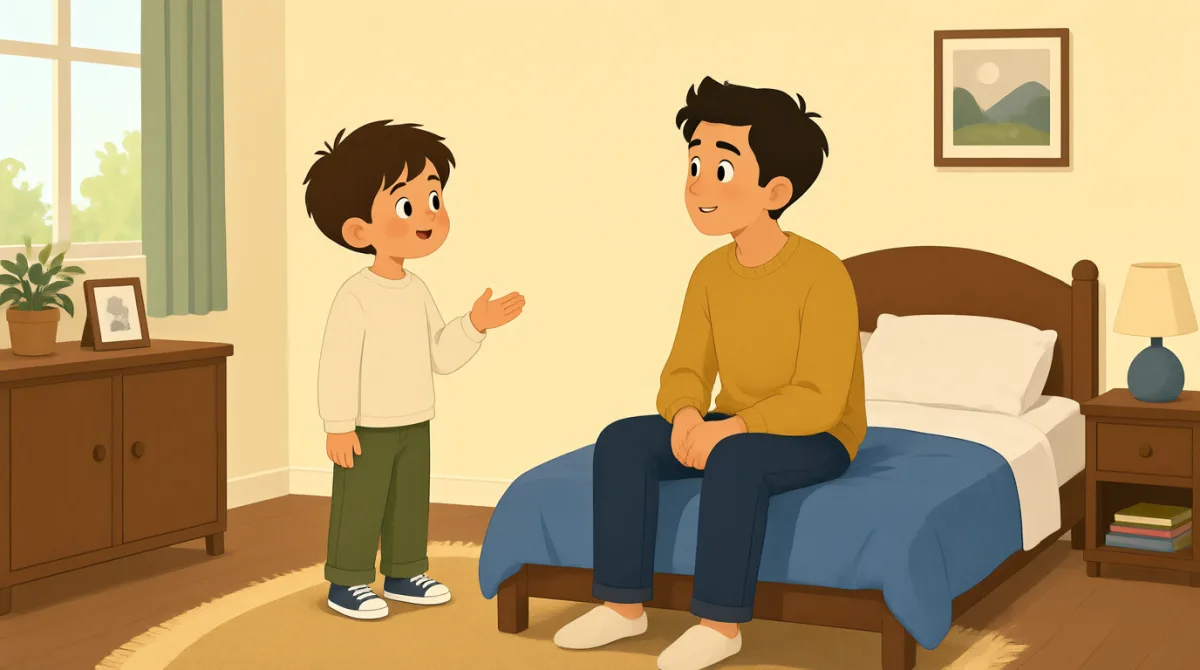

You look tired again, Leo. What time did you go to bed last night?
また疲れてるね、レオ。昨日の夜は何時に寝たの?

I went to bed around midnight, but I didn't fall asleep for a long time.
夜中の12時ごろに寝たけど、なかなか眠れなかったんだ。
What kept you awake? Were you thinking about work?
何が原因で眠れなかったの?仕事のことを考えてた?
Not really. I kept looking at my phone and watching videos.
そうでもないよ。ずっとスマホを見たり、動画を見たりしてたんだ。
What time do you usually get up in the morning?
朝はいつも何時に起きるの?
I get up at seven, so I only got about six hours of sleep.
7時に起きるから、睡眠時間は6時間くらいしかなかったよ。
Do you drink coffee late in the day? That can make it hard to sleep.
夕方遅くにコーヒーを飲むことある?それだと眠りにくくなるよ。
Sometimes I have coffee after dinner. Maybe I should stop doing that.
夕食のあとにコーヒーを飲むことがあるんだ。やめたほうがいいかもね。
語彙6
- go to bed寝る
To go to bed is to get into bed because you are ready to sleep. You can say, “I go to bed at ten.”
“go to bed”は、眠る準備ができてベッドに入ることです。“I go to bed at ten.”(10時に寝ます)のように言えます。
- fall asleep眠りにつく
To fall asleep means to begin sleeping. Use it to talk about when sleep starts.
“fall asleep”は、眠り始めるという意味です。眠りにつく時間について話すときに使います。
- get up起きる
To get up means to leave your bed, usually in the morning. You can say what time you get up.
“get up”は、ベッドから出るという意味で、たいてい朝に使います。何時に起きるかを伝えるときに使えます。
- six hours of sleep6時間の睡眠
This describes how long someone slept. Change the number to say how much sleep you got.
どれくらいの時間眠ったかを表します。数字を変えれば、自分がどれくらい眠ったかを伝えられます。
- late in the day一日の遅い時間に
This means near the end of the day. It is useful when talking about when you eat or drink something.
一日の終わりに近い時間という意味です。食事や飲み物をとる時間について話すときに便利です。
- after dinner夕食のあとに
This means at a time later than dinner. You can use it to say when you do something.
夕食より後の時間という意味です。何かをする時間を伝えるときに使えます。
重要な文8
- 1
What time did you go to bed last night?
昨日の夜は何時に寝たの?
Use this question to ask about someone’s bedtime on the previous night. Change “last night” to another time phrase, such as “on Saturday.”
前の晩に何時に寝たかを尋ねる表現です。“last night”を“on Saturday”のような別の時間表現に変えて使えます。
- 2
I went to bed around midnight, but I didn't fall asleep for a long time.
夜中の12時ごろに寝たけど、なかなか眠れなかったんだ。
This sentence tells someone when you went to bed and that you had trouble sleeping. Use “around” before an approximate time.
何時に寝たかと、なかなか眠れなかったことを伝える文です。およその時間を言うときは、“around”を時間の前に置きます。
- 3
What kept you awake?
何が原因で眠れなかったの?
This is a simple way to ask why someone could not sleep. Replace “you” with another person, such as “him” or “her.”
相手が眠れなかった理由を尋ねる、簡単な表現です。“you”を“him”や“her”など別の人を表す言葉に置き換えられます。
- 4
I kept looking at my phone and watching videos.
ずっとスマホを見たり、動画を見たりしてたんだ。
Use “kept” plus an -ing verb to describe something you did repeatedly. You can name other activities, too.
“kept”のあとに -ing形の動詞を続けると、何かを繰り返ししていたことを表せます。ほかの行動を入れても使えます。
- 5
What time do you usually get up in the morning?
朝はいつも何時に起きるの?
Use this question to ask about someone’s usual morning routine. “Usually” shows that you are asking about a regular habit.
相手の普段の朝の習慣を尋ねる表現です。“Usually”は、いつもの習慣について聞いていることを示します。
- 6
I get up at seven, so I only got about six hours of sleep.
7時に起きるから、睡眠時間は6時間くらいしかなかったよ。
This sentence connects a wake-up time with the amount of sleep you got. Change the time and number to fit your routine.
起きる時間と、実際にとれた睡眠時間を結びつけて伝える文です。自分の生活に合わせて時間や数字を変えてください。
- 7
Do you drink coffee late in the day?
夕方遅くにコーヒーを飲むことある?
Use this question to ask whether someone has a habit. You can replace “drink coffee” with another activity.
相手に習慣があるかどうかを尋ねる表現です。“drink coffee”を別の行動に置き換えて使えます。
- 8
Maybe I should stop doing that.
それ、やめたほうがいいかもね。
Use this phrase to say that you are thinking about changing a habit. Replace “doing that” with the specific habit.
習慣を変えようか考えていることを伝える表現です。“doing that”を、やめようと思っている具体的な習慣に置き換えられます。