Locating a Specific Title
Mencari Judul Buku Tertentu
A customer is looking for a book with a known title but can't find it on the shelves and approaches a staff member for assistance.
Seorang pelanggan mencari buku dengan judul yang sudah diketahui, tetapi tidak menemukannya di rak. Ia lalu meminta bantuan staf toko.
Dialog9
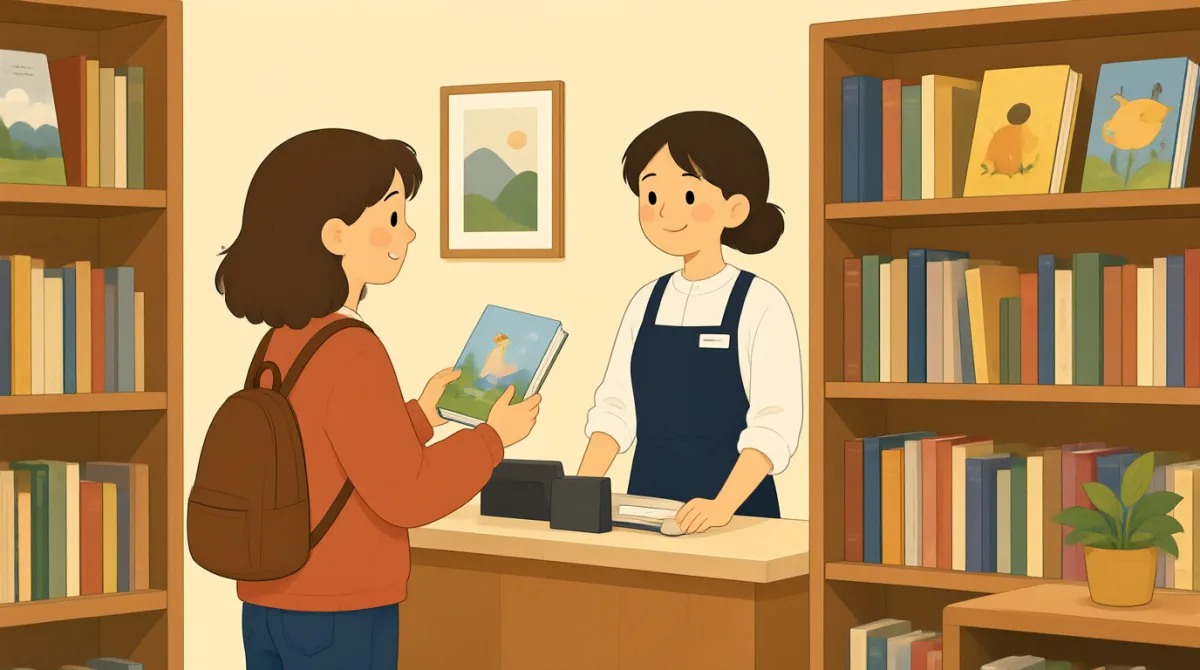

Excuse me, I'm looking for a specific book but I can't seem to find it. Would you be able to help?
Permisi, saya sedang mencari buku tertentu, tapi sepertinya tidak ketemu. Bisa bantu saya?

Certainly! What's the title you're looking for?
Tentu! Apa judul buku yang Anda cari?
It's called 'The Midnight Library' by Matt Haig.
Judulnya 'The Midnight Library', karya Matt Haig.
Ah, 'The Midnight Library'. We usually keep that in the fiction section, near the front of the store. Have you checked there?
Oh, 'The Midnight Library'. Biasanya buku itu ada di bagian fiksi, dekat bagian depan toko. Anda sudah cek di sana?
Yes, I did, but I couldn't spot it. Maybe it's out of stock?
Sudah, tapi saya tidak melihatnya. Mungkin stoknya habis?
Let me check our system for you. What's the author's full name again?
Saya coba cek di sistem kami. Siapa nama lengkap penulisnya tadi?
Matt Haig. H-A-I-G.
Matt Haig. H-A-I-G.
Okay, just a moment. (typing on computer) It looks like we have a few copies in stock. They should be on the shelf. Let me walk you over to the exact spot.
Baik, sebentar. (mengetik di komputer) Sepertinya masih ada beberapa eksemplar. Seharusnya ada di rak. Saya antar Anda ke tempatnya.
Oh, that would be wonderful! Thank you so much!
Wah, baik sekali! Terima kasih banyak!
Kosakata7
- excuse mepermisi
A polite phrase used to get someone's attention or interrupt them gently, like starting a conversation in a store.
Ungkapan sopan untuk menarik perhatian seseorang atau menyela dengan halus, misalnya saat memulai percakapan di toko.
- specifictertentu
Means particular or exact, not general. Use it when you want something very precise, like a specific book title.
Artinya khusus atau spesifik, bukan umum. Gunakan kata ini saat menginginkan sesuatu yang sangat tepat, seperti judul buku tertentu.
- titlejudul
The name of a book, movie, or song. In bookstores, ask for the title to find what you're looking for.
Nama sebuah buku, film, atau lagu. Di toko buku, sebutkan judulnya untuk mencari buku yang Anda inginkan.
- fictionfiksi
A type of book that tells made-up stories, not real events. Many bookstores have a fiction section for novels.
Jenis buku yang menceritakan kisah rekaan, bukan peristiwa nyata. Banyak toko buku memiliki bagian fiksi untuk novel.
- out of stockstok habis
Means something is sold out and not available right now. Common in shopping when items are temporarily unavailable.
Artinya barang sudah terjual habis dan sedang tidak tersedia. Ungkapan ini umum digunakan saat berbelanja ketika barang untuk sementara tidak tersedia.
- copieseksemplar
Multiple versions of the same book or item. Use it to talk about how many are available, like 'a few copies in stock'.
Beberapa salinan dari buku atau barang yang sama. Kata ini digunakan untuk menyebut jumlah yang tersedia, seperti dalam 'a few copies in stock' (beberapa eksemplar tersedia).
- shelfrak
A flat surface in a store or library where books are placed and displayed for customers to see.
Permukaan datar di toko atau perpustakaan tempat buku ditata dan dipajang agar dapat dilihat pelanggan.
Kalimat Kunci8
- 1
Excuse me, I'm looking for a specific book but I can't seem to find it. Would you be able to help?
Permisi, saya sedang mencari buku tertentu, tapi sepertinya tidak ketemu. Bisa bantu saya?
This is a polite way to ask for help in a store. 'Can't seem to find it' softens the statement to sound less direct. Use it when you need assistance locating something. The question 'Would you be able to help?' is a conditional polite request.
Ini cara yang sopan untuk meminta bantuan di toko. 'Can't seem to find it' (sepertinya tidak bisa menemukannya) membuat pernyataan terdengar lebih halus dan tidak terlalu langsung. Gunakan ungkapan ini saat Anda perlu bantuan mencari sesuatu. Pertanyaan 'Would you be able to help?' merupakan permintaan sopan dalam bentuk pengandaian.
- 2
Certainly! What's the title you're looking for?
Tentu! Apa judul buku yang Anda cari?
A helpful response offering assistance. 'Certainly' means 'of course' and shows eagerness. 'What's the title you're looking for?' uses a contraction and focuses on key information. Useful for service workers to gather details quickly.
Jawaban yang menunjukkan kesiapan untuk membantu. 'Certainly' berarti 'tentu saja' dan menunjukkan antusiasme. 'What's the title you're looking for?' menggunakan bentuk singkat dan menanyakan informasi penting. Ungkapan ini berguna bagi staf layanan untuk mendapatkan informasi dengan cepat.
- 3
It's called 'The Midnight Library' by Matt Haig.
Judulnya 'The Midnight Library', karya Matt Haig.
This introduces a book by its title and author. 'It's called' is a common way to name something. Include the author for clarity. Practice this pattern for recommending or asking about books: 'It's called [title] by [author]'.
Kalimat ini memperkenalkan buku dengan menyebutkan judul dan penulisnya. 'It's called' adalah cara umum untuk menyebut nama sesuatu. Sebutkan penulisnya agar lebih jelas. Latih pola ini saat merekomendasikan atau menanyakan buku: 'It's called [title] by [author]' (Judulnya [judul], karya [penulis]).
- 4
We usually keep that in the fiction section, near the front of the store. Have you checked there?
Biasanya buku itu ada di bagian fiksi, dekat bagian depan toko. Anda sudah cek di sana?
Gives location details using 'usually keep' for habitual placement. 'Have you checked there?' is a present perfect question to confirm actions. Useful for directing customers and politely asking about their efforts.
Kalimat ini menjelaskan lokasi dengan 'usually keep', yang menunjukkan penempatan biasanya. 'Have you checked there?' adalah pertanyaan present perfect untuk memastikan apakah seseorang sudah melakukan sesuatu. Ungkapan ini berguna untuk mengarahkan pelanggan dan menanyakan dengan sopan apakah mereka sudah mencoba mencari.
- 5
Yes, I did, but I couldn't spot it. Maybe it's out of stock?
Sudah, tapi saya tidak melihatnya. Mungkin stoknya habis?
Responds to a question with 'Yes, I did' (past tense confirmation) and contrasts with 'but'. 'Couldn't spot it' means couldn't see it. 'Maybe it's out of stock?' suggests a possibility. Use this to explain problems and guess reasons.
Jawaban 'Yes, I did' (Ya, sudah) menggunakan bentuk lampau untuk mengonfirmasi tindakan, lalu membandingkannya dengan 'but' (tetapi). 'Couldn't spot it' berarti tidak bisa melihatnya. 'Maybe it's out of stock?' menyampaikan kemungkinan. Gunakan ungkapan ini untuk menjelaskan masalah dan menebak penyebabnya.
- 6
Let me check our system for you.
Saya coba cek di sistem kami.
Offers to look something up politely with 'Let me' (permission to act). 'Our system' refers to a computer database. This is practical for customer service when verifying availability.
'Let me' digunakan untuk menawarkan bantuan atau menyatakan bahwa Anda akan melakukan sesuatu. 'Our system' merujuk pada basis data komputer. Ungkapan ini berguna dalam layanan pelanggan saat memeriksa ketersediaan barang.
- 7
It looks like we have a few copies in stock. Let me walk you over to the exact spot.
Sepertinya masih ada beberapa eksemplar. Saya antar Anda ke tempatnya.
Reports information with 'It looks like' for tentative statements. 'A few copies in stock' means some available. 'Let me walk you over' offers personal guidance. Useful for reassuring customers and providing help.
'It looks like' digunakan untuk menyampaikan informasi dengan sedikit kehati-hatian. 'A few copies in stock' berarti ada beberapa eksemplar yang tersedia. 'Let me walk you over' menawarkan untuk mengantar seseorang langsung ke tempatnya. Ungkapan ini berguna untuk meyakinkan pelanggan dan membantu mereka.
- 8
Oh, that would be wonderful! Thank you so much!
Wah, baik sekali! Terima kasih banyak!
Expresses gratitude enthusiastically. 'That would be wonderful' is conditional for future help. 'Thank you so much' emphasizes thanks. Use this to show appreciation in service situations.
Ungkapan ini menunjukkan rasa terima kasih dengan antusias. 'That would be wonderful' menyatakan bahwa bantuan yang ditawarkan akan sangat menyenangkan. 'Thank you so much' menegaskan rasa terima kasih. Gunakan ungkapan ini untuk menunjukkan penghargaan dalam situasi pelayanan.