Looking at Vacation Photos
छुट्टियों की तस्वीरें देखना
Mia shows Emma photos from her vacation and describes a few of them. Emma asks questions about the places and people in the pictures.
मिया एमा को अपनी छुट्टियों की तस्वीरें दिखाती है और उनमें से कुछ के बारे में बताती है। एमा तस्वीरों में दिख रही जगहों और लोगों के बारे में सवाल पूछती है।
संवाद9
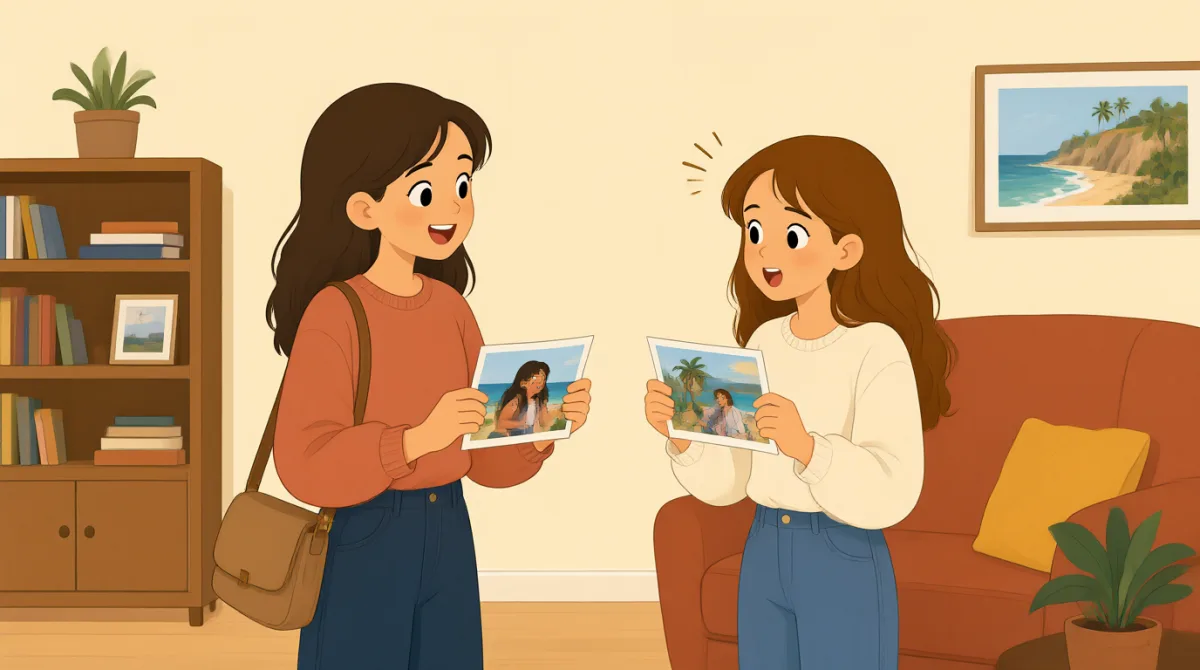

Look at these vacation photos! I took them on the coast.
ये छुट्टियों की तस्वीरें देखो! मैंने ये समुद्र तट पर खींची थीं।

This one is beautiful. Is that the beach you walked along?
यह वाली बहुत खूबसूरत है। क्या तुम इसी समुद्र तट पर टहली थीं?
Yes, it is. The water was so blue, and the beach was quiet.
हाँ, यही है। पानी इतना नीला था और समुद्र तट पर बहुत शांति थी।
And what’s that little building behind you?
और तुम्हारे पीछे वह छोटी-सी इमारत क्या है?
It’s a small café near the beach. I had lunch there one day.
वह समुद्र तट के पास एक छोटा-सा कैफ़े है। एक दिन मैंने वहाँ दोपहर का खाना खाया था।
Did you take this photo in the town square?
क्या तुमने यह तस्वीर शहर के चौक में खींची थी?
Yes. I liked the colorful houses and the little market there.
हाँ। मुझे वहाँ के रंग-बिरंगे घर और छोटा-सा बाज़ार बहुत पसंद आया।
Who’s in this last picture with you?
इस आख़िरी तस्वीर में तुम्हारे साथ कौन है?
That’s a local shop owner. She helped me find a nice souvenir.
वह वहाँ की एक दुकानदार हैं। उन्होंने एक अच्छा-सा यादगार सामान ढूँढ़ने में मेरी मदद की।
शब्दावली7
- on the coastसमुद्र तट पर
This means in an area next to the sea. Use it to say where a place or vacation was.
इसका मतलब है समुद्र के किनारे वाले इलाके में। किसी जगह या छुट्टी कहाँ बिताई, यह बताने के लिए इसका इस्तेमाल करो।
- walked alongकिनारे-किनारे टहलीं
This means moved on foot beside something, such as a beach. Use it to describe a walk in the past.
इसका मतलब है किसी चीज़, जैसे समुद्र तट, के पास-पास पैदल चलना। बीते समय में की गई सैर के बारे में बताने के लिए इसका इस्तेमाल करो।
- behind youतुम्हारे पीछे
This means at the back of you. Use it to ask about or describe where something is in a photo.
इसका मतलब है तुम्हारे पीछे की ओर। तस्वीर में किसी चीज़ की जगह पूछने या बताने के लिए इसका इस्तेमाल करो।
- near the beachसमुद्र तट के पास
This means close to the beach. Use it to describe where a place is.
इसका मतलब है समुद्र तट के नज़दीक। कोई जगह कहाँ है, यह बताने के लिए इसका इस्तेमाल करो।
- town squareशहर का चौक
This is an open public area in the center of a town. Use it when talking about a place you visited.
यह शहर के बीचों-बीच बना खुला सार्वजनिक स्थान होता है। जिस जगह पर तुम गए थे, उसके बारे में बात करते समय इसका इस्तेमाल करो।
- local shop ownerवहाँ की दुकानदार
This means a person who owns a shop in the area. Use it to describe someone you met while traveling.
इसका मतलब है उस इलाके में दुकान की मालिक कोई व्यक्ति। यात्रा के दौरान मिले किसी व्यक्ति का परिचय देने के लिए इसका इस्तेमाल करो।
- find a nice souvenirकोई अच्छा-सा यादगार सामान ढूँढ़ना
This means locate a good item to remember a trip by. Use it when talking about shopping for a travel keepsake.
इसका मतलब है यात्रा की याद के तौर पर रखने के लिए कोई अच्छी चीज़ ढूँढ़ना। यात्रा की निशानी खरीदने की बात करते समय इसका इस्तेमाल करो।
मुख्य वाक्य7
- 1
Look at these vacation photos!
ये छुट्टियों की तस्वीरें देखो!
Use this to show someone pictures from a trip. You can replace “vacation photos” with another thing you want someone to look at.
किसी को यात्रा की तस्वीरें दिखाने के लिए यह कहो। “vacation photos” की जगह उस दूसरी चीज़ का नाम रख सकते हो जिसे तुम किसी को दिखाना चाहते हो।
- 2
Is that the beach you walked along?
क्या तुम इसी समुद्र तट पर टहली थीं?
This is a useful way to ask if you recognize a place in a photo. You can change “the beach” to another place.
तस्वीर में दिख रही किसी जगह को पहचानते हुए उसके बारे में पूछने का यह अच्छा तरीका है। “the beach” की जगह किसी और जगह का नाम रख सकते हो।
- 3
The water was so blue, and the beach was quiet.
पानी इतना नीला था और समुद्र तट पर बहुत शांति थी।
This sentence describes what a place was like in the past. You can use the pattern “It was so [adjective], and it was [adjective]” to describe a trip.
यह वाक्य बताता है कि कोई जगह पहले कैसी थी। यात्रा का वर्णन करने के लिए “It was so [adjective], and it was [adjective]” वाला ढाँचा इस्तेमाल कर सकते हो।
- 4
It’s a small café near the beach.
वह समुद्र तट के पास एक छोटा-सा कैफ़े है।
Use this to identify a place and say where it is. You can replace “a small café” and “near the beach” with other details.
किसी जगह की पहचान बताने और यह कहने के लिए कि वह कहाँ है, इसका इस्तेमाल करो। “a small café” और “near the beach” की जगह दूसरी जानकारी दे सकते हो।
- 5
I had lunch there one day.
एक दिन मैंने वहाँ दोपहर का खाना खाया था।
This is a simple way to say what you did at a place during a trip. Replace “lunch” with another activity or meal.
यात्रा के दौरान किसी जगह पर तुमने क्या किया, यह बताने का यह आसान तरीका है। “lunch” की जगह किसी दूसरी गतिविधि या खाने का नाम रखो।
- 6
Did you take this photo in the town square?
क्या तुमने यह तस्वीर शहर के चौक में खींची थी?
Use this question to ask where someone took a photo. Change “the town square” to another possible location.
यह सवाल पूछने के लिए कहो कि किसी ने तस्वीर कहाँ खींची थी। “the town square” की जगह किसी दूसरी संभावित जगह का नाम रखो।
- 7
She helped me find a nice souvenir.
उन्होंने एक अच्छा-सा यादगार सामान ढूँढ़ने में मेरी मदद की।
This explains how someone helped you during a trip. You can reuse “helped me find” with other things, such as a café or a bus stop.
इससे पता चलता है कि यात्रा के दौरान किसी ने तुम्हारी किस तरह मदद की। “helped me find” का इस्तेमाल दूसरी चीज़ों, जैसे किसी कैफ़े या बस स्टॉप, के साथ भी कर सकते हो।