The Best and Worst Parts
सबसे अच्छा और सबसे बुरा हिस्सा
Emma asks Mia what she liked most and least about the trip. Mia shares her favorite moment and a small travel problem.
एमा मिया से पूछती है कि उसे यात्रा में सबसे ज़्यादा और सबसे कम क्या पसंद आया। मिया अपना पसंदीदा पल और यात्रा की एक छोटी-सी परेशानी बताती है।
संवाद8
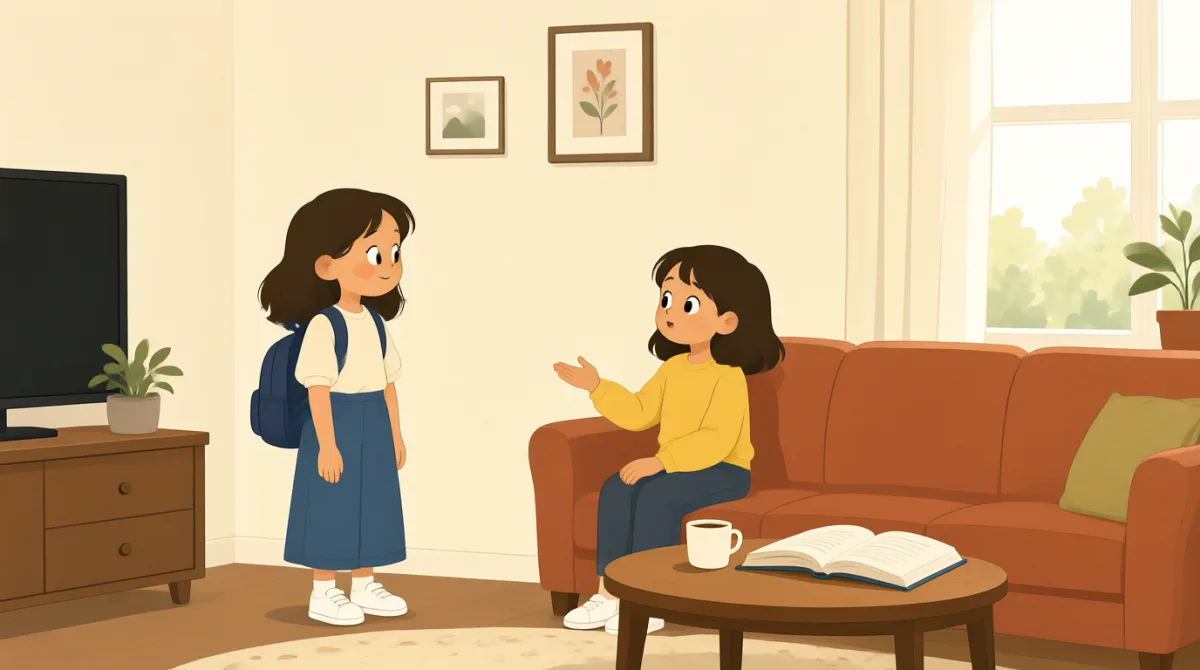

What did you like most about your trip to the coast?
तुम्हें समुद्र-तट की यात्रा में सबसे ज़्यादा क्या पसंद आया?

I loved walking on the beach early in the morning. It was so peaceful.
मुझे सुबह-सुबह समुद्र-तट पर टहलना बहुत अच्छा लगा। वहाँ कितना सुकून था।
That sounds lovely! Did you see anything special along the way?
सुनने में बहुत अच्छा लग रहा है! रास्ते में तुम्हें कुछ खास देखने को मिला?
Yes, I saw a group of dolphins near the shore. I took some photos.
हाँ, मैंने किनारे के पास डॉल्फ़िनों का एक झुंड देखा। मैंने कुछ तस्वीरें भी लीं।
Wow! What was the worst part of the trip?
वाह! यात्रा का सबसे बुरा हिस्सा क्या था?
Our bus was late, so I missed my train home. I had to wait an hour.
हमारी बस देर से आई, इसलिए मेरी घर जाने वाली ट्रेन छूट गई। मुझे एक घंटे इंतज़ार करना पड़ा।
Oh no! Were you upset, or did you find something to do?
अरे नहीं! क्या तुम परेशान हो गई थीं, या फिर तुम्हें कुछ करने को मिल गया?
I was a little tired, but I got a snack and read my book.
मैं थोड़ी थक गई थी, लेकिन मैंने कुछ खाने को लिया और अपनी किताब पढ़ी।
शब्दावली8
- the coastसमुद्र-तट
The coast is the land next to the sea. Use it when talking about a place by the ocean.
समुद्र-तट वह ज़मीन होती है जो समुद्र के किनारे हो। समुद्र के पास की किसी जगह के बारे में बात करते समय इस शब्द का इस्तेमाल करो।
- peacefulशांतिपूर्ण
Peaceful means quiet and calm. You can use it to describe a relaxing place or moment.
“Peaceful” का मतलब है शांत और सुकूनभरा। किसी सुकून देने वाली जगह या पल का वर्णन करने के लिए तुम इसका इस्तेमाल कर सकते हो।
- along the wayरास्ते में
This means during a journey, while going from one place to another. Use it to mention something you saw or did on a trip.
इसका मतलब है यात्रा के दौरान, एक जगह से दूसरी जगह जाते समय। यात्रा में देखी या की गई किसी चीज़ का ज़िक्र करने के लिए इसका इस्तेमाल करो।
- near the shoreकिनारे के पास
This means close to the land beside the sea. Use it to say where something was in the water.
इसका मतलब है समुद्र के पास की ज़मीन के नज़दीक। पानी में किसी चीज़ की जगह बताने के लिए इसका इस्तेमाल करो।
- the worst partसबसे बुरा हिस्सा
This means the least enjoyable or most difficult part of an experience. You can use it to ask about a trip or event.
इसका मतलब है किसी अनुभव का सबसे कम मज़ेदार या सबसे मुश्किल हिस्सा। यात्रा या किसी कार्यक्रम के बारे में पूछते समय तुम इसका इस्तेमाल कर सकते हो।
- was lateदेर से आया
This means something did not arrive or happen at the planned time. Use it to talk about a delayed bus, train, or person.
इसका मतलब है कि कोई चीज़ तय समय पर नहीं पहुँची या नहीं हुई। देर से आने वाली बस, ट्रेन या व्यक्ति के बारे में बात करने के लिए इसका इस्तेमाल करो।
- missed my train homeमेरी घर जाने वाली ट्रेन छूट गई
This means I did not catch the train that was going home. Use it to explain a travel problem.
इसका मतलब है कि मैं घर जाने वाली ट्रेन पकड़ नहीं पाई। यात्रा में हुई किसी परेशानी को समझाने के लिए इसका इस्तेमाल करो।
- got a snackकुछ खाने को लिया
This means I bought or found something small to eat. You can use it to describe a simple thing you did while waiting.
इसका मतलब है कि मैंने खाने के लिए कुछ छोटा-मोटा खरीदा या ढूँढ़ा। इंतज़ार करते समय तुमने जो साधारण-सी चीज़ की, उसका वर्णन करने के लिए इसका इस्तेमाल कर सकते हो।
मुख्य वाक्य8
- 1
What did you like most about your trip to the coast?
तुम्हें समुद्र-तट की यात्रा में सबसे ज़्यादा क्या पसंद आया?
This is a friendly way to ask about someone's favorite part of a trip. You can replace “your trip to the coast” with another activity or place.
यह किसी से उसकी यात्रा के पसंदीदा हिस्से के बारे में पूछने का एक दोस्ताना तरीका है। तुम “your trip to the coast” की जगह किसी दूसरी गतिविधि या जगह का नाम ले सकते हो।
- 2
I loved walking on the beach early in the morning.
मुझे सुबह-सुबह समुद्र-तट पर टहलना बहुत अच्छा लगा।
Use this sentence to describe a favorite activity from a past trip. You can change the activity and place, such as “I loved swimming in the lake.”
बीती हुई यात्रा की अपनी पसंदीदा गतिविधि बताने के लिए इस वाक्य का इस्तेमाल करो। तुम गतिविधि और जगह बदल सकते हो, जैसे “I loved swimming in the lake.”
- 3
It was so peaceful.
वहाँ कितना सुकून था।
This is a simple way to say that a place or moment felt calm and quiet. You can use it to describe a park, beach, or quiet morning.
किसी जगह या पल के शांत और सुकूनभरे लगने की बात कहने का यह एक आसान तरीका है। पार्क, समुद्र-तट या शांत सुबह का वर्णन करने के लिए तुम इसका इस्तेमाल कर सकते हो।
- 4
Did you see anything special along the way?
रास्ते में तुम्हें कुछ खास देखने को मिला?
This question asks whether someone noticed something interesting during a journey. You can change “special” to “interesting” or name a particular thing.
यह सवाल पूछता है कि क्या किसी ने यात्रा के दौरान कोई दिलचस्प चीज़ देखी। तुम “special” की जगह “interesting” कह सकते हो या किसी खास चीज़ का नाम ले सकते हो।
- 5
What was the worst part of the trip?
यात्रा का सबसे बुरा हिस्सा क्या था?
Use this question to ask about the most difficult or least enjoyable part of an experience. You can replace “the trip” with “the day” or “the weekend.”
किसी अनुभव के सबसे मुश्किल या सबसे कम मज़ेदार हिस्से के बारे में पूछने के लिए इस सवाल का इस्तेमाल करो। तुम “the trip” की जगह “the day” या “the weekend” कह सकते हो।
- 6
Our bus was late, so I missed my train home.
हमारी बस देर से आई, इसलिए मेरी घर जाने वाली ट्रेन छूट गई।
This sentence explains a travel problem and its result. Use “so” to connect a problem with what happened because of it.
यह वाक्य यात्रा की एक परेशानी और उसके नतीजे को समझाता है। किसी परेशानी और उसके कारण हुई घटना को जोड़ने के लिए “so” का इस्तेमाल करो।
- 7
I had to wait an hour.
मुझे एक घंटे इंतज़ार करना पड़ा।
Use “had to” to talk about something you needed to do in the past. You can change the time, such as “I had to wait ten minutes.”
बीते समय में जो काम करना ज़रूरी था, उसके बारे में बताने के लिए “had to” का इस्तेमाल करो। तुम समय बदल सकते हो, जैसे “I had to wait ten minutes.”
- 8
I was a little tired, but I got a snack and read my book.
मैं थोड़ी थक गई थी, लेकिन मैंने कुछ खाने को लिया और अपनी किताब पढ़ी।
This sentence describes how someone felt and what they did afterward. Use “but” to connect a feeling with a different or unexpected action.
यह वाक्य बताता है कि किसी को कैसा महसूस हुआ और उसके बाद उसने क्या किया। किसी भावना को उससे अलग या अप्रत्याशित काम से जोड़ने के लिए “but” का इस्तेमाल करो।