Asking People Nearby
पास के लोगों से पूछताछ
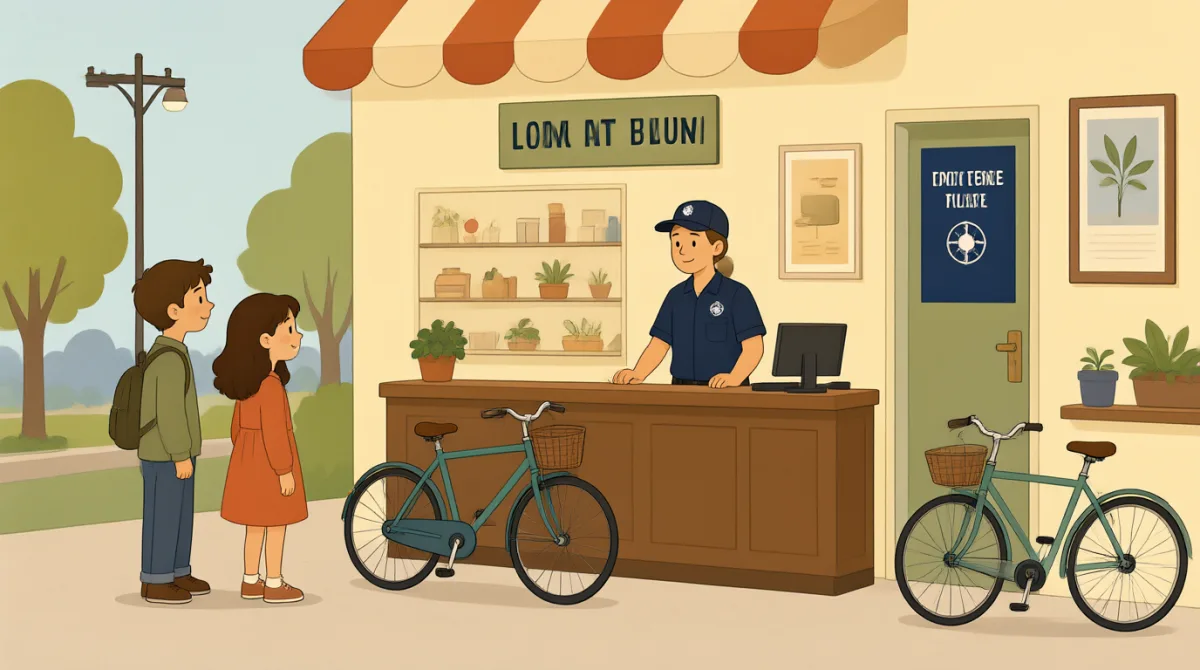
Leo and Emma ask a nearby shop worker if anyone saw the bike. They learn when it was last seen and decide to go to the police station.
लियो और एमा पास की एक दुकान पर काम करने वाली महिला से पूछते हैं कि क्या किसी ने साइकिल देखी थी। उन्हें पता चलता है कि साइकिल आखिरी बार कब देखी गई थी और वे पुलिस स्टेशन जाने का फैसला करते हैं।
संवाद9

Hi, did you see a blue bike near the rack this morning?
नमस्ते, क्या तुमने आज सुबह स्टैंड के पास नीली साइकिल देखी थी?

I work at the shop next door. What time did you leave it there?
मैं बगल वाली दुकान में काम करती हूँ। तुमने उसे वहाँ कितने बजे छोड़ा था?
Around ten. I came back at noon, but it was gone.
लगभग दस बजे। मैं दोपहर में वापस आया, लेकिन वह वहाँ नहीं थी।

Did you notice anyone taking it, or see where they went?
क्या तुमने किसी को उसे ले जाते हुए देखा, या यह देखा कि वे किस तरफ गए?
I saw someone ride away on a blue bike around eleven thirty.
मैंने लगभग साढ़े ग्यारह बजे किसी को नीली साइकिल पर जाते हुए देखा था।
Was it a man or a woman? Did you see their face?
वह आदमी था या औरत? क्या तुमने उसका चेहरा देखा?
I couldn't see their face. They wore a dark jacket and a helmet.
मैं उसका चेहरा नहीं देख पाई। उसने गहरे रंग की जैकेट और हेलमेट पहना हुआ था।
Thanks. We should go to the police station and report it now.
धन्यवाद। हमें अब पुलिस स्टेशन जाकर इसकी रिपोर्ट करनी चाहिए।
Okay. Can you come with me? I don't know what to bring.
ठीक है। क्या तुम मेरे साथ चल सकती हो? मुझे नहीं पता कि क्या लेकर जाना है।
शब्दावली8
- next doorबगल में
This means in the building or place right beside another one. Here, Grace works at the shop beside the bike rack.
इसका अर्थ है किसी दूसरी इमारत या जगह के ठीक पास होना। यहाँ Grace उस दुकान में काम करती है जो साइकिल स्टैंड के बगल में है।
- came backवापस आया
This means returned to a place. You can say, “I came back at noon” to explain when you returned.
इसका अर्थ है किसी जगह पर लौटना। आप यह बताने के लिए “I came back at noon” कह सकते हैं कि आप कब लौटे।
- it was goneवहाँ नहीं थी
This means something was no longer there. Use it to say that an item has disappeared.
इसका अर्थ है कि कोई चीज़ अब वहाँ मौजूद नहीं थी। इसका इस्तेमाल यह बताने के लिए करें कि कोई वस्तु गायब हो गई है।
- noticeध्यान देना
To notice someone is to see or become aware of what they are doing. Ask, “Did you notice anyone?” when looking for information.
किसी व्यक्ति पर ध्यान देने का अर्थ है उसे कुछ करते हुए देखना या उसके काम के बारे में जानकारी होना। जानकारी लेने के लिए पूछें, “Did you notice anyone?”
- ride awayसाइकिल पर चले जाना
This means to leave while riding a bike or another vehicle. You can say, “She rode away” to describe someone leaving by bike.
इसका अर्थ है साइकिल या किसी दूसरे वाहन पर सवार होकर चले जाना। किसी के साइकिल से जाने का वर्णन करने के लिए आप “She rode away” कह सकते हैं।
- couldn't seeदेख नहीं पाया
This means was not able to see. Use it to explain that something was difficult or impossible to see.
इसका अर्थ है देखने में सक्षम न होना। इसका इस्तेमाल यह बताने के लिए करें कि कोई चीज़ देखना मुश्किल या असंभव था।
- police stationपुलिस स्टेशन
This is a place where police officers work. People can go there to report a crime.
यह वह जगह है जहाँ पुलिस अधिकारी काम करते हैं। लोग वहाँ किसी अपराध की रिपोर्ट करने जा सकते हैं।
- bringलेकर जाना
To bring something is to take it with you to a place. You can ask what to bring when you are not sure what you will need.
किसी चीज़ को लेकर जाने का अर्थ है उसे अपने साथ किसी जगह ले जाना। जब आपको पता न हो कि आपको किन चीज़ों की ज़रूरत पड़ेगी, तब आप पूछ सकते हैं कि क्या लेकर जाना है।
मुख्य वाक्य8
- 1
Hi, did you see a blue bike near the rack this morning?
नमस्ते, क्या तुमने आज सुबह स्टैंड के पास नीली साइकिल देखी थी?
Use this question to ask if someone saw a specific item at a particular time and place. Change “a blue bike” and “this morning” to fit your situation.
किसी खास समय और जगह पर किसी विशेष वस्तु को देखे जाने के बारे में पूछने के लिए इस सवाल का इस्तेमाल करें। अपनी स्थिति के अनुसार “a blue bike” और “this morning” को बदल दें।
- 2
What time did you leave it there?
तुमने उसे वहाँ कितने बजे छोड़ा था?
This asks when someone left an item in a place. You can use the same question to ask about a bag, phone, or other object.
इस सवाल से पूछा जाता है कि किसी ने किसी वस्तु को किसी जगह पर कब छोड़ा था। आप बैग, फोन या किसी दूसरी वस्तु के बारे में पूछने के लिए भी यही सवाल इस्तेमाल कर सकते हैं।
- 3
I came back at noon, but it was gone.
मैं दोपहर में वापस आया, लेकिन वह वहाँ नहीं थी।
This explains when you returned and that the item was missing. Replace “at noon” with another time to give a clear timeline.
इससे आप बताते हैं कि आप कब लौटे और वस्तु वहाँ नहीं थी। स्पष्ट क्रम बताने के लिए “at noon” की जगह कोई दूसरा समय रखें।
- 4
Did you notice anyone taking it, or see where they went?
क्या तुमने किसी को उसे ले जाते हुए देखा, या यह देखा कि वे किस तरफ गए?
Use this to ask whether someone saw a person take something or where that person went. It is useful when asking witnesses for details.
इसका इस्तेमाल यह पूछने के लिए करें कि क्या किसी ने किसी व्यक्ति को कोई चीज़ लेते हुए देखा या यह देखा कि वह व्यक्ति कहाँ गया। गवाहों से जानकारी लेते समय यह बहुत उपयोगी है।
- 5
I couldn't see their face.
मैं उसका चेहरा नहीं देख पाई।
This is a simple way to explain that you could not identify someone. You can replace “their face” with another detail you could not see.
किसी व्यक्ति की पहचान न कर पाने की बात बताने का यह एक सरल तरीका है। जिस दूसरी जानकारी को आप नहीं देख पाए, उसके अनुसार “their face” को बदल सकते हैं।
- 6
We should go to the police station and report it now.
हमें अब पुलिस स्टेशन जाकर इसकी रिपोर्ट करनी चाहिए।
Use “We should” to suggest an action. You can replace “report it” with another useful step, such as “call the shop.”
किसी काम का सुझाव देने के लिए “We should” का इस्तेमाल करें। आप “report it” की जगह कोई दूसरा उपयोगी कदम रख सकते हैं, जैसे “call the shop.”
- 7
Can you come with me?
क्या तुम मेरे साथ चल सकती हो?
This is a polite, everyday way to ask someone to go somewhere with you. Change “with me” to “with us” when inviting more than one person.
किसी से अपने साथ कहीं चलने के लिए कहने का यह रोज़मर्रा का विनम्र तरीका है। एक से अधिक लोगों को बुलाते समय “with me” को “with us” में बदल दें।
- 8
I don't know what to bring.
मुझे नहीं पता कि क्या लेकर जाना है।
Use this to say you are unsure which things to take with you. It is useful before going to an appointment or office.
जब आपको यह पता न हो कि अपने साथ कौन-कौन सी चीज़ें ले जानी हैं, तब इसका इस्तेमाल करें। किसी मुलाकात या कार्यालय जाने से पहले यह वाक्य उपयोगी है।