Working With a Neighbor
पड़ोसी के साथ मिलकर काम करना
Emma and Mia work with Jack to pick up litter along a path. They share the work and find a safe way to move a heavy bag.
एमा और मिया जैक के साथ रास्ते पर पड़ा कचरा उठाते हैं। वे काम बाँट लेते हैं और भारी थैले को सुरक्षित तरीके से ले जाने का उपाय ढूँढ़ते हैं।
संवाद8
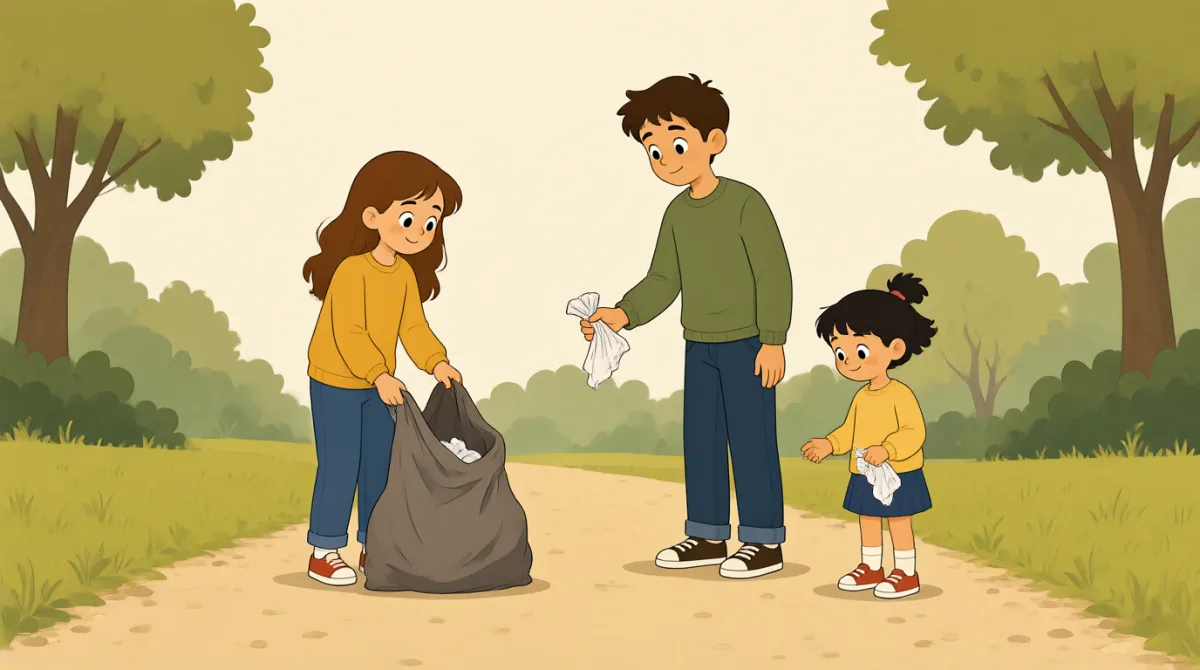

This path has a lot of wrappers. I’ll start on this side.
इस रास्ते पर बहुत सारे खाने के रैपर पड़े हैं। मैं इस तरफ़ से शुरू करती हूँ।

Great. I’ll pick up the bottles near the bench.
बढ़िया। मैं बेंच के पास की बोतलें उठा लेती हूँ।

Thanks for helping. Let’s keep the path clear while we work.
मदद करने के लिए शुक्रिया। काम करते हुए रास्ता साफ़ रखते हैं।
I found a big bag. It’s getting pretty heavy now.
मुझे एक बड़ा थैला मिला है। अब यह काफ़ी भारी होता जा रहा है।
Let’s not lift it alone. Jack, can you help us?
इसे अकेले मत उठाते हैं। जैक, क्या तुम हमारी मदद कर सकते हो?
Sure. Let’s tie it closed and carry it together, one side each.
ज़रूर। इसे बाँधकर बंद कर देते हैं और साथ उठाते हैं—एक-एक तरफ़ से।
Good idea. Watch your step; there’s a root by your foot.
अच्छा विचार है। कदम देखकर चलना; तुम्हारे पैर के पास पेड़ की जड़ है।
We can put the bag by the park entrance for pickup.
हम थैले को उठाने के लिए पार्क के प्रवेश-द्वार के पास रख सकते हैं।
शब्दावली8
- pick upउठाना
To pick up litter means to collect it from the ground. You can also use “pick up” for other things you find or drop.
कचरा उठाने का मतलब है उसे ज़मीन से इकट्ठा करना। “pick up” का इस्तेमाल आपको मिली या गिरी हुई दूसरी चीज़ों के लिए भी कर सकते हैं।
- wrappersरैपर
Wrappers are pieces of paper or plastic around food or other items. Here, they are litter along the path.
Wrappers कागज़ या प्लास्टिक के वे टुकड़े होते हैं जिनमें खाना या दूसरी चीज़ें लपेटी जाती हैं। यहाँ, ये रास्ते पर पड़ा कचरा हैं।
- keep the path clearरास्ता साफ़ रखना
This means to make sure the path does not have litter or other things in the way. You can say “keep the area clear” about other places, too.
इसका मतलब है यह पक्का करना कि रास्ते पर कचरा या कोई दूसरी रुकावट न हो। दूसरी जगहों के लिए भी आप “keep the area clear” कह सकते हैं।
- heavyभारी
Heavy means difficult to lift or carry. Here, the bag has become hard to move because it has a lot inside.
Heavy का मतलब है जिसे उठाना या ले जाना मुश्किल हो। यहाँ, थैले में बहुत कुछ होने के कारण उसे हिलाना मुश्किल हो गया है।
- lift it aloneअकेले उठाना
To lift something alone means to raise it without help. Use this phrase when something may be too heavy to move by yourself.
किसी चीज़ को अकेले उठाने का मतलब है बिना मदद के उसे ऊपर उठाना। जब कोई चीज़ इतनी भारी हो कि आप उसे खुद न हिला पाएँ, तब इस वाक्यांश का इस्तेमाल करें।
- tie it closedबाँधकर बंद करना
This means to close the bag by tying its opening. You can use “tie it closed” for a bag that needs to be carried.
इसका मतलब है थैले का मुँह बाँधकर उसे बंद करना। जिस थैले को ले जाना हो, उसके लिए आप “tie it closed” कह सकते हैं।
- together, one side eachसाथ मिलकर, एक-एक तरफ़ से
This means two people will carry something at the same time, with each person holding one side. It is a useful way to share the work.
इसका मतलब है कि दो लोग एक ही समय पर कोई चीज़ उठाएँगे और हर व्यक्ति उसका एक तरफ़ का हिस्सा पकड़ेगा। काम बाँटने का यह एक उपयोगी तरीका है।
- Watch your stepकदम देखकर चलना
This is a warning to be careful where you walk. You can say it when there is something on the ground that someone could trip over.
यह चलते समय सावधान रहने की चेतावनी है। जब ज़मीन पर कोई ऐसी चीज़ हो जिससे किसी को ठोकर लग सकती है, तब आप यह कह सकते हैं।
मुख्य वाक्य8
- 1
I’ll start on this side.
मैं इस तरफ़ से शुरू करूँगी।
Use this to say where you will begin a task. Replace “this side” with a place or part of the job, such as “I’ll start by the door.”
किसी काम को कहाँ से शुरू करेंगी, यह बताने के लिए इस वाक्य का इस्तेमाल करें। “this side” की जगह कोई जगह या काम का हिस्सा रख सकती हैं, जैसे “I’ll start by the door.”
- 2
I’ll pick up the bottles near the bench.
मैं बेंच के पास की बोतलें उठा लूँगी।
This sentence offers to collect specific things in a specific place. You can replace “the bottles” and “near the bench” with other items and locations.
इस वाक्य से आप किसी खास जगह पर रखी खास चीज़ें इकट्ठा करने की पेशकश करती हैं। आप “the bottles” और “near the bench” की जगह दूसरी चीज़ों और जगहों के नाम रख सकती हैं।
- 3
Let’s keep the path clear while we work.
काम करते हुए रास्ता साफ़ रखते हैं।
Use “Let’s” to suggest doing something together. You can change “keep the path clear” to another shared goal, like “keep the room tidy.”
“Let’s” का इस्तेमाल साथ मिलकर कुछ करने का सुझाव देने के लिए करें। आप “keep the path clear” की जगह कोई दूसरा साझा लक्ष्य रख सकती हैं, जैसे “keep the room tidy.”
- 4
It’s getting pretty heavy now.
अब यह काफ़ी भारी होता जा रहा है।
This is a simple way to say that something is becoming difficult to carry. Replace “heavy” with another adjective, such as “cold” or “busy.”
यह कहने का आसान तरीका है कि किसी चीज़ को ले जाना मुश्किल होता जा रहा है। “heavy” की जगह कोई दूसरा विशेषण रख सकती हैं, जैसे “cold” या “busy.”
- 5
Let’s not lift it alone.
इसे अकेले मत उठाते हैं।
Use “Let’s not” to suggest avoiding an action. You can use this pattern when a task may be difficult or unsafe to do by yourself.
किसी काम से बचने का सुझाव देने के लिए “Let’s not” का इस्तेमाल करें। जब कोई काम अकेले करना मुश्किल या असुरक्षित हो सकता है, तब आप इस ढाँचे का इस्तेमाल कर सकती हैं।
- 6
Jack, can you help us?
जैक, क्या तुम हमारी मदद कर सकते हो?
This is a polite, direct way to ask someone for help. Replace “help us” with the task you need help with, such as “carry this box.”
किसी से मदद माँगने का यह विनम्र और सीधा तरीका है। “help us” की जगह उस काम का नाम रखें जिसमें आपको मदद चाहिए, जैसे “carry this box.”
- 7
Let’s tie it closed and carry it together, one side each.
इसे बाँधकर बंद कर देते हैं और साथ उठाते हैं—एक-एक तरफ़ से।
This sentence suggests a safe plan and explains how two people can share the work. Use “Let’s” to propose a plan, then describe the steps.
इस वाक्य में सुरक्षित योजना का सुझाव है और यह बताया गया है कि दो लोग काम कैसे बाँट सकते हैं। योजना सुझाने के लिए “Let’s” कहें, फिर उसके कदम बताएँ।
- 8
Watch your step; there’s a root by your foot.
कदम देखकर चलना; तुम्हारे पैर के पास पेड़ की जड़ है।
Use “Watch your step” to warn someone about something on the ground. You can add a short explanation after it to show what to avoid.
ज़मीन पर किसी चीज़ के बारे में आगाह करने के लिए “Watch your step” कहें। इससे बचने वाली चीज़ बताने के लिए इसके बाद एक छोटा-सा स्पष्टीकरण जोड़ सकती हैं।