Getting Gloves and Bags
दस्ताने और थैले लेना
At the park, Grace gives Emma and Mia gloves and bags. She explains where to put the trash.
पार्क में ग्रेस, एमा और मिया को दस्ताने और थैले देती है। वह उन्हें बताती है कि कचरा कहाँ रखना है।
संवाद8
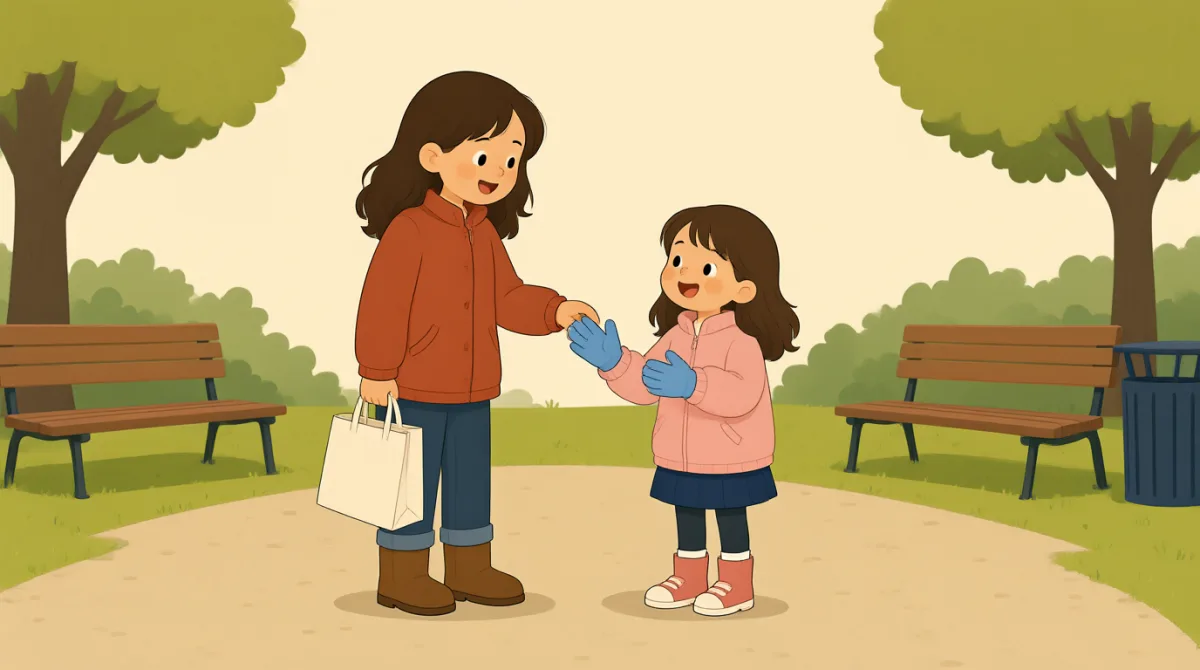

Here are your gloves and bags. Please put on the gloves before you start.
ये रहे तुम्हारे दस्ताने और थैले। शुरू करने से पहले दस्ताने पहन लो।

Thanks, Grace. Where should we put the trash when our bags are full?
धन्यवाद, ग्रेस। जब हमारे थैले भर जाएँ, तो कचरा कहाँ रखें?
Leave full bags by the park entrance. We’ll collect them there later.
भरे हुए थैले पार्क के प्रवेश द्वार के पास रख देना। हम बाद में उन्हें वहाँ से ले लेंगे।

Should we pick up broken glass too, or leave it for someone else?
क्या हमें टूटे हुए काँच के टुकड़े भी उठाने चाहिए, या उन्हें किसी और के लिए छोड़ दें?
Please don’t touch broken glass. Tell me, and I’ll bring a special container.
कृपया टूटे हुए काँच को मत छूना। मुझे बताना, मैं एक खास डिब्बा ले आऊँगी।
Got it. Are there any areas we should clean first?
समझ गई। क्या कोई ऐसी जगह है, जहाँ हमें पहले सफ़ाई करनी चाहिए?
Start along the paths near the playground. Watch for people walking by.
खेल के मैदान के पास वाले रास्तों से शुरू करो। आते-जाते लोगों का ध्यान रखना।
Okay, we’ll take these bags and start near the playground.
ठीक है, हम ये थैले लेकर खेल के मैदान के पास से शुरू करेंगे।
शब्दावली8
- put on the glovesदस्ताने पहनना
To put on the gloves means to wear them on your hands. You can use “put on” for clothes and accessories.
“put on the gloves” का मतलब है अपने हाथों में दस्ताने पहनना। कपड़ों और दूसरी पहनने वाली चीज़ों के लिए भी “put on” कह सकते हैं।
- bags are fullथैले भर जाना
This means there is no more space in the bags. You can say “My bag is full” when it cannot hold anything else.
इसका मतलब है कि थैलों में और जगह नहीं बची है। जब थैले में और कुछ नहीं रखा जा सकता, तो आप कह सकते हैं, “My bag is full” (मेरा थैला भर गया है)।
- park entranceपार्क का प्रवेश द्वार
The park entrance is the place where people enter the park. You can use this phrase to give someone a meeting place.
पार्क का प्रवेश द्वार वह जगह है जहाँ से लोग पार्क में दाखिल होते हैं। किसी को मिलने की जगह बताने के लिए आप इस वाक्यांश का इस्तेमाल कर सकते हैं।
- pick upउठाना
Here, “pick up” means to collect something from the ground. You can also say “pick up litter” when cleaning outside.
यहाँ “pick up” का मतलब है ज़मीन से कोई चीज़ उठाना। बाहर सफ़ाई करते समय आप “pick up litter” (कूड़ा उठाना) भी कह सकते हैं।
- broken glassटूटा हुआ काँच
Broken glass is glass that has cracked into pieces. It can be dangerous, so people should not touch it.
टूटा हुआ काँच वह काँच है जो टूटकर टुकड़ों में बिखर गया हो। यह खतरनाक हो सकता है, इसलिए लोगों को इसे नहीं छूना चाहिए।
- special containerखास डिब्बा
A special container is a particular box or holder made for a certain purpose. You can use “container” for something that holds or carries items.
“special container” कोई खास काम करने के लिए बना हुआ डिब्बा या पात्र होता है। चीज़ें रखने या ले जाने वाली वस्तु के लिए आप “container” कह सकते हैं।
- walking byपास से गुज़रते हुए
“Walking by” means passing near a place on foot. You can use it to talk about people moving past you.
“walking by” का मतलब है पैदल किसी जगह के पास से गुज़रना। अपने पास से गुज़र रहे लोगों के बारे में बात करते समय आप इसका इस्तेमाल कर सकते हैं।
- near the playgroundखेल के मैदान के पास
This means close to the playground. You can use “near” to say that one place is not far from another.
इसका मतलब है खेल के मैदान से नज़दीक। एक जगह दूसरी जगह से दूर नहीं है, यह बताने के लिए आप “near” का इस्तेमाल कर सकते हैं।
मुख्य वाक्य8
- 1
Please put on the gloves before you start.
शुरू करने से पहले दस्ताने पहन लो।
This is a polite way to give someone an instruction. Use “Please” to make a request sound friendly.
यह किसी को निर्देश देने का विनम्र तरीका है। अपनी बात को दोस्ताना अनुरोध बनाने के लिए “Please” का इस्तेमाल करें।
- 2
Where should we put the trash when our bags are full?
जब हमारे थैले भर जाएँ, तो कचरा कहाँ रखें?
This is a useful way to ask where something belongs. Replace “the trash” with another item to ask where to put it.
किसी चीज़ को कहाँ रखना है, यह पूछने का यह एक उपयोगी तरीका है। उसकी जगह कोई दूसरी चीज़ रखकर पूछें कि उसे कहाँ रखना है।
- 3
Leave full bags by the park entrance.
भरे हुए थैले पार्क के प्रवेश द्वार के पास रख देना।
This gives a clear instruction about where to leave something. You can replace “full bags” and “the park entrance” with other items and places.
यह किसी चीज़ को कहाँ छोड़ना है, इस बारे में साफ़ निर्देश देता है। “full bags” और “the park entrance” की जगह दूसरी चीज़ों और जगहों के नाम रख सकते हैं।
- 4
Please don’t touch broken glass.
कृपया टूटे हुए काँच को मत छूना।
This is a polite but clear warning. Use “Please don’t” to ask someone not to do something.
यह विनम्र लेकिन साफ़ चेतावनी है। किसी से कोई काम न करने के लिए कहने हेतु “Please don’t” का इस्तेमाल करें।
- 5
Tell me, and I’ll bring a special container.
मुझे बताना, मैं एक खास डिब्बा ले आऊँगी।
This offers help and explains what you will do next. Use “I’ll” to talk about a future action or decision.
इसमें मदद की पेशकश की गई है और बताया गया है कि आप आगे क्या करेंगे। भविष्य में होने वाले काम या लिए गए फ़ैसले के बारे में बात करने के लिए “I’ll” का इस्तेमाल करें।
- 6
Are there any areas we should clean first?
क्या कोई ऐसी जगह है, जहाँ हमें पहले सफ़ाई करनी चाहिए?
This is a useful way to ask which task or place to begin with. Replace “areas we should clean” with another activity to ask what to do first.
यह पूछने का उपयोगी तरीका है कि कौन-सा काम या जगह पहले शुरू करनी चाहिए। पहले क्या करना है, यह पूछने के लिए “areas we should clean” की जगह कोई दूसरी गतिविधि रख सकते हैं।
- 7
Watch for people walking by.
आते-जाते लोगों का ध्यान रखना।
This reminds someone to be careful and notice people nearby. Use “Watch for” to warn someone to look out for something.
यह किसी को सावधान रहने और आसपास के लोगों पर ध्यान देने की याद दिलाता है। किसी को किसी चीज़ पर नज़र रखने की चेतावनी देने के लिए “Watch for” का इस्तेमाल करें।
- 8
Okay, we’ll take these bags and start near the playground.
ठीक है, हम ये थैले लेकर खेल के मैदान के पास से शुरू करेंगे।
This confirms a plan and says what will happen next. Use “we’ll” to describe a future action you have decided on.
यह किसी योजना की पुष्टि करता है और बताता है कि आगे क्या होगा। तय किए गए भविष्य के काम के बारे में बताने के लिए “we’ll” का इस्तेमाल करें।