Signing Up
पंजीकरण करना
Emma and Mia meet Grace, who is organizing the clean-up. They sign up and learn when and where to meet.
एमा और मिया ग्रेस से मिलती हैं, जो सफ़ाई अभियान का आयोजन कर रही हैं। वे अपना नाम लिखवाती हैं और जानती हैं कि कहाँ और कब मिलना है।
संवाद8
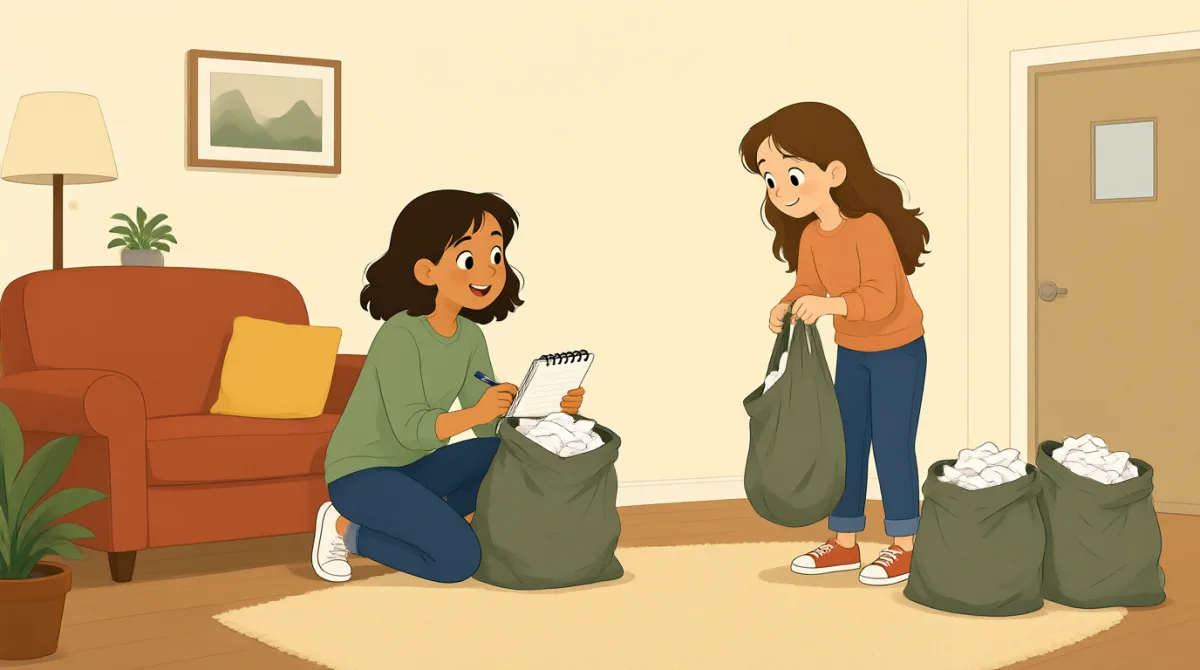

Hi, Grace. Mia and I saw the clean-up poster. Can we sign up?
हाय, ग्रेस। मिया और मैंने सफ़ाई अभियान का पोस्टर देखा। क्या हम अपना नाम लिखवा सकती हैं?

Of course! Please write your names on this sign-up sheet.
बिल्कुल! कृपया इस सूची में अपने नाम लिख दीजिए।

Do we need to bring anything, like gloves or trash bags?
क्या हमें कुछ लाना होगा, जैसे दस्ताने या कचरे के थैले?
No, I have tools for everyone. Just wear comfortable shoes and clothes.
नहीं, मेरे पास सबके लिए औज़ार हैं। बस आरामदायक जूते और कपड़े पहनकर आइए।
Great! What time should we meet, and where in the park?
बहुत अच्छा! हमें कितने बजे मिलना चाहिए, और पार्क में कहाँ?
Meet at nine on Saturday by the park's main entrance.
शनिवार को नौ बजे पार्क के मुख्य प्रवेश द्वार के पास मिलिए।
Got it. We’ll be there at nine. How long will we work?
समझ गई। हम नौ बजे वहाँ पहुँच जाएँगी। हम कितनी देर काम करेंगे?
About two hours. Then we’ll take a short break and have snacks.
करीब दो घंटे। फिर हम थोड़ी देर आराम करेंगे और कुछ नाश्ता करेंगे।
शब्दावली7
- sign upनाम लिखवाना
To sign up means to put your name on a list to join an activity. You can use it when you want to take part in an event or class.
"sign up" का मतलब है किसी गतिविधि में शामिल होने के लिए सूची में अपना नाम लिखना। किसी कार्यक्रम या कक्षा में हिस्सा लेने के लिए आप इस वाक्यांश का इस्तेमाल कर सकते हैं।
- sign-up sheetनाम लिखने की सूची
A sign-up sheet is a paper where people write their names to join an activity. It helps the organizer know who is coming.
"sign-up sheet" वह कागज़ होता है जिस पर लोग किसी गतिविधि में शामिल होने के लिए अपने नाम लिखते हैं। इससे आयोजक को पता चलता है कि कौन-कौन आ रहा है।
- bring anythingकुछ साथ लाना
This asks if you need to take something with you. You can use it before an event or visit.
"bring anything" पूछता है कि क्या आपको अपने साथ कोई चीज़ लानी है। किसी कार्यक्रम या मुलाक़ात से पहले आप इसका इस्तेमाल कर सकते हैं।
- comfortable shoes and clothesआरामदायक जूते और कपड़े
These are shoes and clothes that feel good to wear. You can use this phrase when asking what to wear for an activity.
"comfortable shoes and clothes" ऐसे जूते और कपड़े हैं जिन्हें पहनकर अच्छा और आरामदायक महसूस हो। किसी गतिविधि के लिए क्या पहनना है, यह पूछते समय आप इस वाक्यांश का इस्तेमाल कर सकते हैं।
- main entranceमुख्य प्रवेश द्वार
The main entrance is the most important or usual way into a place. It is useful for giving a clear meeting point.
"main entrance" किसी जगह में आने-जाने का सबसे प्रमुख या आम रास्ता होता है। मिलने की जगह साफ़-साफ़ बताने में यह वाक्यांश काम आता है।
- be thereवहाँ पहुँचना
To be there means to arrive at or be in a place. You can use it to confirm that you will come.
"be there" का मतलब है किसी जगह पर पहुँचना या वहाँ मौजूद होना। आप इसका इस्तेमाल यह पक्का करने के लिए कर सकते हैं कि आप आएँगे।
- take a short breakथोड़ी देर का विराम लेना
This means to stop working for a little while to rest. You can use it when talking about a pause during an activity.
"take a short break" का मतलब है आराम करने के लिए थोड़ी देर काम रोकना। किसी गतिविधि के दौरान विराम के बारे में बात करते समय आप इसका इस्तेमाल कर सकते हैं।
मुख्य वाक्य8
- 1
Can we sign up?
क्या हम अपना नाम लिखवा सकती हैं?
Use this to ask if you can join an activity or event. You can replace “sign up” with another action, such as “come along.”
किसी गतिविधि या कार्यक्रम में शामिल होने की अनुमति पूछने के लिए इस वाक्य का इस्तेमाल करें। आप "sign up" की जगह कोई दूसरी क्रिया, जैसे "come along" (साथ आना), रख सकते हैं।
- 2
Do we need to bring anything, like gloves or trash bags?
क्या हमें कुछ लाना होगा, जैसे दस्ताने या कचरे के थैले?
This is a useful way to ask what you should take with you. You can name a few examples after “like.”
अपने साथ क्या ले जाना चाहिए, यह पूछने का यह एक उपयोगी तरीका है। "like" के बाद आप कुछ उदाहरण दे सकते हैं।
- 3
Just wear comfortable shoes and clothes.
बस आरामदायक जूते और कपड़े पहनिए।
Use this to give simple advice about what to wear. Replace “comfortable shoes and clothes” with other suitable clothing.
क्या पहनना है, इस बारे में आसान सलाह देने के लिए इस वाक्य का इस्तेमाल करें। "comfortable shoes and clothes" की जगह आप कपड़ों के दूसरे सही विकल्प रख सकते हैं।
- 4
What time should we meet, and where in the park?
हमें कितने बजे मिलना चाहिए, और पार्क में कहाँ?
This asks for both the meeting time and place. You can use the same question pattern to make plans for other locations.
इसमें मिलने का समय और जगह, दोनों पूछे जाते हैं। दूसरी जगहों पर मिलने की योजना बनाते समय भी आप यही सवाल पूछने का ढाँचा इस्तेमाल कर सकते हैं।
- 5
Meet at nine on Saturday by the park's main entrance.
शनिवार को नौ बजे पार्क के मुख्य प्रवेश द्वार के पास मिलिए।
This gives a clear meeting time, day, and place. You can use this pattern to tell someone where and when to meet.
इस वाक्य में मिलने का समय, दिन और जगह साफ़-साफ़ बताई गई है। किसी को बताने के लिए कि कब और कहाँ मिलना है, आप इसी ढाँचे का इस्तेमाल कर सकते हैं।
- 6
We’ll be there at nine.
हम नौ बजे वहाँ पहुँच जाएँगी।
Use this to confirm that you will arrive at a certain time. Replace “nine” with another time.
किसी तय समय पर पहुँचने की पुष्टि करने के लिए इस वाक्य का इस्तेमाल करें। "nine" की जगह कोई दूसरा समय रख सकते हैं।
- 7
How long will we work?
हम कितनी देर काम करेंगे?
Use this to ask about the length of a future activity. You can replace “work” with another activity, such as “clean” or “wait.”
आगे होने वाली किसी गतिविधि की अवधि पूछने के लिए इस वाक्य का इस्तेमाल करें। "work" की जगह कोई दूसरी गतिविधि, जैसे "clean" या "wait", रख सकते हैं।
- 8
Then we’ll take a short break and have snacks.
फिर हम थोड़ी देर आराम करेंगे और कुछ नाश्ता करेंगे।
This explains what will happen after the main activity. You can use “Then we’ll…” to describe the next steps in a plan.
यह वाक्य बताता है कि मुख्य गतिविधि के बाद क्या होगा। किसी योजना के अगले कदम बताने के लिए आप "Then we’ll…" का इस्तेमाल कर सकते हैं।