Working With a Neighbor
Praca z sąsiadem
Emma and Mia work with Jack to pick up litter along a path. They share the work and find a safe way to move a heavy bag.
Emma i Mia pomagają Jackowi zbierać śmieci wzdłuż ścieżki. Dzielą się pracą i znajdują bezpieczny sposób na przeniesienie ciężkiego worka.
Dialog8
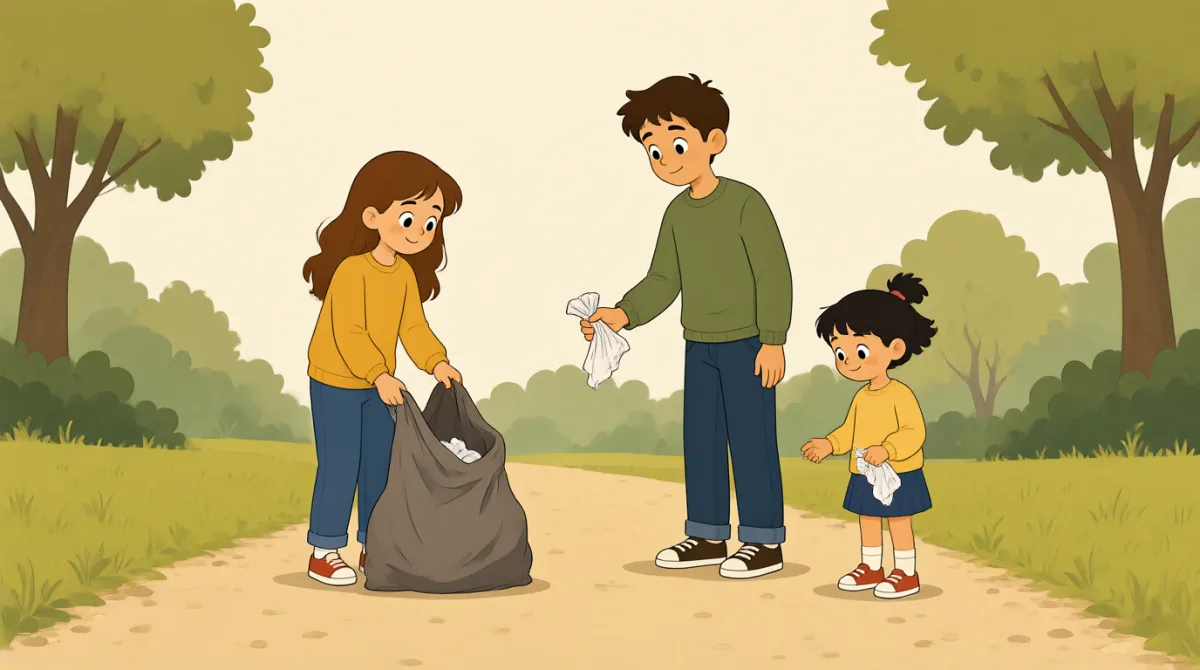

This path has a lot of wrappers. I’ll start on this side.
Na tej ścieżce jest mnóstwo opakowań. Zacznę z tej strony.

Great. I’ll pick up the bottles near the bench.
Świetnie. Pozbieram butelki przy ławce.

Thanks for helping. Let’s keep the path clear while we work.
Dzięki za pomoc. Dbajmy o to, żeby ścieżka była czysta, kiedy pracujemy.
I found a big bag. It’s getting pretty heavy now.
Znalazłam duży worek. Robi się już całkiem ciężki.
Let’s not lift it alone. Jack, can you help us?
Nie podnośmy go same. Jack, możesz nam pomóc?
Sure. Let’s tie it closed and carry it together, one side each.
Jasne. Zawiążmy go i zanieśmy razem, każde z nas za jeden bok.
Good idea. Watch your step; there’s a root by your foot.
Dobry pomysł. Uważaj pod nogi, przy twojej stopie jest korzeń.
We can put the bag by the park entrance for pickup.
Możemy zostawić worek przy wejściu do parku, żeby go zabrali.
Słownictwo8
- pick upzbierać
To pick up litter means to collect it from the ground. You can also use “pick up” for other things you find or drop.
„Pick up litter” oznacza zbierać śmieci z ziemi. „Pick up” możesz też powiedzieć o innych rzeczach, które znajdziesz lub upuścisz.
- wrappersopakowania
Wrappers are pieces of paper or plastic around food or other items. Here, they are litter along the path.
Opakowania to kawałki papieru lub plastiku, w które zawija się jedzenie albo inne przedmioty. Tutaj chodzi o śmieci leżące wzdłuż ścieżki.
- keep the path clearutrzymywać ścieżkę w czystości
This means to make sure the path does not have litter or other things in the way. You can say “keep the area clear” about other places, too.
To znaczy dbać o to, żeby na ścieżce nie było śmieci ani innych przeszkód. Możesz też powiedzieć „keep the area clear” o innych miejscach.
- heavyciężki
Heavy means difficult to lift or carry. Here, the bag has become hard to move because it has a lot inside.
„Heavy” znaczy, że coś trudno podnieść lub nieść. Tutaj worek zrobił się trudny do przeniesienia, bo jest w nim dużo rzeczy.
- lift it alonepodnieść coś samemu
To lift something alone means to raise it without help. Use this phrase when something may be too heavy to move by yourself.
„Lift something alone” znaczy podnieść coś bez pomocy. Użyj tego wyrażenia, gdy coś może być zbyt ciężkie, żeby przenieść to samodzielnie.
- tie it closedzawiązać, żeby zamknąć
This means to close the bag by tying its opening. You can use “tie it closed” for a bag that needs to be carried.
To znaczy zamknąć worek, zawiązując jego otwór. „Tie it closed” możesz powiedzieć o worku, który trzeba przenieść.
- together, one side eachrazem, każde z jednej strony
This means two people will carry something at the same time, with each person holding one side. It is a useful way to share the work.
To znaczy, że dwie osoby niosą coś jednocześnie, każda trzymając jeden bok. To dobry sposób na podzielenie się pracą.
- Watch your stepUważaj pod nogi
This is a warning to be careful where you walk. You can say it when there is something on the ground that someone could trip over.
To ostrzeżenie, żeby uważać, gdzie się stąpa. Możesz tak powiedzieć, gdy na ziemi leży coś, o co ktoś może się potknąć.
Kluczowe zdania8
- 1
I’ll start on this side.
Zacznę z tej strony.
Use this to say where you will begin a task. Replace “this side” with a place or part of the job, such as “I’ll start by the door.”
Użyj tego zdania, żeby powiedzieć, gdzie zaczniesz wykonywać zadanie. Zamiast „this side” możesz podać inne miejsce lub część zadania, na przykład „I’ll start by the door.”
- 2
I’ll pick up the bottles near the bench.
Pozbieram butelki przy ławce.
This sentence offers to collect specific things in a specific place. You can replace “the bottles” and “near the bench” with other items and locations.
To zdanie oznacza, że oferujesz zebranie konkretnych rzeczy w określonym miejscu. Możesz zamienić „the bottles” i „near the bench” na inne przedmioty i miejsca.
- 3
Let’s keep the path clear while we work.
Dbajmy o to, żeby ścieżka była czysta, kiedy pracujemy.
Use “Let’s” to suggest doing something together. You can change “keep the path clear” to another shared goal, like “keep the room tidy.”
Użyj „Let’s”, żeby zaproponować wspólne działanie. Możesz zamienić „keep the path clear” na inny wspólny cel, na przykład „keep the room tidy.”
- 4
It’s getting pretty heavy now.
Robi się już całkiem ciężki.
This is a simple way to say that something is becoming difficult to carry. Replace “heavy” with another adjective, such as “cold” or “busy.”
To prosty sposób, by powiedzieć, że coś staje się trudne do niesienia. Zamiast „heavy” możesz użyć innego przymiotnika, na przykład „cold” lub „busy.”
- 5
Let’s not lift it alone.
Nie podnośmy go sami.
Use “Let’s not” to suggest avoiding an action. You can use this pattern when a task may be difficult or unsafe to do by yourself.
Użyj „Let’s not”, żeby zasugerować, że warto czegoś nie robić. Możesz zastosować ten wzór, gdy zadanie może być trudne lub niebezpieczne do wykonania w pojedynkę.
- 6
Jack, can you help us?
Jack, możesz nam pomóc?
This is a polite, direct way to ask someone for help. Replace “help us” with the task you need help with, such as “carry this box.”
To uprzejmy i bezpośredni sposób, by poprosić kogoś o pomoc. Zamiast „help us” możesz podać zadanie, w którym potrzebujesz pomocy, na przykład „carry this box.”
- 7
Let’s tie it closed and carry it together, one side each.
Zawiążmy go i zanieśmy razem, każde z nas za jeden bok.
This sentence suggests a safe plan and explains how two people can share the work. Use “Let’s” to propose a plan, then describe the steps.
To zdanie proponuje bezpieczny plan i wyjaśnia, jak dwie osoby mogą podzielić się pracą. Użyj „Let’s”, by zaproponować plan, a potem opisz kolejne kroki.
- 8
Watch your step; there’s a root by your foot.
Uważaj pod nogi, przy twojej stopie jest korzeń.
Use “Watch your step” to warn someone about something on the ground. You can add a short explanation after it to show what to avoid.
Użyj „Watch your step”, by ostrzec kogoś przed czymś na ziemi. Możesz dodać krótkie wyjaśnienie, co należy ominąć.