Seeing the Poster
पोस्टर देखना
Emma and Mia see a poster for a neighborhood clean-up day at the park. They talk about joining the event.
एमा और मिया पार्क में पड़ोस की सफ़ाई के दिन का पोस्टर देखती हैं। वे इस आयोजन में शामिल होने के बारे में बात करती हैं।
संवाद8
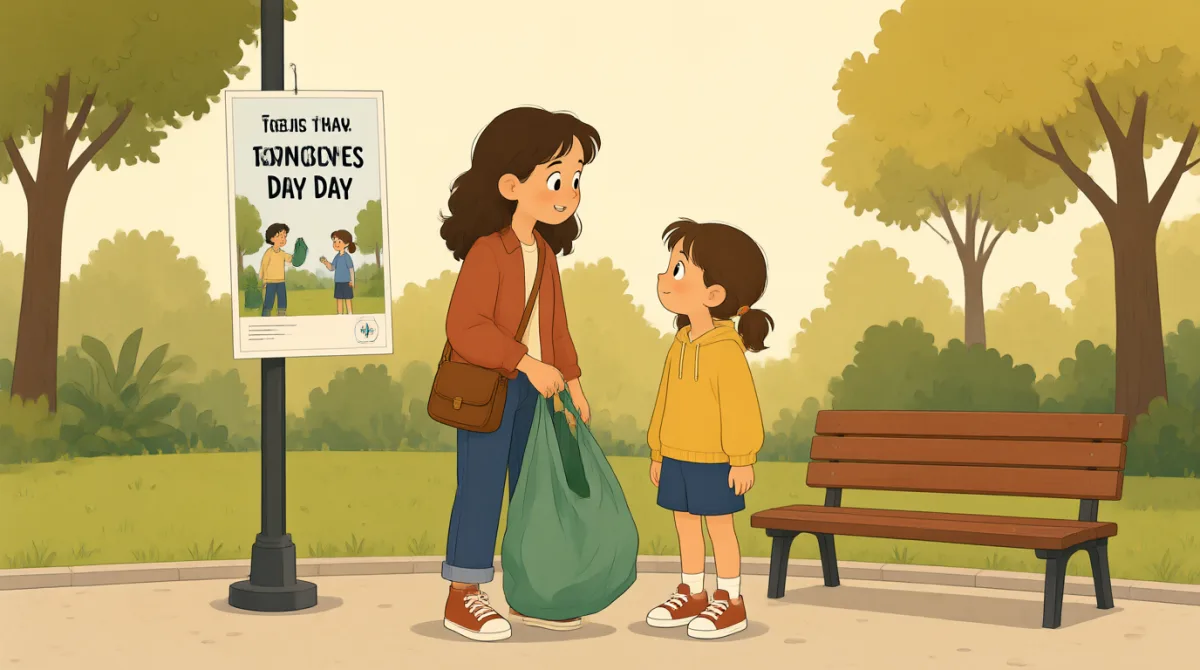

Mia, look at that poster by the park gate. It says “Neighborhood Clean-Up Day.”
मिया, पार्क के फाटक के पास लगा वह पोस्टर देखो। उस पर लिखा है, “पड़ोस की सफ़ाई का दिन।”

Oh, nice! When is it? I’d like to help clean up the park.
अरे, बढ़िया! यह कब है? मैं पार्क की सफ़ाई में मदद करना चाहूँगी।
It’s this Saturday morning, from nine to noon. Are you free then?
इस शनिवार सुबह, नौ बजे से दोपहर बारह बजे तक। क्या तुम उस समय खाली हो?
Yes, I am. I usually take a walk there on Saturdays anyway.
हाँ, हूँ। वैसे भी मैं शनिवार को अक्सर वहाँ टहलने जाती हूँ।
Great! We can pick up litter and make the park look nicer.
बहुत बढ़िया! हम कूड़ा उठा सकते हैं और पार्क को और सुंदर बना सकते हैं।
Do we need to bring anything, like gloves or trash bags?
क्या हमें कुछ लाना होगा, जैसे दस्ताने या कूड़े के थैले?
The poster says tools will be provided. We just need to show up on time.
पोस्टर पर लिखा है कि औज़ार दिए जाएँगे। हमें बस समय पर पहुँचना है।
Sounds good. Let’s join! We can ask the organizer where to meet.
अच्छा है। चलो, शामिल होते हैं! हम आयोजक से पूछ सकते हैं कि कहाँ मिलना है।
शब्दावली7
- clean upसफ़ाई करना
To clean a place by removing dirt or rubbish. Here, Mia wants to help clean the park.
किसी जगह से गंदगी या कूड़ा हटाकर उसे साफ़ करना। यहाँ मिया पार्क की सफ़ाई में मदद करना चाहती है।
- pick up litterकूड़ा उठाना
To collect rubbish from the ground. You can use this phrase when talking about cleaning a public place.
ज़मीन पर पड़ा कूड़ा इकट्ठा करना। किसी सार्वजनिक जगह की सफ़ाई की बात करते समय इस वाक्यांश का इस्तेमाल कर सकते हैं।
- look nicerऔर सुंदर दिखना
To appear more attractive or pleasant. Use it to describe how a place may look after cleaning.
ज़्यादा आकर्षक या अच्छा दिखाई देना। सफ़ाई के बाद कोई जगह कैसी दिखेगी, यह बताने के लिए इसका इस्तेमाल करें।
- be providedउपलब्ध कराया जाना
To be supplied or given for people to use. Here, the organizers will supply the tools.
लोगों के इस्तेमाल के लिए कोई चीज़ दी जाना या मुहैया कराई जाना। यहाँ आयोजक औज़ार मुहैया कराएँगे।
- show up on timeसमय पर पहुँचना
To arrive at the expected time. This phrase is useful for plans and events.
तय समय पर पहुँचना। योजनाओं और आयोजनों के बारे में बात करते समय यह वाक्यांश काम आता है।
- joinशामिल होना
To take part in an activity with other people. Here, Mia agrees to take part in the clean-up.
दूसरे लोगों के साथ किसी गतिविधि में हिस्सा लेना। यहाँ मिया सफ़ाई के काम में हिस्सा लेने के लिए राज़ी होती है।
- ask the organizerआयोजक से पूछना
To speak to the person who plans or manages an event. You can ask the organizer for information about where to meet.
उस व्यक्ति से बात करना जो किसी आयोजन की योजना बनाता है या उसे सँभालता है। मिलने की जगह जानने के लिए आप आयोजक से पूछ सकते हैं।
मुख्य वाक्य8
- 1
When is it?
यह कब है?
This is a simple way to ask when an event or activity will happen. You can use it after someone tells you about a plan.
किसी आयोजन या गतिविधि का समय पूछने का यह एक आसान तरीका है। कोई आपको योजना बताए, तो आप यह सवाल पूछ सकते हैं।
- 2
I’d like to help clean up the park.
मैं पार्क की सफ़ाई में मदद करना चाहूँगी।
Use “I’d like to” to say what you want to do politely. You can replace “clean up the park” with another activity.
“I’d like to” का इस्तेमाल अपनी इच्छा विनम्रता से बताने के लिए करें। आप “clean up the park” की जगह कोई दूसरी गतिविधि रख सकते हैं।
- 3
Are you free then?
क्या तुम उस समय खाली हो?
This is a common way to ask if someone is available at a particular time. “Then” refers to a time that was just mentioned.
किसी खास समय पर किसी के उपलब्ध होने के बारे में पूछने का यह आम तरीका है। “Then” का मतलब है अभी-अभी बताया गया समय।
- 4
We can pick up litter and make the park look nicer.
हम कूड़ा उठा सकते हैं और पार्क को और सुंदर बना सकते हैं।
This sentence suggests two things people can do together. Use “We can” to talk about possible activities or plans.
इस वाक्य में दो ऐसे काम सुझाए गए हैं जिन्हें लोग साथ मिलकर कर सकते हैं। संभावित गतिविधियों या योजनाओं के बारे में बात करने के लिए “We can” का इस्तेमाल करें।
- 5
Do we need to bring anything, like gloves or trash bags?
क्या हमें कुछ लाना होगा, जैसे दस्ताने या कूड़े के थैले?
Use this question to find out what you should bring to an event. “Like” introduces examples of useful things.
किसी आयोजन में क्या लाना चाहिए, यह जानने के लिए यह सवाल पूछें। “Like” का इस्तेमाल काम की चीज़ों के उदाहरण देने के लिए होता है।
- 6
We just need to show up on time.
हमें बस समय पर पहुँचना है।
This tells someone what they need to do. Use “just need to” when the task or requirement is simple.
इससे किसी को बताया जाता है कि उसे क्या करना है। जब काम या ज़रूरत आसान हो, तो “just need to” का इस्तेमाल करें।
- 7
Let’s join!
चलो, शामिल होते हैं!
Use “Let’s” to suggest doing something together. You can replace “join” with another activity, such as “Let’s go.”
साथ मिलकर कुछ करने का सुझाव देने के लिए “Let’s” का इस्तेमाल करें। “join” की जगह कोई दूसरी गतिविधि रख सकते हैं, जैसे “Let’s go.”
- 8
We can ask the organizer where to meet.
हम आयोजक से पूछ सकते हैं कि कहाँ मिलना है।
This sentence suggests asking someone for information. Use “where to meet” when you need to find out the meeting place.
इस वाक्य में किसी से जानकारी पूछने का सुझाव दिया गया है। मिलने की जगह जाननी हो, तो “where to meet” का इस्तेमाल करें।