Finding the Exit
बाहर निकलने का रास्ता ढूँढ़ना
Emma and Jack get off at their stop and look for the right exit. They check the signs before leaving the station.
एमा और जैक अपने स्टेशन पर उतरते हैं और सही निकास ढूँढ़ते हैं। स्टेशन से बाहर जाने से पहले वे संकेत देखते हैं।
संवाद8
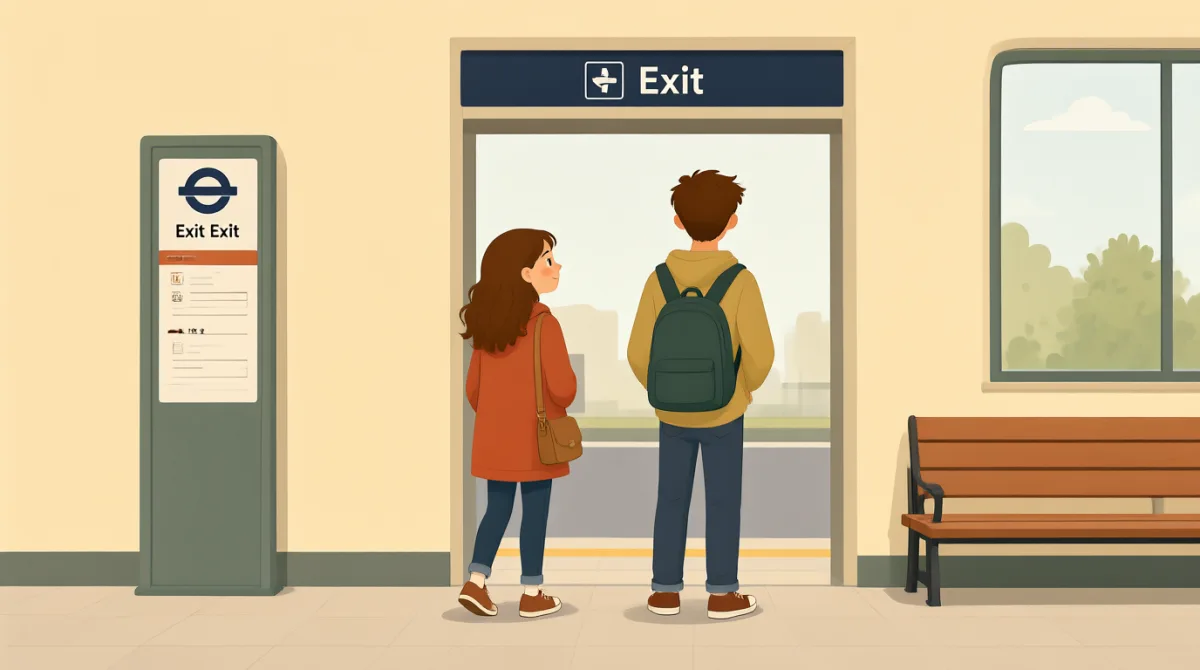

We’re at our stop. Which exit do we need?
हम अपने स्टेशन पर आ गए हैं। हमें किस निकास से जाना है?

Let’s check the signs. Where do you want to go?
चलो, संकेत देखते हैं। तुम्हें कहाँ जाना है?
I need the main street. Is this exit right?
मुझे मुख्य सड़क पर जाना है। क्या यह सही निकास है?
Yes. The sign says Main Street. Let’s follow it.
हाँ। संकेत पर मुख्य सड़क लिखा है। चलो, उसी रास्ते चलते हैं।
Great. Do we go up these stairs?
बढ़िया। क्या हमें इन सीढ़ियों से ऊपर जाना है?
Yes. The exit is at the top.
हाँ। निकास ऊपर है।
Thanks for helping me find the right exit.
सही निकास ढूँढ़ने में मेरी मदद करने के लिए शुक्रिया।
You’re welcome. Now we’re on the right street.
कोई बात नहीं। अब हम सही सड़क पर हैं।
शब्दावली8
- at our stopअपने स्टेशन पर
We use this when we arrive at the station where we need to get off. You can say, “We’re at our stop” when it is time to leave the train.
जब हम उस स्टेशन पर पहुँचते हैं जहाँ हमें उतरना होता है, तो यह कहते हैं। ट्रेन से उतरने का समय होने पर आप कह सकते हैं, “We’re at our stop” (हम अपने स्टेशन पर आ गए हैं)।
- exitनिकास
An exit is a way to leave a place. You can ask, “Which exit do we need?” when you are looking for the right way out.
निकास किसी जगह से बाहर जाने का रास्ता होता है। सही बाहर जाने का रास्ता ढूँढ़ते समय आप पूछ सकते हैं, “Which exit do we need?” (हमें किस निकास से जाना है?)।
- check the signsसंकेत देखना
This means to look at signs for information or directions. You can say, “Let’s check the signs” when you are not sure where to go.
इसका मतलब है, जानकारी या दिशा जानने के लिए संकेतों को देखना। जब आपको पता न हो कि कहाँ जाना है, तो आप कह सकते हैं, “Let’s check the signs” (चलो, संकेत देखते हैं)।
- main streetमुख्य सड़क
The main street is an important or central street in an area. You can say, “I need the main street” to explain where you want to go.
मुख्य सड़क किसी इलाके की अहम या बीचोंबीच की सड़क होती है। आप जहाँ जाना चाहते हैं, वह बताने के लिए कह सकते हैं, “I need the main street” (मुझे मुख्य सड़क पर जाना है)।
- follow itउसी दिशा में चलना
This means to go in the direction shown by a sign or route. You can say, “Let’s follow it” after finding the right direction.
इसका मतलब है, संकेत या रास्ते से दिखाई गई दिशा में जाना। सही दिशा पता चलने पर आप कह सकते हैं, “Let’s follow it” (चलो, उसी दिशा में चलते हैं)।
- go up these stairsइन सीढ़ियों से ऊपर जाना
This means to walk up the stairs. You can ask, “Do we go up these stairs?” when checking how to reach an exit.
इसका मतलब है सीढ़ियाँ चढ़ना। निकास तक पहुँचने का रास्ता पूछते समय आप कह सकते हैं, “Do we go up these stairs?” (क्या हमें इन सीढ़ियों से ऊपर जाना है?)।
- at the topसबसे ऊपर
This means at the highest point of something, such as a set of stairs. You can say, “The exit is at the top” to give a simple direction.
इसका मतलब किसी चीज़ के सबसे ऊँचे हिस्से पर होना है, जैसे सीढ़ियों के ऊपरी सिरे पर। रास्ता बताने के लिए आप कह सकते हैं, “The exit is at the top” (निकास सबसे ऊपर है)।
- You’re welcome.कोई बात नहीं।
This is a polite reply when someone says thank you. You can use it after helping someone.
जब कोई धन्यवाद कहता है, तो यह उसका विनम्र जवाब होता है। किसी की मदद करने के बाद आप इसका इस्तेमाल कर सकते हैं।
मुख्य वाक्य8
- 1
Which exit do we need?
हमें किस निकास से जाना है?
Use this question when you need to find the right way out. You can replace “exit” with another place, such as “Which platform do we need?”
सही बाहर जाने का रास्ता ढूँढ़ने के लिए यह सवाल पूछें। आप “exit” की जगह किसी दूसरी जगह का नाम रख सकते हैं, जैसे “Which platform do we need?” (हमें किस प्लेटफ़ॉर्म पर जाना है?)।
- 2
Let’s check the signs.
चलो, संकेत देखते हैं।
This is a simple way to suggest looking for directions or information. Use “Let’s” plus an action to suggest doing something together.
दिशा या जानकारी ढूँढ़ने का सुझाव देने का यह आसान तरीका है। साथ मिलकर कुछ करने का सुझाव देने के लिए “Let’s” के बाद कोई काम बताने वाला शब्द लगाएँ।
- 3
Where do you want to go?
तुम्हें कहाँ जाना है?
Use this question to ask someone about their destination. You can answer with a place, such as “I want to go to the main street.”
किसी से उसकी मंज़िल पूछने के लिए यह सवाल करें। जवाब में आप किसी जगह का नाम बता सकते हैं, जैसे “I want to go to the main street.” (मुझे मुख्य सड़क पर जाना है।)।
- 4
Is this exit right?
क्या यह सही निकास है?
Use this question to check if an exit is the correct one. You can change “exit” to another choice, such as “Is this door right?”
यह जानने के लिए यह सवाल पूछें कि निकास सही है या नहीं। आप “exit” की जगह कोई दूसरा विकल्प रख सकते हैं, जैसे “Is this door right?” (क्या यह सही दरवाज़ा है?)।
- 5
The sign says Main Street.
संकेत पर मुख्य सड़क लिखा है।
Use this sentence to share information written on a sign. You can replace “Main Street” with the words you see.
किसी संकेत पर लिखी जानकारी बताने के लिए यह वाक्य इस्तेमाल करें। “Main Street” की जगह आप वहाँ लिखे शब्द रख सकते हैं।
- 6
Do we go up these stairs?
क्या हमें इन सीढ़ियों से ऊपर जाना है?
Use this question to check if you should take a set of stairs. You can replace “up” with “down” to ask about going down.
सीढ़ियों से जाना है या नहीं, यह पूछने के लिए यह सवाल करें। नीचे जाने के बारे में पूछने के लिए “up” की जगह “down” कहें।
- 7
The exit is at the top.
निकास सबसे ऊपर है।
This sentence gives a clear location for the exit. You can use “at the top” to describe where something is on stairs or a hill.
इस वाक्य से निकास की जगह साफ़-साफ़ पता चलती है। सीढ़ियों या पहाड़ी पर किसी चीज़ की जगह बताने के लिए “at the top” का इस्तेमाल कर सकते हैं।
- 8
Thanks for helping me find the right exit.
सही निकास ढूँढ़ने में मेरी मदद करने के लिए शुक्रिया।
Use this sentence to thank someone for helping you. You can replace “exit” with another thing, such as “the station.”
किसी की मदद के लिए उसे धन्यवाद देने के लिए यह वाक्य कहें। आप “exit” की जगह किसी दूसरी चीज़ का नाम रख सकते हैं, जैसे “the station” (स्टेशन)।