Browsing and Initial Inquiry
दुकान में सामान देखना और शुरुआती पूछताछ
A customer is browsing products, looking for a specific item or type of product, and asks a sales associate a general question about product availability or location.
एक ग्राहक सामान देख रहा है और किसी खास वस्तु या उत्पाद के प्रकार की तलाश में है। वह दुकान के कर्मचारी से सामान की उपलब्धता या उसकी जगह के बारे में सामान्य सवाल पूछता है।
संवाद6
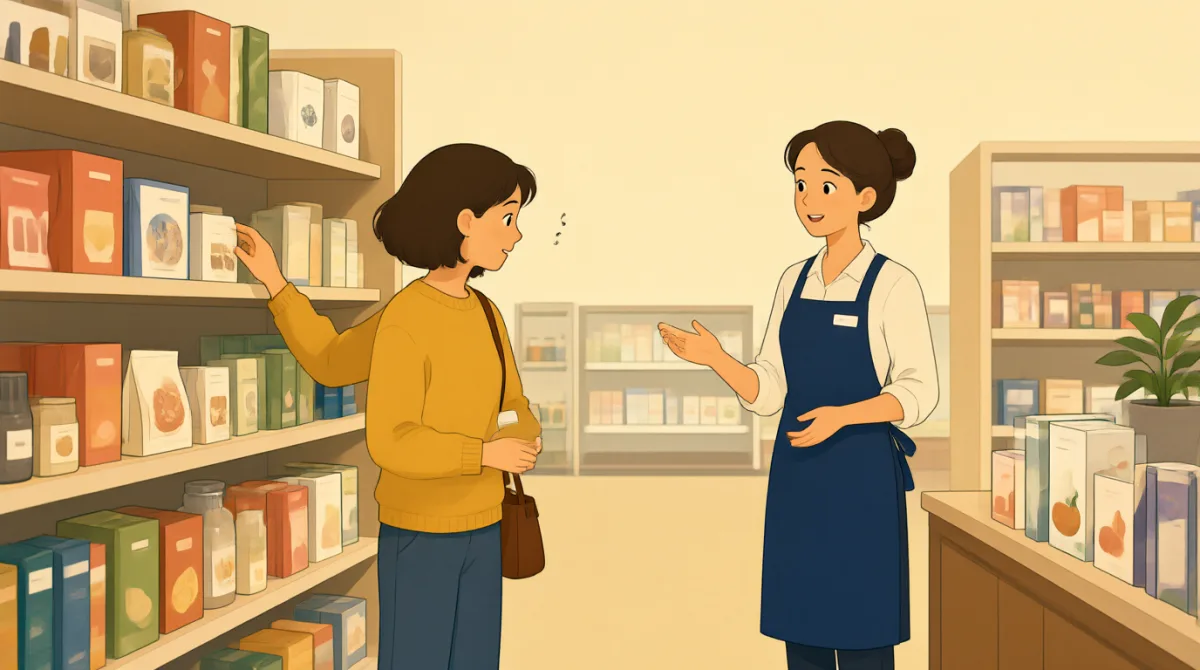

Excuse me, I'm looking for the denim jacket section. Could you point me in the right direction?
माफ़ कीजिए, मैं डेनिम जैकेट वाले सेक्शन की तलाश में हूँ। क्या आप मुझे बता सकते हैं कि वह किस तरफ़ है?

Certainly! The men's denim jackets are on the second floor, and the women's are just around the corner, past the activewear.
ज़रूर! पुरुषों की डेनिम जैकेट दूसरी मंज़िल पर हैं, और महिलाओं की जैकेट एक्टिववियर के आगे, कोने के ठीक पास हैं।
Ah, okay. I'm looking for a women's jacket. Do you happen to have any in a light wash with a slightly oversized fit?
अच्छा, ठीक है। मैं महिलाओं की जैकेट ढूँढ़ रही हूँ। क्या आपके पास हल्के रंग की, थोड़ी ढीली फिट वाली कोई जैकेट है?
Yes, we do have a few styles like that. They should be hanging on the rack just to your right. If you don't see what you're looking for there, I can check our current stock in the back.
जी हाँ, हमारे पास उस तरह की कुछ डिज़ाइन हैं। वे आपके ठीक दाईं ओर लगे रैक पर होनी चाहिए। अगर वहाँ आपको अपनी पसंद की जैकेट न मिले, तो मैं पीछे जाकर मौजूदा स्टॉक देख सकता हूँ।
Great, thanks so much for your help! I'll take a look over there first.
बहुत बढ़िया, आपकी मदद के लिए बहुत-बहुत शुक्रिया! पहले मैं वहाँ जाकर देखती हूँ।
No problem at all! Let me know if you need anything else.
कोई बात नहीं! अगर आपको किसी और चीज़ की ज़रूरत हो, तो मुझे बताइएगा।
शब्दावली11
- Excuse meमाफ़ कीजिए
A polite way to get someone's attention, especially when asking for help or directions in a store.
किसी का ध्यान विनम्रता से अपनी ओर खींचने का तरीका, खासकर दुकान में मदद या रास्ता पूछते समय।
- Looking forतलाश करना
Means searching for something specific; use it when asking about the location of an item in a shop.
“Looking for” का मतलब है किसी खास चीज़ को ढूँढ़ना। दुकान में किसी सामान की जगह पूछते समय इसका इस्तेमाल करें।
- Sectionसेक्शन
A part of a store dedicated to a type of product, like clothing or electronics; helps you navigate large retail spaces.
दुकान का वह हिस्सा जहाँ एक खास तरह का सामान रखा जाता है, जैसे कपड़े या इलेक्ट्रॉनिक्स। बड़ी दुकानों में रास्ता ढूँढ़ने में यह शब्द काम आता है।
- Point me in the right directionसही दिशा बता देना
An idiomatic expression asking for guidance or directions to a specific area; polite and common in shopping situations.
“Point me in the right direction” एक मुहावरेदार अभिव्यक्ति है, जिसका इस्तेमाल किसी खास जगह तक पहुँचने का रास्ता या मार्गदर्शन माँगने के लिए किया जाता है। खरीदारी के दौरान यह विनम्र और आम बोलचाल का तरीका है।
- Certainlyज़रूर
A formal way to say 'yes' or 'of course' when agreeing to help; shows politeness in customer service.
मदद के लिए सहमति जताते हुए “हाँ” या “बिल्कुल” कहने का औपचारिक तरीका। ग्राहक सेवा में यह विनम्रता दिखाता है।
- Around the cornerकोने के पास
Means nearby, just past a bend or turn; useful for giving or understanding short directions in a store.
“Around the corner” का मतलब है पास में, मोड़ के ठीक आगे। दुकान में छोटा-सा रास्ता बताने या समझने के लिए यह काम का है।
- Light washहल्के रंग का डेनिम
Refers to a faded, light-colored denim fabric; common term in fashion for describing jeans or jackets.
इससे फीके, हल्के रंग के डेनिम कपड़े का मतलब होता है। फ़ैशन में जींस या जैकेट का रंग बताने के लिए यह आम शब्द है।
- Oversized fitढीली फिट
Describes clothing that is larger than standard size for a loose, baggy style; popular in modern fashion vocabulary.
ऐसे कपड़ों के लिए कहा जाता है जो आम आकार से बड़े और ढीले हों। आधुनिक फ़ैशन की शब्दावली में यह आम है।
- Rackकपड़े टाँगने का रैक
A stand or rail where clothes are hung for display in a store; essential for talking about where items are located.
दुकान में कपड़े दिखाने के लिए उन्हें जिस स्टैंड या छड़ पर टाँगा जाता है, उसे “rack” कहते हैं। सामान कहाँ रखा है, यह बताने के लिए यह शब्द काम आता है।
- Stockस्टॉक
The inventory or supply of products available; use it when asking if a store has more items in storage.
दुकान में उपलब्ध सामान का भंडार या मात्रा। स्टोररूम में और सामान है या नहीं, यह पूछते समय इस शब्द का इस्तेमाल करें।
- No problemकोई बात नहीं
A casual way to say 'you're welcome' or 'it's okay'; friendly response after helping someone.
“No problem” किसी की मदद के बाद दोस्ताना ढंग से “आपका स्वागत है” या “कोई बात नहीं” कहने का तरीका है।
मुख्य वाक्य6
- 1
Excuse me, I'm looking for the denim jacket section. Could you point me in the right direction?
माफ़ कीजिए, मैं डेनिम जैकेट वाले सेक्शन की तलाश में हूँ। क्या आप मुझे बता सकते हैं कि वह किस तरफ़ है?
This is a polite opening sentence for asking directions in a store. 'I'm looking for' expresses your need, and 'Could you...?' is a polite request form using 'could' for possibility. Useful when you need help finding a product area.
दुकान में रास्ता पूछने के लिए यह एक विनम्र शुरुआत है। “I'm looking for” (मैं तलाश में हूँ) बताता है कि आपको क्या चाहिए, और “Could you...?” (क्या आप...?) “could” का इस्तेमाल करके विनम्र अनुरोध करता है। किसी उत्पाद का सेक्शन ढूँढ़ने में मदद चाहिए हो, तो यह वाक्य काम आएगा।
- 2
Certainly! The men's denim jackets are on the second floor, and the women's are just around the corner, past the activewear.
ज़रूर! पुरुषों की डेनिम जैकेट दूसरी मंज़िल पर हैं, और महिलाओं की जैकेट एक्टिववियर के आगे, कोने के ठीक पास हैं।
A helpful response giving directions. It uses 'certainly' for agreement and simple prepositions like 'on the second floor' and 'past' to describe locations. Great for sales staff or anyone giving store guidance; the 'and' connects two related pieces of information.
यह रास्ता बताने वाला एक मददगार जवाब है। इसमें सहमति जताने के लिए “certainly” और जगह बताने के लिए “on the second floor” और “past” जैसे सरल शब्दों का इस्तेमाल है। दुकान के कर्मचारी या किसी को रास्ता बताने वाले व्यक्ति के लिए यह उपयोगी है। “and” दो जुड़ी हुई जानकारियों को जोड़ता है।
- 3
Ah, okay. I'm looking for a women's jacket. Do you happen to have any in a light wash with a slightly oversized fit?
अच्छा, ठीक है। मैं महिलाओं की जैकेट ढूँढ़ रही हूँ। क्या आपके पास हल्के रंग की, थोड़ी ढीली फिट वाली कोई जैकेट है?
This follows up on previous info and specifies preferences. 'Do you happen to have' is a soft way to inquire about availability, adding politeness. Useful for describing what you want in detail; 'with' connects features like color and style.
इस वाक्य में पहले मिली जानकारी के बाद अपनी पसंद बताई गई है। “Do you happen to have” (क्या आपके पास... है?) उपलब्धता पूछने का नरम और विनम्र तरीका है। आप क्या चाहते हैं, यह विस्तार से बताने के लिए इसका इस्तेमाल करें। “with” (वाली) रंग और स्टाइल जैसी विशेषताओं को जोड़ता है।
- 4
Yes, we do have a few styles like that. They should be hanging on the rack just to your right. If you don't see what you're looking for there, I can check our current stock in the back.
जी हाँ, हमारे पास उस तरह की कुछ डिज़ाइन हैं। वे आपके ठीक दाईं ओर लगे रैक पर होनी चाहिए। अगर वहाँ आपको अपनी पसंद की जैकेट न मिले, तो मैं पीछे जाकर मौजूदा स्टॉक देख सकता हूँ।
Offers confirmation and options. 'We do have' emphasizes possession, and the conditional 'If... I can...' shows helpfulness. Practical for retail interactions; teaches how to suggest locations and offer further assistance using future tense 'can check'.
इस जवाब में उपलब्धता की पुष्टि की जाती है और दूसरे विकल्प भी बताए जाते हैं। “We do have” उपलब्धता पर ज़ोर देता है, जबकि “If... I can...” (अगर... तो मैं...) मदद की पेशकश करता है। यह खुदरा दुकानों में काम की भाषा है: इससे आप सामान की जगह बता सकते हैं और “can check” (देख सकता हूँ) कहकर आगे मदद की पेशकश कर सकते हैं।
- 5
Great, thanks so much for your help! I'll take a look over there first.
बहुत बढ़िया, आपकी मदद के लिए बहुत-बहुत शुक्रिया! पहले मैं वहाँ जाकर देखती हूँ।
Expresses thanks and next steps. 'Thanks so much' is emphatic gratitude, and 'I'll take a look' uses future 'will' for personal plans. Ideal for ending a helpful exchange politely; shows appreciation in shopping scenarios.
इसमें धन्यवाद और आगे क्या करने वाले हैं, यह बताया गया है। “Thanks so much” ज़ोर देकर आभार जताता है, और “I'll take a look” भविष्य के लिए अपना इरादा बताता है। खरीदारी के दौरान मददगार बातचीत को विनम्रता से खत्म करने और आभार जताने के लिए यह अच्छा वाक्य है।
- 6
No problem at all! Let me know if you need anything else.
कोई बात नहीं! अगर आपको किसी और चीज़ की ज़रूरत हो, तो मुझे बताइएगा।
A welcoming close to the conversation. 'No problem at all' is a casual 'you're welcome,' and 'Let me know if...' invites future questions using imperative 'let me know.' Useful for customer service to keep the door open for more help.
यह बातचीत को दोस्ताना ढंग से खत्म करता है। “No problem at all” (बिल्कुल कोई बात नहीं) “आपका स्वागत है” कहने का सहज तरीका है, और “Let me know if...” (अगर... तो मुझे बताइएगा) आगे कोई सवाल हो तो पूछने का न्योता देता है। ग्राहक सेवा में इससे यह जताया जाता है कि आप और मदद के लिए तैयार हैं।